


Is Rio de Janeiro Safe? The Short Answer
For most visitors, yes. If you stay in the South Zone (Zona Sul), keep your phone out of sight, and take a ride-hailing car after dark, you are likely to have a trouble-free trip. Rio is still a big city with real crime, so “safe” here means “safe with habits,” not “safe without thinking.”
The most likely problem is a stolen phone or bag, not anything violent. Where you sleep, which streets you walk and what time it is matter more than almost anything else. This guide goes neighborhood by neighborhood so you can plan around the risks instead of worrying about them in general.
For the wider picture across the country, see our honest guide to safety in Brazil.
What US, UK and EU Advice Says About Rio
US citizens: The State Department rates Brazil at Level 2, Exercise Increased Caution. The August 31, 2026 advisory cites crime and kidnapping. It singles out Rio for assaults involving sedatives or drugs placed in drinks. It also lists informal housing developments (favelas) under “Do Not Travel.” Advisory levels get reviewed regularly, so check the current version before you fly.
UK citizens: The FCDO’s “all but essential travel” warnings for Brazil cover remote river areas of Amazonas State, not Rio’s visitor districts. Its Rio advice focuses on favelas, beach and phone theft, express kidnapping, taxi and ride-hailing scams, Carnival and dating-app crime. Read the FCDO regional risks page for the current wording.
EU citizens: There is no single EU-wide advisory. Your own foreign ministry publishes advice for Brazil, and it is worth reading before you go. Expect the same themes: petty theft, favelas, nightlife drugging and express kidnapping.
Canada’s government goes a step further and names two favela complexes in Rio, Complexo da Maré and Complexo da Penha, as places to avoid entirely. Neither is anywhere near a normal tourist route, but the Canadian advice shows how seriously officials take the issue.
Neighborhood Safety at a Glance

This table is a starting point, not a guarantee. Conditions change block by block, and a quiet street at noon can feel very different at 11 p.m.
| Neighborhood | Daytime | After dark | Main risk |
|---|---|---|---|
| Leblon | Very comfortable | Comfortable on busy streets | Phone snatching |
| Ipanema | Very comfortable | Comfortable on busy streets | Phone snatching, beach theft |
| Copacabana and Leme | Comfortable | Stay on main avenues, skip the beach | Phone theft, beach sweeps, quiet side streets |
| Botafogo and Flamengo | Comfortable | Stick to lit, active streets | Opportunistic theft |
| Santa Teresa | Comfortable on main streets | Take a car, do not walk the lanes | Robbery on dark, steep streets |
| Lapa | Fine | Go with a plan, leave by car | Highest concentration of nighttime theft |
| Centro | Fine on weekdays | Avoid | Empty streets after office hours |
| Barra da Tijuca | Comfortable | Car-based, plan rides | Spread-out layout, uneven areas |
| Favelas | Avoid | Avoid | Armed groups, police operations |
The numbers back up the pattern. In 2025, the three police precinct areas covering Copacabana, Leme, Ipanema and Leblon recorded 16 of the city’s 1,537 victims of violent lethality, about 1%. Property crime is a different story, and those same areas see plenty of phone theft.
Ipanema, Leblon and Copacabana: The Beach Neighborhoods
These three neighborhoods are where most first-time visitors sleep, and for good reason. They have the best foot traffic, the most visible police and the easiest transport. They are still places where phones disappear.
Ipanema and Leblon
Leblon is generally considered Rio’s safest neighborhood, an upscale and largely residential district. Ipanema is a close second, and it suits most first-timers better because it is more central and walkable. Both have steady residential foot traffic and good lighting and patrols.
The trade-off is price, especially in Leblon. If you want the lowest-stress base on a first trip, Ipanema is the default we recommend. Our guide to where to stay in Rio de Janeiro compares the neighborhoods by budget and style.
Copacabana and Leme
Copacabana is lively, full of hotels at every price, and fine by day. The risk shifts after dark. Pickpocketing and phone snatching can occur, especially on the beach, and the beachfront is best avoided late at night. The streets a few blocks back from the promenade can feel more isolated at night than Ipanema’s residential streets.
In practice, that means choosing a hotel on or near a busy block, walking along the main avenue rather than improvising shortcuts, and taking a car for any late return. The southern end near Arpoador is generally regarded as the calmer part. It is a good option if you want Copacabana’s prices without its roughest edges.
Botafogo, Flamengo and Other Zona Sul Bases
Botafogo, Flamengo, Laranjeiras and Catete sit in the same South Zone as the beach neighborhoods. Local guides commonly list them among the safer parts of the city. They have more locals and fewer tourists, which many travelers prefer. You will also find cheaper restaurants and easier metro access.
The caveat is the same as everywhere: stick to well-lit streets after dark. These areas have fewer tourist-focused patrols than the beachfront, so a late walk home across a quiet stretch is a worse idea than it looks on the map. A ride-hailing car for the last few blocks costs very little.
Santa Teresa and Lapa: Great Visits, Poor Late-Night Walks

These two neighborhoods sit side by side, and they have opposite personalities. Both are worth visiting. Neither is where we would suggest sleeping on a first trip.
Santa Teresa
The hilltop neighborhood of artists’ studios, views and restaurants is generally safe on its main streets and squares. The charm is in the side streets, and so is the risk at night. The streets can be steep, poorly lit and quiet after dark. Stick to main roads after dark and take a car back rather than walking downhill through unlit lanes.
The metro also does not reach Santa Teresa directly, so you will rely on cars or taxis regardless. Visit for the day, have dinner on a busy street, and leave by app.
Lapa
Lapa is Rio’s best-known nightlife district, with live samba spilling out of bars, mostly on Thursday through Saturday nights. It is also where the highest concentration of tourist thefts happens at night. Police data for the precinct area that includes Lapa and part of Centro shows one of the highest street-robbery counts among the visitor areas reviewed.
That is not a reason to skip it. Go with a plan: carry only what you need, keep your phone in a front pocket or bag, stay near busy venues, and order a car from the door when you leave. Do not wander off to find a better bar.
Centro and Barra da Tijuca
Centro
Downtown Rio has the Museum of Tomorrow, the Olympic Boulevard waterfront and historic churches, and it works well for daytime sightseeing. At night some areas become deserted, so schedule your visit for weekday daylight and leave before the office crowds thin out. Streets around the Novo Rio bus terminal can feel sketchy after dark, so book bus arrivals and departures with that in mind.
Our list of the best things to do in Rio de Janeiro flags which attractions pair well with a daytime Centro visit.
Barra da Tijuca
Barra is the modern, car-oriented neighborhood to the west, with long beaches and big malls. Some visitor guides call it well-policed and busy with visitors. Police data for 2025 tells a more mixed story: Recreio and Barra recorded the most violent deaths among the visitor areas in one review. Those figures cover residents and visitors alike, but they are a reason to choose your exact area carefully.
It is a reasonable base for families who want space and plan to drive or use apps. It is less natural for first-timers who want to walk to restaurants and see the city’s classic sights.
Favelas and the Streets Next to Them
Official advice from both Washington and London is blunt: stay out of favelas. The US advisory says neither tour companies nor police can guarantee your safety in these communities, even on guided tours. The FCDO advises avoiding all favelas, including tours marketed to tourists, and warns that visitors have been shot after entering one by accident. We follow that advice.
The practical challenge is that favelas are not far from tourist areas. Communities such as Rocinha and Vidigal fall within the same police battalion area as Ipanema and Leblon. Before using a map app, make sure your GPS does not route you through a favela. Ask your hotel which nearby streets to avoid, and be careful with moto-taxi rides or unfamiliar shortcuts that might head uphill.
Armed confrontations can happen with little warning. Security conditions can deteriorate rapidly, particularly during police or military operations. If you hear gunfire or see roads blocked, move away and check local news and your hotel.
Beach Safety: Theft, Sweeps and Rip Currents
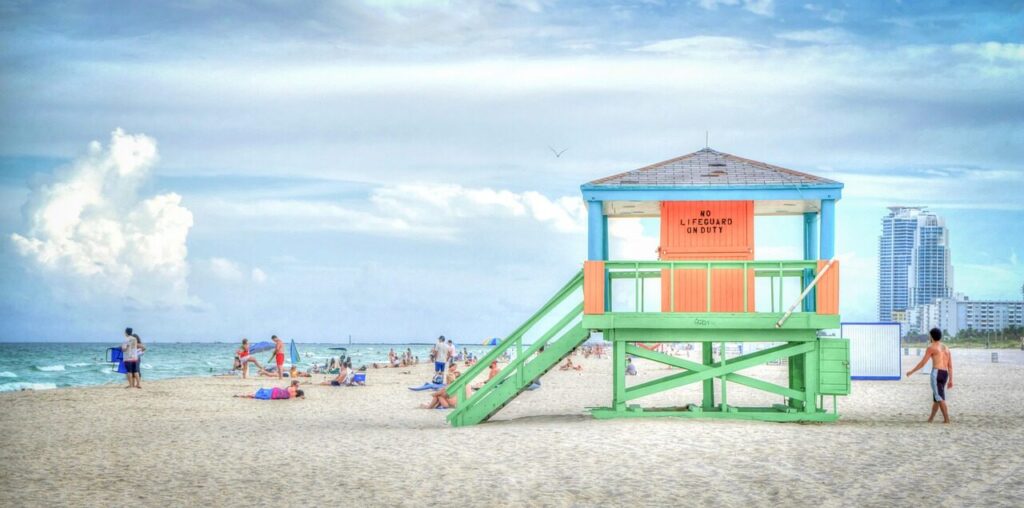
Rio’s beaches are the best free show in the city, and daytime visits are generally fine. Keep the kit minimal: a towel, sunscreen, a little cash and a phone you can part with. If you are in a group, someone should always stay with the bags.
After dark, avoid the sand altogether. The State Department advises avoiding walking on beaches after dark. Coordinated group thefts, known as arrastões, sweep through bathers grabbing phones, watches and bags, and they usually occur in the evening or at night. Patrols have reduced them, but they have not stopped.
The water has its own hazards. Strong rip currents are present at Rio’s beaches. Swim near a lifeguard tower, obey flag warnings, and stay out of the water if the surf looks rough.
Getting Around Rio Safely
Ride-hailing apps are the simplest solution after dark. Uber and 99 are widely used in Rio and reduce the need to hail an unknown car on the street, though no ride is risk-free. Check that the plate and driver match the app, wait indoors where possible, and share your trip with someone.
The metro is a practical choice during the day. It covers the whole of Zona Sul all the way to Barra da Tijuca. Rush hour is crowded, which is when pickpockets thrive, so keep your bag in front of you. Municipal buses are a different matter: US government employees are advised not to use them because of the risk of robbery and assault, especially at night. Most visitors can skip buses without missing anything.
If you rent a car, park in attended lots and keep windows up and valuables out of sight at traffic lights.
Scams and Crimes Worth Knowing About
Phone snatching
This is the big one. Thieves on foot or on bikes grab phones from hands, tables and beach towels. The FCDO says thieves target phones particularly between 4 p.m. and 9 p.m. and advises avoiding phone use in the street. Step into a shop doorway to check directions, and turn on remote-lock and tracking before you leave home.
Drink spiking and dating apps
The US advisory states that criminals target foreigners through dating apps or at bars before drugging and robbing their victims. Never leave a drink unattended, do not accept drinks from strangers, and meet matches in busy public places. The advice to avoid going to bars or nightclubs alone applies especially in Rio.
Express kidnapping and forced transfers
In an express kidnapping, victims are forced to withdraw cash or make instant bank transfers. Reports describe Pix, Brazil’s instant payment system, being used for this. Keep daily transfer limits low on your banking apps, and use ATMs inside busy, well-lit locations. The US advisory also urges care when withdrawing cash from ATMs or leaving banks.
Fake police
One reported scam involves men who flash badges, claim to be doing a drug check and demand your passport, wallet and phone. If this happens, stay calm, do not hand over valuables, and say you will go to a police station or call the tourist police. If you face a real armed robbery, the official advice is clear: do not physically resist. A phone can be replaced.
Crowds and Carnival
Street parties draw pickpockets. The FCDO notes that criminals target large-scale celebrations such as Carnival. Dress light, carry little, and travel in a group. Our Rio de Janeiro travel guide for first-timers covers what to expect from the city’s busiest seasons.
If Something Goes Wrong
Rio has a dedicated tourist police station, the DEAT. Report thefts there rather than at a regular precinct. It issues the police report (boletim de ocorrência) that travel insurance claims require. Staff generally speak some English. Check the current address and hours before you need it, since published details vary. For emergencies, dial 190 for the police.
If your passport is stolen, contact your embassy or consulate. US citizens can reach the consulate general in Rio, and UK and EU citizens should contact their own embassy or consulate. Keep a photo of your passport on your phone and a copy separate from the original. Leave the original in your hotel safe on most days.
Planning Your Visit
Pick your base first. For a first trip, Ipanema or Leblon is the easiest answer, with Copacabana’s quieter end or Botafogo as good value alternatives. Then book flights and ground transport around daylight arrivals if you can, and save Lapa and Santa Teresa for evenings with a car booked in advance.
A few habits cover most of the risk: phone out of sight, nothing flashy, no beach after dark, apps instead of street hails, and no favelas. Budget a little extra for rides, because it is money well spent. Our safety section has more guides to the city and the rest of Brazil, and the Rio de Janeiro hub collects our other planning pages.
Frequently Asked Questions
Is Rio de Janeiro safe for tourists?
For most tourists, yes, with precautions. Stay in Zona Sul neighborhoods like Ipanema, Leblon or Copacabana, keep your phone out of sight, avoid beaches after dark and use ride apps at night. Petty theft is the main risk. Violent crime is concentrated elsewhere, and official advisories ask visitors to stay out of favelas.
What is the safest neighborhood to stay in Rio?
Leblon is generally considered the safest, followed closely by Ipanema. Both have steady foot traffic, good lighting and a residential feel. Ipanema is more central and walkable, so it suits most first-time visitors. Leblon is quieter and pricier. Whichever you choose, the exact block and your route at night still matter.
Is Copacabana safe at night?
Copacabana is fine by day, but it needs more care after dark. Avoid the beach and the beachfront at night, stay on busy main avenues, and skip quiet side streets a few blocks back from the promenade. For late returns, take a ride-hailing car rather than walking, even if your hotel is close.
Is it safe to visit a favela on a guided tour?
Official advice says no. The US State Department lists favelas under “Do Not Travel” and says neither tour companies nor police can guarantee safety there. The UK FCDO also advises avoiding all favelas, including tours marketed to tourists. Armed groups and police operations can make conditions change without warning.
Is it safe to use Uber in Rio de Janeiro?
Uber and 99 are widely used and are the usual recommendation after dark. They are safer than hailing an unknown car on the street, but no ride is risk-free. Check that the plate and driver match the app, wait indoors if you can, share your trip with someone and sit in the back.
What should I do if my phone is stolen in Rio?
Do not chase the thief. Lock or wipe the phone remotely, then report the theft to the tourist police (DEAT) to get a police report, which your insurer will need. Contact your bank if apps were logged in, and call your embassy or consulate if your passport was taken too.