


If you hold an EU or UK passport, you do not need a visa to visit Brazil as a tourist. You can enter for up to 90 days, pay no application fee, and skip the embassy. What you do need is a passport with enough validity, a few documents ready for the border officer, and a clear idea of the rules around stamps, vaccines and customs.
This guide covers the Brazil entry requirements Europe-based travelers actually run into, with the differences between EU and UK citizens spelled out. The basics are simple. The problems usually come from small details like an unstamped passport, a passport that expires too soon, or a customs form skipped at the airport.
Brazil Entry Requirements for Europe at a Glance
The table below summarizes the rules for a standard tourist trip on an ordinary passport. Details and exceptions follow in the sections after it.
| Requirement | EU citizens | UK citizens |
|---|---|---|
| Visa for tourism | Not required | Not required |
| Fee or online authorization | None | None |
| Permitted stay | 90 days in any 180-day period | Up to 90 days for tourism |
| Passport validity | At least six months after arrival is the safe standard | Expiry date at least six months after arrival |
| Entry stamp | Check that the officer stamps your passport | Check that the officer stamps your passport |
| Yellow fever certificate | Not required on a direct trip, but required if you arrive from certain risk countries | Same |
| COVID-19 proof | Not requested | Not requested |
Neither group needs an e-visa. That is different from US travelers, which we cover further down.
How Long Can You Stay Without a Visa?

Ninety days is the number to remember. Tourism, short business meetings and transit all fall under the visa-free rule. Paid work, study and living in Brazil do not, and those need a proper visa arranged in advance.
EU citizens: 90 days in any 180
The visa exemption between Brazil and the European Union was updated by a Brazilian decree in March 2026. It now defines a short stay as 90 days in any 180-day period, replacing the older wording of three months in six. The count is a rolling window, the same logic used for the Schengen Area.
In practice, you can split your 90 days across several visits. You cannot simply leave for a weekend in Buenos Aires and reset the clock. If you plan a long South America trip with Brazil as one stop, add up your days before you book.
UK citizens: up to 90 days
The UK government tells British travelers they can visit Brazil without a visa for up to 90 days for tourism. Its official entry requirements page for Brazil is the place to confirm the rules before you fly, since Brazil sets and enforces them and the UK page only reflects its understanding.
If you are planning several trips within a short period, keep a log of your entry and exit dates. Immigration systems track them, and you will be better off knowing your total than guessing.
Extensions and overstays
If you want more than 90 days, you must ask the Federal Police (Polícia Federal) inside Brazil before your current stay ends. The UK government points travelers to the Federal Police for this. Approval is at their discretion, so do not buy a non-refundable ticket that depends on it. EU citizens should plan around the 90-in-180 formula rather than assume an extension will be granted.
Overstaying brings a daily fine. UK guidance says you can pay it when you leave Brazil or on your next visit. An overstay can also cause trouble at future entries, so it is not worth the risk for a few extra beach days.
Passport Rules That Catch Travelers Out
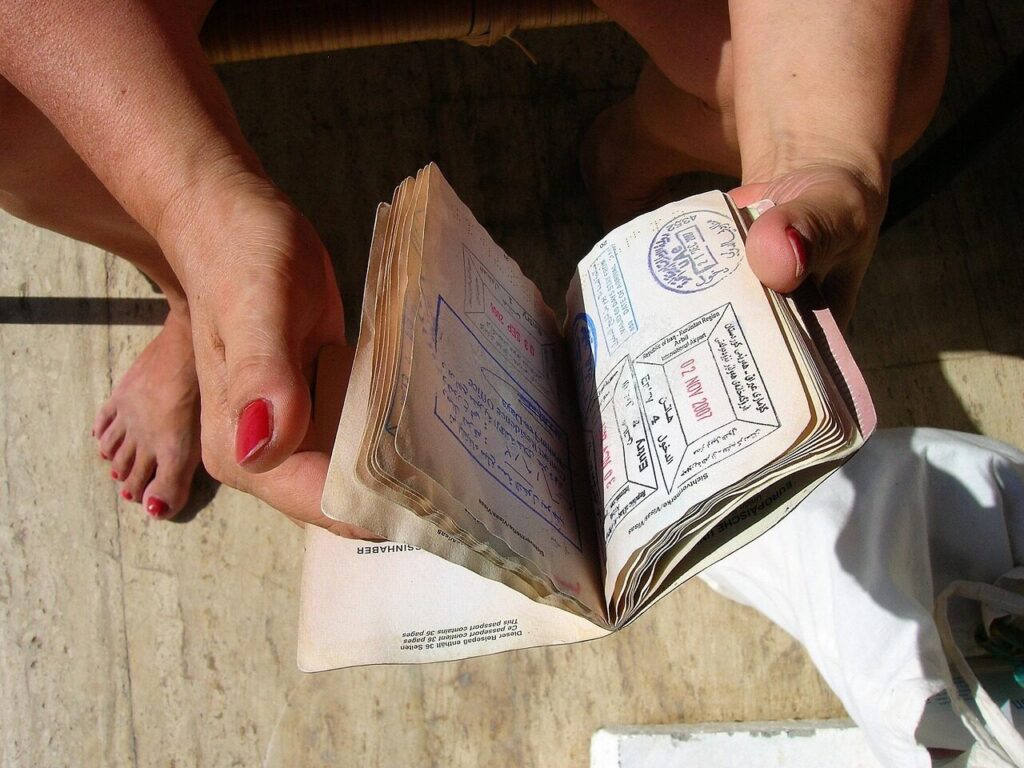
Your passport matters more than any form. Three points deserve attention: validity, the entry stamp, and dual nationality.
Six months of validity
The UK government states that your passport needs an expiry date at least six months after the day you arrive. Airlines apply the same standard to everyone on European passports and may refuse boarding if you fall short. Check the date well before you buy tickets, because renewal can take weeks.
The passport must also be undamaged and not reported lost or stolen. A travel document that fails either test can mean denied entry.
Make sure you get stamped
The border officer should stamp your passport on arrival. If that does not happen and you leave without a stamp, you may face a fine on exit. Look at the page before you walk away from the desk. If there is no stamp, ask politely and go back to the officer.
Dual nationals
If you hold Brazilian citizenship as well as a European one, Brazil expects you to enter and leave on your Brazilian passport. The UK government notes that British-Brazilian dual nationals are often required to use their Brazilian passport. You still need your British passport to return to the UK. Carry both, and use the right one at the right desk.
What Border Officers May Ask For
Most visitors from Europe are waved through after a quick look at the passport. Even so, officers can ask about your trip, and UK guidance says you should be ready to show enough funds, accommodation details and evidence of onward or return travel.
A simple folder, digital or paper, covers it:
- Your return or onward flight confirmation
- The address of your first hotel or rental
- A card or bank app showing you can fund the stay
- A rough itinerary, in case you are asked where you are going
Airlines also check onward travel before you board. If you are planning to enter Brazil by air and leave overland to Argentina, Uruguay or Paraguay, have a bus or flight booking you can show, or be ready to explain your plan.
Health Rules and Vaccines Before You Fly

Brazil does not ask European visitors for proof of COVID-19 vaccination or a test. For entry, the main health document to think about is the yellow fever certificate.
Yellow fever: required only in some cases
Brazil does not require a yellow fever certificate if you fly in directly from the EU or UK. It does ask for one from travelers arriving from, or recently transiting, countries with yellow fever risk. If your route includes a stopover or recent stay in Africa or tropical South America, check the current list with your airline and the Brazilian consulate before departure. Some airlines may ask to see the certificate at check-in.
Separate from the border rule is the health advice. The US CDC recommends the vaccine for many parts of Brazil, including Rio de Janeiro state, São Paulo state, Brasília, much of the Amazon and the Iguazu Falls area. A single dose is considered lifelong protection, and it should be given at least 10 days before arrival. Speak to a travel clinic in your own country four to eight weeks before you leave.
Other health preparation
Dengue exists in Brazil, and there is no simple vaccine that protects every traveler, so bring repellent. Typhoid and hepatitis A vaccines are commonly suggested for trips outside the main cities. Take out travel insurance that covers medical care and evacuation. Brazil’s private hospitals are good, but costs for foreigners add up quickly.
For wider guidance on street-level risks, see our honest guide to safety in Brazil.
Customs, Cash and Items You Cannot Bring

Customs is where visitors lose time and money. Brazil uses an electronic declaration called the e-DBV, run by the federal tax authority, Receita Federal. It is not required from everyone, but you must use it in certain situations.
Cash above US$10,000
If you carry more than US$10,000 in paper cash, or the equivalent in another currency, you must submit the e-DBV. Receita Federal explains the rule on its page about cash when arriving in Brazil. This is a declaration threshold, not a ban on carrying more. Skipping the declaration can bring serious penalties.
Shopping allowance
Travelers arriving by air or sea have an allowance for goods bought abroad, which is US$1,000 per person. Travelers arriving by land have a lower allowance of US$500. Items beyond the allowance, and goods above set quantity limits, must be declared and taxed. The allowance cannot be reused if you entered Brazil in the previous 30 days.
New electronics are the usual problem. A laptop, second phone or camera still in its box can count toward the allowance, and expensive gifts count as well. Keep receipts. You can fill in the declaration online through the official system, as explained in Receita Federal’s guide to completing an e-DBV.
Items to leave at home
- E-cigarettes and vapes: Brazil prohibits importing them, including for personal use.
- Food and plant products: Meat, dairy, fresh fruit and seeds are tightly regulated. Check the agriculture ministry’s rules or leave them behind.
- Medication: Keep personal medicines in original packaging, and carry a prescription or doctor’s letter for controlled drugs or large quantities.
- Weapons and ammunition: Not permitted without authorization.
Traveling With Children
Children from the EU or UK follow the same visa-free rule as adults, with their own valid passport. If a minor travels without both parents, carry an original or certified copy of the birth certificate and a signed consent letter from the absent parent or parents. Airlines can be strict about this, and rules can differ by airline.
Dual British-Brazilian children face a stricter process. Under 18, they need formal authorization from both parents to travel within Brazil or to leave the country, unless both parents travel with them. That authorization goes through a notary process. Start it early.
Connecting Flights and Transit Stops
Many European itineraries to Brazil involve a connection, often in Lisbon, Madrid, Paris, Amsterdam or Frankfurt, which require no extra paperwork for EU and UK passport holders when flying within Europe. Flights routed via the United States or Canada are different. Those countries can require an electronic travel authorization even for a transit stop, so check their rules before booking.
The same caution applies if you stop in a yellow fever risk country on the way. Brazil’s certificate rule is based on where you have been, not just where you boarded the final flight.
How Europe’s Rules Differ From the US Rules
This is the most common source of confusion. Brazil requires US citizens to hold an e-visa for entries since April 10, 2025, while EU and UK citizens remain visa-free. If you are traveling with an American friend or partner, they have an extra step you do not. Our guide to Brazil visa requirements for US citizens covers it in detail.
Online, you will find older articles claiming all Western travelers can arrive visa-free. Treat those with caution. Always check against your own government’s travel advice and the Brazilian consulate serving your country.
Planning Your Visit

A short checklist keeps the paperwork painless. Work through it a few weeks before departure:
- Check that your passport expires at least six months after your arrival date.
- Confirm your route for any yellow fever certificate or transit-country authorization.
- Book a travel clinic appointment and decide on yellow fever vaccination.
- Save your return flight, first-night accommodation and a proof of funds on your phone and on paper.
- If you carry high-value goods or large amounts of cash, prepare the e-DBV in advance.
- On arrival, check that your passport is stamped before you leave the desk.
Rules change, so recheck the official pages close to your travel date. Our Visas and Entry section collects our other guides on the topic. With the paperwork sorted, the only decision left is where to start, whether that is Rio’s beaches, the Amazon or the falls at Iguazu.
Frequently Asked Questions
Do EU citizens need a visa for Brazil?
No. EU citizens can enter Brazil for tourism without a visa. The agreement between Brazil and the EU sets the limit at 90 days in any 180-day period. There is no application, fee or online authorization. You still need a passport valid for at least six months after arrival.
Do UK citizens need a visa for Brazil?
No. UK citizens can visit Brazil without a visa for up to 90 days for tourism, according to UK government advice. Your passport should expire at least six months after you arrive. If you want to stay longer, ask the Brazilian Federal Police for an extension before your stay ends.
How long must my passport be valid for Brazil?
The UK government says your passport needs an expiry date at least six months after the day you arrive in Brazil. Airlines apply this standard to European travelers and can refuse boarding if your passport falls short. Check the date before booking and renew early if needed.
Do I need a yellow fever vaccine to enter Brazil from Europe?
Not if you fly directly from the EU or UK. Brazil asks for a certificate only from travelers arriving from, or recently passing through, countries with yellow fever risk. Health authorities such as the CDC still recommend vaccination for many regions, including Rio, São Paulo and Iguazu. Get it at least 10 days before arrival.
What happens if I overstay in Brazil?
You face a daily fine, which UK guidance says you can pay when leaving Brazil or on your next visit. An overstay can also cause problems when you try to enter again. If you need more time, apply to the Federal Police for an extension before your authorized stay ends.
Do I have to declare cash when entering Brazil?
Yes, if you carry more than US$10,000 in paper cash, or the equivalent in another currency. You must submit the electronic declaration of traveler goods, known as the e-DBV, before leaving the customs area. Carrying less than that amount does not require a declaration.