

The brazil tourist scams you are most likely to meet are small and repetitive: an inflated bill, a rigged card terminal, a fake QR code, a street taxi with a creative meter, a stranger who “helps” at an ATM. Elaborate cons are rare. Most losses come from a few predictable moments, and each one is easy to avoid once you know it.
This guide covers those moments, plus the differences for US, UK and EU travelers. For the wider picture of crime and neighborhoods, start with our honest guide to whether Brazil is safe for tourists. Here we stick to scams, meaning tricks that get you to hand over money or access willingly.
Payment Scams: Card Machines, Pix Codes and ATMs
Payments are where visitors lose the most money. Brazilian officials and foreign governments both flag card cloning and overcharging on payment machines, including at beach stalls and kiosks. The UK FCDO reports card cloning and overcharging on payment machines and by beach vendors.
The card machine (maquininha) trick
A waiter or vendor walks away with your card, or brings a handheld terminal and taps the screen where you can’t see it. The result is a higher amount than the bill, a “failed” payment that is then charged again, or a swapped card. The fix is simple: never let the card leave your sight, read the amount on the screen before you enter your PIN, and tap with a phone wallet when you can.
Also watch for a terminal that offers to charge you in dollars, pounds or euros. Always choose reais. The “convenient” conversion uses the vendor’s bank rate, which is almost always worse than your card’s.
Fake and swapped Pix codes
Pix is Brazil’s instant payment system, and vendors everywhere display QR codes. At busy beach kiosks, scammers sometimes paste their own QR code over the vendor’s. If you pay with Pix, check that the recipient name shown after scanning matches the business before you confirm. Scams depend on people skipping that screen.
Two other Pix variants are worth knowing. Some vendors show a fake “payment received” screen to claim you haven’t paid. And strangers may say their card failed and ask you to Pix them, promising cash back. Decline both. Our guide to using Pix and paying by card as a tourist covers what is realistic for a visitor without a Brazilian account.
ATM helpers and skimmers
Use ATMs inside bank branches, malls or airports during opening hours, not standalone machines on the street. If anyone offers to help, cancel the transaction and walk away. Withdrawals at the wrong place and time also carry a bigger risk than fraud. The State Department describes express kidnapping as an ongoing threat, where victims are forced to empty accounts through ATMs or banking apps.
Taxi and Transfer Scams
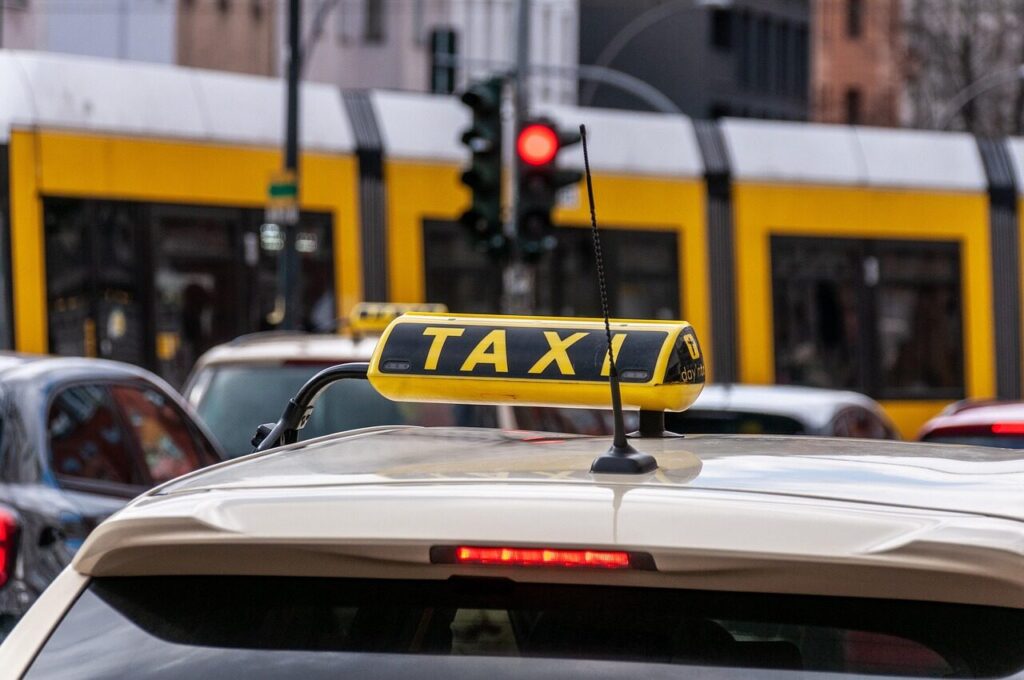
The classic version is a driver who “forgets” the meter, quotes a flat fare after you’re moving, or takes a long route. Airport arrival halls add touts who approach you before you reach the official taxi desk or your app pickup point.
The official advice is stricter than most visitors expect. The FCDO advises against hailing taxis in the street, citing robberies and express kidnappings in unlicensed vehicles, and cars using fraudulent ride-hailing accounts. In practice, that means booking through an app or a prepaid airport counter, and checking that the plate and driver match the booking before you get in.
How that works, including cash options and what to do when a driver asks you to cancel, is covered in our guide to Uber in Brazil. Apps need data at the moment you step out of the airport, so sort out connectivity first with our eSIM and SIM guide.
Street Distractions and “Helpful” Strangers

Distraction scams work because they feel friendly. Someone points out a stain on your shirt, drops something, or starts a loud argument nearby, while a second person goes for your bag or phone. Walk on, keep your hand on your pockets, and don’t stop to let anyone “clean” you.
Tourist areas with heavy souvenir traffic, such as the historic center of Salvador, also have touts who tie a ribbon on your wrist or hand you a “gift” and then ask for money. Say não, obrigado, keep your hands in your pockets and keep walking. Don’t accept anything you haven’t asked for.
Beach vendors are rarely scammers, but prices are often unmarked. Ask the price before you accept a drink, snack or chair, and agree on the total. Disputes after the fact are hard to win.
Phones are the item thieves want most. The FCDO says phone thefts peak in the late afternoon and early evening, and advises against using your phone on the street. Step into a shop or café to check directions.
Nightlife, Dating Apps and Drink Spiking
Brazilians call it Boa Noite, Cinderela: a drink is drugged and the victim is robbed, sometimes emptied out through their banking apps. The State Department warns that this happens especially in Rio, and that criminals target foreigners through dating apps or at bars before drugging and robbing them.
A few habits cut the risk sharply:
- Watch your drink being made, and don’t accept one from someone you just met.
- Meet dating-app matches in a busy public place, and tell a friend where you are.
- Set a low transfer limit in your banking apps before you go out.
- Don’t take your whole wallet. Bring one card and a little cash.
Rio’s neighborhoods vary a lot after dark, so read our neighborhood-by-neighborhood safety guide to Rio before choosing where to go out.
Booking and Deposit Scams
Fake listings are the one scam you can meet before you leave home. They show up as too-cheap apartments, “VIP” party tickets and last-minute tours, each asking for an upfront deposit by Pix or bank transfer. Reservation-deposit scams appear around fake Carnival blocs, fake Airbnbs and fake VIP-box tickets. Pay only through the platform’s own checkout, or with a credit card.
Carnival is the peak for this. Our Rio Carnival guide explains how to buy tickets from legitimate sellers.
A few other warning signs apply across all bookings:
- A seller who moves the conversation off the platform.
- Pressure to pay “in the next hour.”
- A receipt screenshot sent as proof that money arrived. A screenshot proves nothing.
What Differs for US, UK and EU Travelers
The scams are the same for everyone, but your protections and official advice aren’t.
- US citizens: The State Department’s Brazil advisory is the document to read, and enrolling in its STEP program lets the embassy contact you in an emergency. A US credit card usually gives you stronger dispute rights than a debit card. Our visa guide for US citizens covers entry.
- UK citizens: The FCDO publishes its own Brazil advice, including regional risks. Travel insurance can be invalidated if you travel against FCDO advice. Check your policy for theft and card-fraud cover before you pay for flights.
- EU citizens: Follow your own foreign ministry’s advice, which can differ in tone and detail. Card chargeback rules vary by country and card issuer, so ask your bank before you travel. Entry rules are in our entry requirements guide.
If You Get Scammed
Act within minutes, not days. Speed matters most with cards and Pix, because transfers settle almost immediately.
| Situation | First step |
|---|---|
| Overcharged or cloned card | Freeze the card in your banking app, then call the issuer to dispute the charge |
| Wrong Pix sent | Contact your bank at once and report the recipient; keep the screenshot of the transfer |
| Phone stolen | Lock it remotely, call your bank before anyone reaches your apps, then file a police report |
| Drugged or robbed | Get to a hospital or safe place, call the police (190) and contact your embassy or consulate |
Ask the police for a copy of the report (boletim de ocorrência). Insurers and card issuers usually require it. Many Brazilian police stations can take reports quickly, and some cities have dedicated tourist police units.
Planning Your Visit
Preparation takes under an hour and removes most of the risk. Before you fly, load a phone wallet, set low limits on your banking apps, save the number for your bank’s international line, and photograph your passport and insurance policy. Keep one backup card in your luggage, not your day bag.
Once you’re there, the best protection is a few words of Portuguese and a calm “no.” Our 30 Brazil travel tips and the safety section have more planning help.
Frequently Asked Questions
What is the most common scam in Brazil?
Payment fraud is the most common. It includes inflated bills, tampered card terminals, charging in your home currency at a poor rate, and fake or swapped Pix QR codes. Phone theft is also frequent, though it is robbery rather than a scam. Paying by phone wallet and checking every screen before you confirm prevents most of it.
Are street taxis in Brazil safe?
They carry more risk than app rides. The UK FCDO advises against hailing taxis on the street, and the US State Department also warns about robbery and express kidnapping. Book through a ride-hailing app or a prepaid airport counter instead, and match the plate and driver to your booking before you get in.
Is it safe to use ATMs in Brazil?
Yes, if you choose carefully. Use machines inside banks, malls or airports during opening hours, and avoid standalone street ATMs. Never accept help from a stranger. If anyone hovers or the machine looks altered, cancel the transaction and use another one.
Should I pay with Pix as a tourist?
You don’t have to. Cards and phone wallets are accepted nearly everywhere in tourist areas. If you do pay by Pix, check that the recipient name matches the business before confirming. Never pay a code that was sent to you by message, and never send money back to a stranger who says they sent it by mistake.
How do I avoid drink spiking in Brazil?
Watch your drink being prepared and don’t leave it unattended. Avoid drinks offered by people you’ve just met. Meet dating-app matches in busy public places and tell a friend where you are. Keep your banking apps locked behind a strong passcode and low transfer limits in case your phone is taken.
Does travel insurance cover scams in Brazil?
Often only partly. Many policies cover theft and loss, but fraud, drink-related incidents or voluntary payments to a scammer may be excluded or limited. Read the policy wording before you travel, keep the police report, and note that UK travelers should check whether cover is affected by FCDO advice.