


The best 10 days in Brazil itinerary for a first trip is three bases: Rio de Janeiro for four nights, Iguazu Falls for two, and Salvador for three. That gives you city, beach, rainforest, waterfalls and Afro-Brazilian culture, with only two flights between stops. It also leaves room to breathe.
Brazil is far bigger than most visitors expect. Trying to fit in the Amazon, São Paulo and Rio as well would mean spending your trip in airports. This plan keeps the transfers short and the days full but not frantic.
The 10 Days in Brazil Itinerary at a Glance
Here is the whole route on one page. The details for each stop follow below.
| Days | Base | Focus |
|---|---|---|
| 1–4 | Rio de Janeiro | Christ the Redeemer, Sugarloaf, old neighborhoods, beach day |
| 5–6 | Foz do Iguaçu | Brazilian and Argentine sides of Iguazu Falls |
| 7–10 | Salvador | Pelourinho, Bahian food, beach time, departure on day 10 |
That is nine nights on the ground. Day 7 is mostly a travel day, so treat it as a light one.
If you only have a week, drop Salvador and spend the extra nights in Rio and at Iguazu. If you have two weeks, add a coastal stop such as Paraty (see the swaps section below). For other routes and lengths, see our Brazil itineraries collection.
Entry Rules and Timing Before You Book
Your passport decides how much paperwork you face. As of April 10, 2025, U.S. citizens are no longer visa-exempt, and the Brazil eVisa is a multiple-entry visa, valid for 10 years or until your passport expires, and applied for 100% online. Airlines will deny boarding without a valid eVisa. Apply well before you buy non-refundable extras, and use the official e-visa portal. Required documents have been described differently across sources, so check the portal’s current list rather than relying on a blog. Our visa guide for US citizens walks through the process.
UK and EU travelers do not need a visa for tourism. British citizens do not need a visa for holidays to Brazil for stays of up to 90 days, and EU citizens can enter visa-free for tourism and stay up to 90 days. Make sure the border officer stamps your passport, because a missing stamp can cause problems when you leave. Details are in our guide to entry requirements for EU and UK travelers.
All three nationalities should carry a passport with at least six months of validity from your arrival date. Airlines often enforce this strictly even where the official minimum is shorter.
On timing, this route works year-round, but the experience changes. Rio and Salvador are hot and humid in summer, and rain can interrupt beach days in any season. Iguazu is lush and loud when water levels are high. Our month-by-month guide to the best time to visit Brazil will help you pick your window.
Days 1 to 3: Rio de Janeiro’s Big Sights

Rio is the right place to start. The city is dramatic, easy to enjoy, and the sights are close enough together that you can see the main ones in three days. Base yourself in Ipanema, Copacabana or Leblon. They are on the metro, near the beach and comfortable to walk around in the evening.
Day 1: Arrive and Walk the Beach
Whatever time you land, keep day one simple. Check in, then take a walk along the waterfront at Ipanema or Copacabana. Have a coconut water from a kiosk, watch the sun go down, and eat somewhere close to your hotel.
Don’t try to sightsee on a long-haul jet lag. You have the next two days for that.
Day 2: Christ the Redeemer and Old Rio
Go to Christ the Redeemer first thing in the morning, when the air is clearest and the crowds are thinner. The classic route is the Corcovado train from the station at the base of the peak, and trains leave every 20 or 30 minutes. Book a timed ticket in advance on the official Trem do Corcovado site so you aren’t stuck in a queue at the station.
Clouds often cover the summit. If the morning looks socked in, swap this with another day and check the forecast again before you leave. Tickets are tied to a date and slot, so allow for that when booking.
In the afternoon, head to Santa Teresa, a hilltop neighborhood of steep lanes, small galleries and café terraces. Walk down to the tiled Selarón Steps and the Lapa arches. Stay on busy, well-lit streets, and take a ride-hailing car back to your hotel rather than walking after dark.
Day 3: Sugarloaf and Urca
Spend the morning at the Botanical Garden, or walk the quieter Urca waterfront below Sugarloaf. Aim to be at the Sugarloaf cable car for late afternoon. The two-stage ride takes you up to a view over Guanabara Bay, and the light changes beautifully as the sun drops.
Stay for sunset if the sky is clear, then take a car or ride-hail back rather than waiting around in the dark. Dinner can be a churrascaria if you want the full Brazilian meat experience, or a seafood place if you don’t.
Day 4: A Beach Day in Rio
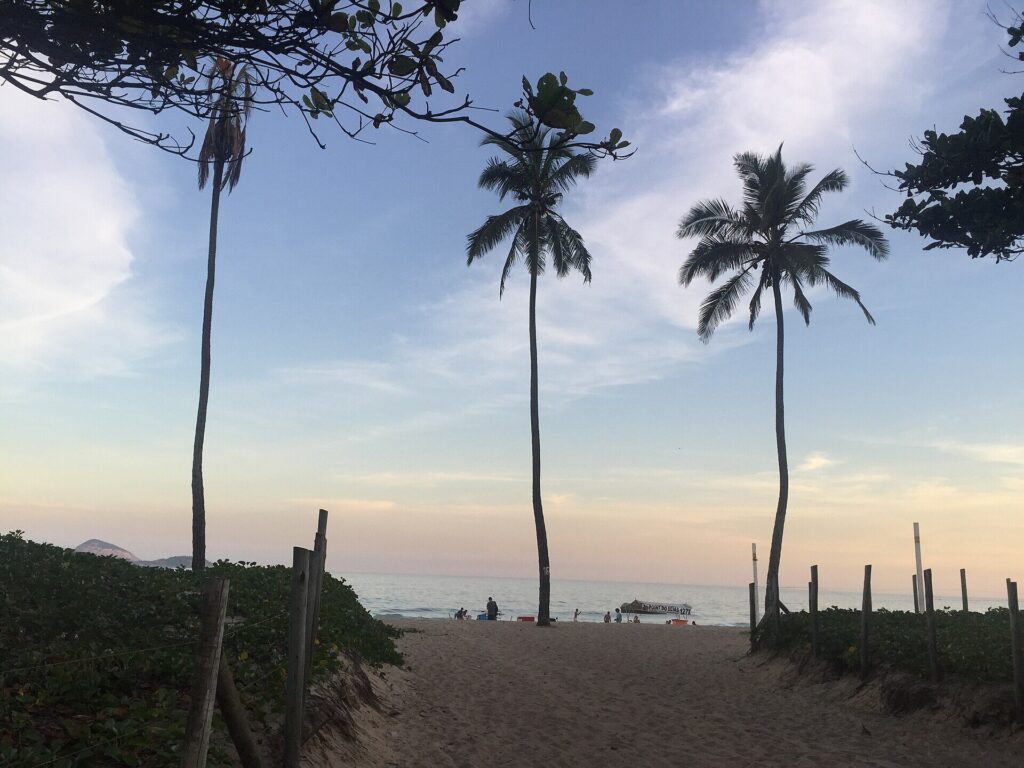
After two days of sightseeing, give yourself a day on the sand. Ipanema is the classic choice, with its lifeguard posts, beach vendors and the Two Brothers mountain at one end. Arpoador rock, at the Copacabana end of Ipanema, is the traditional place to watch the sunset.
Rent a chair and umbrella from a beach vendor, but only carry what you need onto the sand: some cash, your phone, and sunscreen. Leave your passport, spare cards and jewelry at the hotel. Beach theft in Rio is mostly opportunistic, and travelers who carry little give thieves little to take.
If you’d rather not spend the whole day on the beach, a late-morning hike up to a viewpoint such as the Dois Irmãos trail is an option, as long as you go with a guide. Whatever you do, book tomorrow’s flight to Foz do Iguaçu with enough margin before any evening plans, and pack your bags tonight.
Days 5 and 6: Iguazu Falls

The flight from Rio to Foz do Iguaçu is short, and you can be at the falls the same afternoon. Iguazu sits on the border of Brazil and Argentina, and each side gives you something different. You need both to understand the place.
Day 5: The Brazilian Side
The Brazilian side is the panoramic one. You walk along a trail high above the river and get the whole spread of the falls in front of you, with a walkway that reaches out toward the Devil’s Throat. Allow half a day. It’s easy walking, and the park has a bus system between the stops.
Go as early as possible. The first hours are cooler and quieter, and the light is better for photos. If you arrive by afternoon flight, do the park the next morning and use the arrival afternoon for the Parque das Aves, a bird park near the entrance, or a rest.
Day 6: The Argentine Side
The Argentine side is closer and wetter. Its trails put you right next to and above the falls, and a full visit takes most of a day. Both countries run their own national park, so check Argentina’s entry rules for your passport, carry your passport, and ask your hotel or tour operator about the border crossing time.
If you’d rather keep it simple, join a guided tour that handles the crossing and the park transport. Wear shoes with grip, and bring a light rain jacket. You will get wet.
Foz do Iguaçu is a calm town, and you won’t need more than two nights. In the evening, eat a plain, good meal, repack, and sleep early before the next transfer.
Days 7 to 10: Salvador and the Bahian Coast

Salvador is the best counterweight to Rio. It was Brazil’s first capital, and it is the center of Afro-Brazilian culture in the country: the food, the music, the religion and the street life. The pace is slower, the history is more visible, and the city feels very different from the south.
Day 7: Travel Day
Flights from Foz do Iguaçu to Salvador usually connect through a hub such as São Paulo, so budget most of the day. Check schedules before you book your hotels, because the timing decides whether you arrive in time for dinner or only for bed. Choose the earliest departure you can, and keep your valuables and a change of clothes in your carry-on.
When you arrive, settle into a hotel in Barra or Rio Vermelho, or inside the historic center if you want atmosphere. Barra is easier for beach access and evening walks.
Day 8: Pelourinho and the Historic Center
Pelourinho is the old colonial heart of the city, with colored facades, steep cobbled streets and churches covered in gold leaf inside. The São Francisco church is the one most visitors remember. Go in the morning, when it’s cooler and the streets are quiet.
Then take the Lacerda Elevator down to the Lower City and the Mercado Modelo, a craft market by the harbor. Try an acarajé, the fried black-eyed-pea fritter sold by Baianas in white dresses, and a moqueca baiana, a seafood stew with coconut milk and palm oil. Lunch is the best time for both.
Pelourinho is busy during the day and in the early evening. Later at night, stick to lit streets and take a car back to your hotel.
Day 9: Beach Day
Salvador has city beaches, but the best sand is outside the city. Praia do Forte, to the north along the coast, is a laid-back beach town with calm water and a sea turtle conservation project. Allow around an hour or more each way by road, and book a driver or tour rather than renting a car.
If you’d rather stay in town, spend the day at Porto da Barra beach, which has calm, shallow water, and watch the sunset from the lighthouse at Farol da Barra. It’s a social spot where locals and visitors gather every evening.
Day 10: Departure
Plan an easy morning, with one last stroll or a final lunch, before heading to the airport. Leave plenty of time, as traffic in Salvador can be slow. If your international flight leaves from another city, such as Rio or São Paulo, book that connection with a generous buffer.
Swaps and Add-Ons if This Route Isn’t Quite Right
This route covers the classics, but it isn’t the only good one. Here are the swaps we’d suggest, depending on what you want most.
| If you want… | Swap or add | Trade-off |
|---|---|---|
| Colonial coast and quiet beaches | Replace Salvador with Paraty and Ilha Grande, both reachable from Rio by road and boat | Less Afro-Brazilian culture, more nature and calm |
| Rainforest and wildlife | Replace Iguazu with the Amazon, from Manaus | Longer flights and a different climate |
| Big-city food and art | Add São Paulo for a night or two | Takes time from the beaches |
| A slower pace | Cut Salvador, add nights in Rio and Paraty | Fewer regions covered |
Paraty is the most natural swap. It has a well-preserved colonial center with cobbled streets and whitewashed buildings, and boat trips to nearby islands and beaches. Keep one rule in mind: don’t add a fourth base to a 10-day trip. Each extra stop costs you at least half a day.
Budget, Safety and Getting Around
Domestic flights are the main cost beyond hotels, and they are cheaper when booked early. For a realistic breakdown by travel style, see how much a trip to Brazil costs. Fares and hotel rates change often, so check them close to your booking date.
Brazil is a safe trip for most visitors who take sensible precautions, but crime is a real factor. The US State Department has placed Brazil at Level 2: Exercise Increased Caution, and its advisory says that assaults are common, including with sedatives or drugs placed in drinks, especially in Rio. The department also warns against entering favelas, including on guided tours. You can read the current wording on the State Department’s travel advisories page.
In practice, the basics go a long way:
- Use ride-hailing apps or licensed taxis at night rather than walking.
- Keep your phone out of sight on the street and don’t wear flashy jewelry.
- Watch your drink, and never accept one from a stranger.
- Use ATMs inside banks or hotels, in daylight.
- Carry a copy of your passport and leave the original in the hotel safe.
Our guide on whether Brazil is safe for tourists goes deeper on each city.
For getting around, you’ll use flights between the three bases and the metro, ride-hailing or taxis within the cities. Book flights with checked bags in mind, since domestic fares can exclude them and weight limits can be tighter than on international routes.
Planning Your Visit
Start with the entry rules, because a US visa can take time to arrive. Then book your international flights into Rio, and your domestic flights soon after, because the Foz to Salvador connection is the one with the least flexibility.
Next, reserve your Christ the Redeemer slot and an Iguazu tour or park transport. Keep your Rio and Salvador hotels refundable until your flights are firm. Pack light, with layers for Iguazu, a rain jacket, sun protection, and shoes that can handle wet stone.
Finally, leave a little slack. A rainy morning in Rio or a delayed flight to Salvador won’t ruin the trip if you’ve built in a flexible afternoon.
Frequently Asked Questions
Is 10 days enough for a first trip to Brazil?
Yes, if you stick to two or three bases. Ten days covers Rio de Janeiro, Iguazu Falls and one more region such as Salvador without feeling rushed. Brazil is huge, so you won’t see everything, but this route gives a balanced first impression and leaves a reason to return.
Do I need a visa for Brazil for a 10-day trip?
It depends on your passport. US citizens have needed an e-visa since April 10, 2025, applied for online before travel. UK and EU citizens can enter visa-free for tourism for up to 90 days. All travelers should carry a passport valid for at least six months from arrival.
Which cities should I visit in Brazil in 10 days?
We recommend Rio de Janeiro, Foz do Iguaçu for Iguazu Falls, and Salvador. Together they cover city sights, beaches, waterfalls and Afro-Brazilian culture, with only two flights. If you prefer a quieter pace, swap Salvador for Paraty and Ilha Grande, which you can reach from Rio.
How many days do I need at Iguazu Falls?
Two nights is ideal. That allows one half-day on the Brazilian side for panoramic views, and one full day on the Argentine side for trails closer to the water. If you are short on time, one night and a single long day can work, but it feels rushed.
Is it safe to follow this itinerary on my own?
Most visitors do it without problems if they take standard precautions. Use ride-hailing at night, avoid displaying valuables, watch your drinks, and stay out of favelas, even on tours. Rio and Salvador both call for more caution after dark than during the day.
Should I book Brazil domestic flights in advance?
Yes. Fares usually rise as the date approaches, and the Foz do Iguaçu to Salvador connection is the least flexible part of this route. Check baggage allowances too, since some fares exclude checked bags. Book flights before non-refundable hotels or tours.