


The best plan for one week in Brazil is simple: four nights in Rio de Janeiro, two nights at Iguazu Falls, and one internal flight between them. That route gives you city, beaches, mountains and the country’s most famous waterfalls without spending half your trip in airports.
Seven days sounds generous until you count the flights. Once you subtract the long-haul arrival and departure, you have about five full days on the ground. This guide shows how to use them, what to book ahead, and what to change if Rio and Iguazu are not your style.
Why Rio Plus Iguazu Works for One Week in Brazil

Brazil is bigger than the contiguous United States, and the major sights are far apart. Trying to cover Rio, the Amazon, Salvador and Iguazu in seven days means four or five flights and very little time outside departure lounges. Two bases is the sweet spot.
Rio gives you the classic mix: city beaches, forested peaks, samba bars and good food in one compact area. Iguazu gives you a completely different landscape, a huge system of waterfalls straddling the Brazil-Argentina border. The two are connected by a direct flight of roughly two hours, so you lose half a day at most.
This route also works well for first-timers because both places are easy to do independently or with a guide. If you want a little more breathing room, our 10-day itinerary for first-timers uses the same backbone with extra time at each stop.
Before You Book: Entry Rules and Timing
Entry rules depend on your passport, so check this first. Americans need a visa; most Europeans do not.
US citizens
The visa requirement for US citizens took effect on April 10, 2025. Tourists apply online for an e-visa before flying, and airlines can refuse boarding without one. The official application runs through the Brazilian e-visa portal. An approved e-visa is also needed for airside transit through Brazilian airports.
Apply several weeks before departure rather than days. Processing times vary, and a rushed application is the most common way a one-week trip falls apart before it starts. Our guide to Brazil visa requirements for US citizens covers documents and the application step by step.
UK and EU citizens
UK and EU passport holders can generally visit Brazil for tourism without a visa for short stays. You still need a passport with enough validity left and proof of onward travel may be requested. Rules can change, so check the details in our entry requirements guide for EU and UK travelers before you book.
When to go
Rio is hot and humid in the southern summer and milder and drier in the winter months. Iguazu has no dry season to speak of, but March to May and August to September combine good water levels, comfortable temperatures and smaller crowds. Our month-by-month guide to the best time to visit Brazil helps you weigh crowds, weather and prices.
The 7-Day Itinerary at a Glance
| Day | Where | Main plan |
|---|---|---|
| 1 | Rio | Arrive, check in, easy walk and sunset by the beach |
| 2 | Rio | Christ the Redeemer in the morning, Santa Teresa and Lapa after |
| 3 | Rio | Downtown museums, Urca and Sugarloaf at sunset |
| 4 | Rio | Flexible day: beach, botanical garden or a slow neighborhood day |
| 5 | Foz do Iguaçu | Morning flight, Brazilian side of the falls in the afternoon |
| 6 | Foz do Iguaçu | Argentine side, or boat ride and bird park on the Brazil side |
| 7 | Departure | Fly home via Rio or São Paulo with a generous buffer |
Days 1 to 4: Rio de Janeiro
Base yourself in Ipanema, Leblon or Copacabana. All three have beach access, restaurants within walking distance and metro stations, which keeps your logistics easy. Ipanema is the most relaxed choice for a first visit.
Day 1: Arrive and ease in
Most flights from the US and Europe land in the morning or early afternoon at Galeão (GIG). Take a licensed airport taxi or a ride-hailing car to your hotel, drop your bags, and resist the urge to plan anything ambitious. Jet lag plus Rio’s heat is a rough combination.
Walk the Ipanema waterfront, grab a fresh coconut or an açaí bowl, and head to Arpoador rock for sunset. Locals applaud when the sun drops, and the crowd gives the place a cheerful, communal feel. Have dinner nearby and go to bed early. If your trip lands on a Sunday, the craft fair in Praça General Osório is a pleasant way to fill the afternoon.
Day 2: Christ the Redeemer, Santa Teresa and Lapa
Do Christ the Redeemer first thing. Mornings tend to be clearer and less crowded, and cloud often builds up on the peak later in the day. The classic way up is the Corcovado cog train, which takes about 20 minutes through Tijuca Forest. Buy your slot on the official Corcovado train site, because trains can sell out two to three days ahead in busy periods. Official vans are the alternative if the train is full.
After lunch, head to Santa Teresa, the hilltop neighborhood of artists’ studios and cafés. Then walk down to the Selarón steps, a staircase covered in tiles from around the world, and on into Lapa under the white arches of the old aqueduct. Lapa fills up with live music at night, so go with a group and take a ride-hailing car back rather than walking.
Day 3: Downtown, Urca and Sugarloaf
Spend the morning in the old center and port area. The Museum of Tomorrow and the nearby waterfront murals are easy to combine, and the colonial-era Candelária church and Praça XV are a short ride away. Weekday mornings are calmer than weekends.
Take lunch at a “por quilo” restaurant, where you build a plate and pay by weight. It is fast, cheap and a good introduction to everyday Brazilian food. Then go to Urca for the Sugarloaf cable car, which runs in two stages via Morro da Urca. Time it so you reach the top about an hour before sunset: you get daylight, golden hour and city lights in one visit.
Day 4: A flexible day
Treat this as your buffer. If the weather was cloudy on Day 2 or 3, swap the plans around. If everything went smoothly, pick one of these:
- Beach day: Ipanema, Leblon or Copacabana, with chairs and umbrellas rented from the beach vendors.
- Green Rio: The Jardim Botânico and Parque Lage sit close together and shade you from the heat.
- Feijoada afternoon: The black bean and pork stew is traditionally a Saturday lunch. Ask your hotel for a good local spot.
Pack the evening for flight prep: the next morning you leave Rio for Iguazu, so lay out documents and charge your phone.
Days 5 and 6: Iguazu Falls
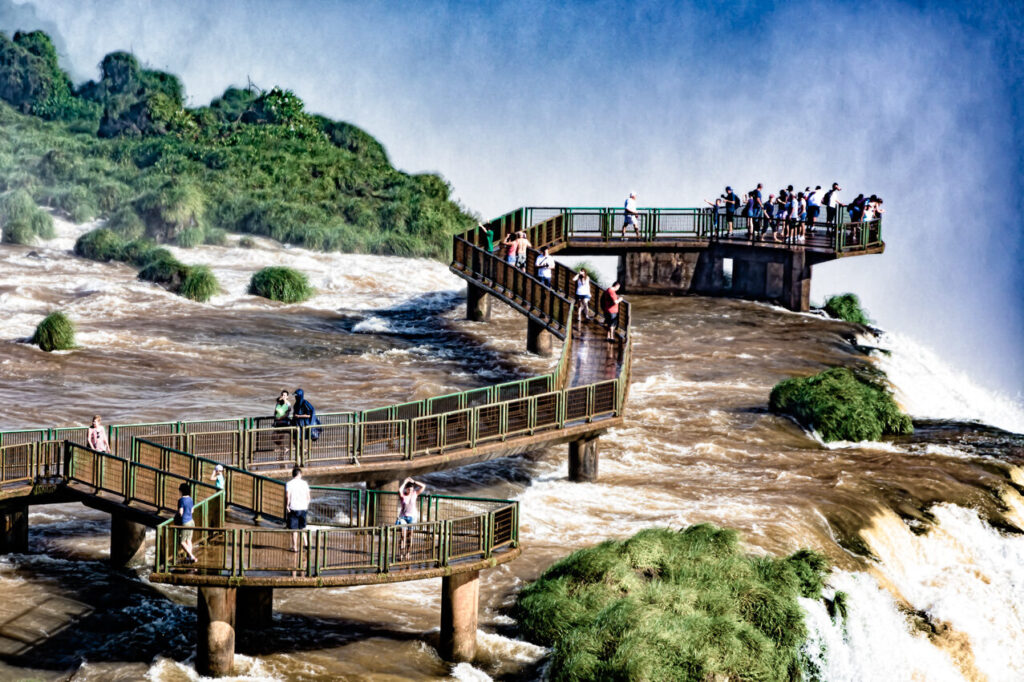
Fly into Foz do Iguaçu airport on the Brazilian side. It is a short drive to the national park and to the town of Foz, where most visitors stay. Book the earliest sensible flight on Day 5 so you have the afternoon free.
Day 5: The Brazilian side
The Brazilian park is the panoramic one: you walk a trail that opens onto wide views of the whole system, finishing on a walkway close to the water. The main route usually takes two to three hours. Entry opens at 9:00 a.m. on weekdays and 8:30 a.m. on weekends, with last entry at 4:00 p.m. and exit by 5:30 p.m. Hours change, so double-check before you go.
Tickets are sold with timed entry periods, so buy ahead and pick a slot you can realistically reach after landing. If your flight arrives around noon, a mid-afternoon slot works. Anything later is risky.
Day 6: Argentine side or more Brazil
You have two good options for your last full day.
- Argentine side: This is a closer, wetter experience with more trails and the famous Devil’s Throat viewpoint. Plan five to eight hours in the park. You cross a border, so bring your passport and check Argentina’s entry rules for your nationality. Each side has its own park and ticket, with no single pass covering both.
- Stay in Brazil: Take a boat ride up to the base of the falls and visit the bird park next to the national park. It is a slower day with no border formalities.
Most first-timers who have the energy choose the Argentine side. You can book it independently or as a guided day trip from Foz.
Day 7: Heading Home
There are very few direct flights from Foz to Europe or the US, so you will connect through São Paulo or Rio. Aim for a daytime flight out of Foz and a late-evening international departure, with at least three to four hours between the two. Buying the whole journey as a single ticket protects you if the first leg runs late.
If you cannot find a comfortable connection, spend one more night in Rio or São Paulo near the international airport. That is better than rushing and missing your flight home.
Swaps if Rio and Iguazu Do Not Fit
The Rio and Iguazu route suits most first-timers, but it is not the only sensible one. These three also work in seven days.
| Option | Route | Best for | Trade-off |
|---|---|---|---|
| Rio and Salvador | 4 nights Rio, 3 nights Salvador | Afro-Brazilian culture, music, food, colonial architecture | No big natural wonder; hotter and more humid |
| Rio and Paraty | 3 nights Rio, 3 nights Paraty or Ilha Grande | Beaches, islands, slow pace | Road or boat transfers; less variety |
| Rio only | 6 nights in Rio with day trips | Easy pacing, no internal flights | You miss Iguazu entirely |
Salvador is the strongest alternative if you care more about culture than scenery. Its old town, Pelourinho, is a World Heritage area with colonial buildings, drumming groups and Bahian cooking that feels very different from Rio. The flight from Rio takes roughly two and a half hours.
If you have two full weeks, you can combine Rio, Iguazu, Salvador and an Amazon stay in one trip. For a one-week visit, though, it is better to pick two bases and do them properly.
Flights, Luggage and Getting Around
Book the Rio to Foz flight early, since limited daily schedules mean the best times fill up. Check the baggage allowance on domestic fares. Some budget fares include only a small carry-on, and checked bags can cost extra.
In Rio, the metro is quick, clean and cheap for Ipanema, Copacabana and downtown. Use ride-hailing apps for nights out and for places not near a station. In Foz, taxis, ride-hailing and hotel transfers all work for the national park. Pack light for the whole trip, because you will unpack and repack twice.
Day-to-day costs vary widely with hotel choice and tours. Our breakdown of trip costs in Brazil will help you set a realistic budget.
Staying Safe on a Short Trip
Most visitors have trouble-free trips, but Brazil needs sensible habits. The US State Department’s advisory for Brazil was at Level 2, “Exercise Increased Caution,” after its late-August 2026 update. Check the State Department advisories page for the current wording before you fly. UK travelers should check FCDO guidance in the same way.
A few habits cover most of the risk in Rio:
- Keep your phone out of sight on the street and carry only the cash and cards you need.
- Watch your drink. The advisory specifically warns that assaults involving drugged drinks are common, especially in Rio.
- Skip informal settlements, even on guided tours; the advisory says neither tour companies nor police can guarantee your safety.
- Use ride-hailing apps after dark and avoid empty beach stretches at night.
- Use ATMs inside banks or hotels, in daylight.
The border-area warnings in the advisory exclude Foz do Iguaçu National Park, so the falls are not affected. For more, read our honest guide to safety in Brazil.
Planning Your Visit
Work backward from your dates: sort out the visa first if you hold a US passport, then book your international flights, then the Rio to Foz flight, and finally the timed tickets for Corcovado, Sugarloaf and the Brazilian side of Iguazu. Leave Day 4 and Day 6 as flexible as you can, since weather decides more in Brazil than most itineraries admit.
If seven days feels too tight once you map it out, add a night in each place before you add a new destination. You can also browse more routes in our itineraries section.
Frequently Asked Questions
Is one week in Brazil enough?
One week is enough for a good first taste if you pick two bases. Rio de Janeiro plus Iguazu Falls works best, with one internal flight. You will not see the Amazon, Salvador or the Pantanal, but you will see Brazil’s most famous city and its biggest waterfalls without constant travel.
Do I need a visa for a one-week trip to Brazil?
It depends on your passport. US citizens have needed an e-visa since April 10, 2025, and must get it before boarding. UK and EU citizens can generally visit for tourism without a visa. Rules change, so confirm with the official portal or your government’s travel page before booking.
Is Rio or Iguazu better if I can only pick one?
Pick Rio if you want city life, beaches and food in one place, since a week there is easy to fill. Choose Iguazu only if waterfalls are your main goal, but plan to add another stop, because two or three days is plenty at the falls.
How do I get from Rio to Iguazu Falls?
Fly from Rio to Foz do Iguaçu airport, which takes roughly two hours on a direct flight. The airport is a short drive from the Brazilian national park and from town. Overland, the journey takes more than a day, so it is not realistic in one week.
Should I visit the Brazilian or Argentine side of Iguazu Falls?
See both if you have two days. The Brazilian side gives panoramic views in two to three hours, while the Argentine side offers more trails and takes most of a day. Each has its own ticket, and the Argentine side requires a border crossing with your passport.
Can I add Salvador or the Amazon to a seven-day trip?
You can swap Iguazu for Salvador, which suits culture lovers. Adding a third base, or the Amazon, makes the week rushed because flights eat whole days. For three or more destinations, plan on ten days to two weeks.