


Copacabana vs Ipanema: The Short Answer
For a pure beach day, Ipanema is the better beach. It is calmer, more compact, better organized by section, and it has the best sunset spot in Rio at its eastern end. Copacabana is the better base: it has more hotels at more price levels, easier transport, and an energy that runs from early morning to late night.
Both are free, public and open to everyone, and they sit only a short walk or metro ride apart. Most visitors end up on both. The real question is where to sleep and where to spend your sand time.

The two beaches belong to the same stretch of Rio’s Zona Sul (South Zone), but they feel like different neighborhoods. Copacabana is long, urban and mixed. Ipanema is shorter, more residential and more polished. Below, we break down what that means in practice.
Copacabana and Ipanema at a Glance
| Factor | Copacabana | Ipanema |
|---|---|---|
| Length | Roughly 4 km (about 2.5 miles), from Leme to the fort | Roughly 2 km (about 1.2 miles), from Arpoador to the Leblon canal |
| Atmosphere | Busy, democratic, high-rise urban | Relaxed, stylish, residential |
| Best for | Value, variety, big events, first-night base | Beach days, sunsets, cafés, shopping |
| Sunset | Pleasant, but buildings block the sun early | Excellent, especially from Arpoador |
| Accommodation | Widest range, from hostels to grand hotels | Fewer rooms, generally higher prices |
| Nightlife | Mixed: old-school bars, clubs, late kiosks | Quieter: restaurants and bars, with more of a dinner crowd |
| Surfing | Possible, mostly toward the fort end | Stronger surf scene, especially around Arpoador |
The Sand, the Water and the Waves
Both beaches face the open Atlantic, so the water is the same ocean and the same cool, sometimes rough conditions. Neither is a calm bay. Waves and currents change with the swell, and lifeguards use flags to mark safer and riskier areas.
Copacabana curves in a long, wide arc, and the promenade runs the full length beside it. The wave-patterned sidewalk designed by Roberto Burle Marx is one of Rio’s best-known images. The beach is divided by numbered lifeguard posts, from Posto 2 near Leme to Posto 6 by the fort, and locals use those numbers to say where they are.
Ipanema is shorter and feels more contained. Its posts run from 8 to 10, and the mountains of Dois Irmãos frame the western end, giving the beach a more dramatic backdrop than Copacabana’s wall of apartment blocks. Many visitors find it easier to settle into one spot and stay there all afternoon.
A practical point for both: after heavy rain, water quality at Rio’s city beaches can drop. Locals tend to skip swimming for a day or two after a downpour. If the weather has been wet, a walk and a coconut water may be a better plan than a swim.
Which one is better for swimming?
Neither has a clear advantage for casual swimming. Pick a staffed section near a lifeguard post, enter where other people are in the water, and stay out of any area where the waves break hard on the shore. Rip currents can form at either beach, so do not swim alone far from the sand.
Surfers favor Arpoador and the Ipanema end, while Copacabana’s surf is less of a draw. If you want to watch rather than join, Arpoador is a good vantage point.
Who You Will Share the Beach With
Copacabana draws the widest cross-section of Rio. Families from across the city, tourists, vendors, fitness groups, retirees and footvolley players all share the same sand. It can feel crowded and loud on weekends, but also very alive, and the whole stretch is easy to understand at a glance.
Ipanema is more segmented, and locals read the beach by the numbered posts. Around Rua Farme de Amoedo you will find the area most associated with the LGBTQ+ community, welcoming and relaxed. Other sections draw families, young groups, surfers or sports players. Those social maps are informal, so if one section is not your scene, walk 200 meters and you will find another.
On weekends, both beaches fill up from late morning, with Ipanema’s sand sometimes packed shoulder to shoulder in its most popular sections. For more space, go on a weekday or arrive early.
Sunset: Why Ipanema Wins
Ipanema has the better sunset because of Arpoador, the rocky point at its eastern end. People climb the rocks in the late afternoon, wait for the sun to drop behind the Dois Irmãos peaks, and often applaud when it disappears. It is a local tradition and a genuine highlight, not just a tourist ritual.
Arrive well before sunset to claim a spot on the rock, and bring a layer in cooler months because the wind picks up once the sun goes down. The pathway down from Arpoador is dim after dark, so plan to leave with other people rather than alone.
Copacabana’s sunsets are fine, but the high-rises along the beachfront shade the sand early. The best view on that side is from the fort at the southern end. If you want a different kind of sunset altogether, our guide to Sugarloaf Mountain and its sunset timing covers the cable car option.
Food, Drinks and Beach Vendors
You do not need to bring anything to either beach. Vendors walk the sand all day selling water, soft drinks, cold beer, caipirinhas, grilled cheese on a stick (queijo coalho), crunchy Globo biscuits, sunglasses, sarongs and swimwear. Beachfront kiosks offer a more settled alternative with seating, restrooms and a menu.
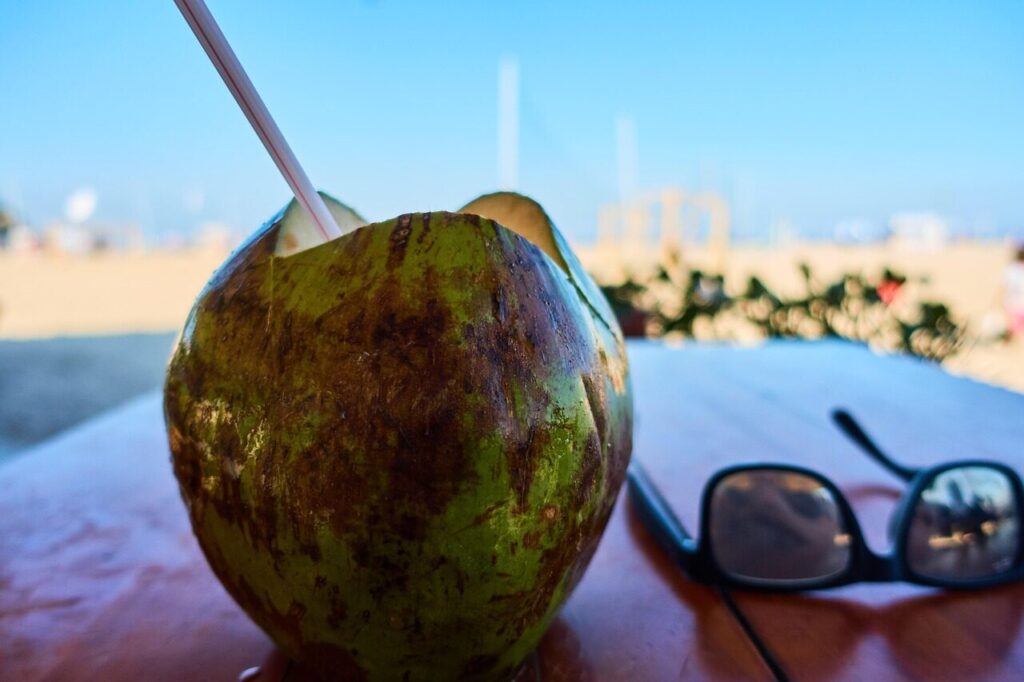
Coconut water served in the shell is the classic order, and it is sold at kiosks at both beaches. Açaí bowls, sandwiches and simple plates are easy to find too. Kiosk prices are usually higher than in a regular café a block or two inland, which is the cost of the location and the chair.
Some practical habits help:
- If you rent a chair or umbrella from a vendor or kiosk, confirm what is included before you sit down.
- Carry small bills. Many kiosks take cards, but individual vendors often prefer cash or Pix, Brazil’s instant payment system.
- Keep sunscreen handy. The sun is strong even on cloudy days, and the sand reflects it.
- Bring your own bottle for the walk. Vendors are everywhere, but a reusable bottle saves you from buying the same drink all day.
Behind the beach, Ipanema leans toward polished cafés, restaurants and boutiques, especially around Rua Visconde de Pirajá and the streets near Praça General Osório. On Sundays, the Hippie Fair in that square sells crafts, jewelry and art. Copacabana’s backstreets are more mixed, with traditional lunch spots, bakeries, bars and neighborhood restaurants that cater to locals as much as visitors.
Where to Stay: Copacabana vs Ipanema
This is where Copacabana pulls ahead. It has far more accommodation, from hostels and simple apartments to historic luxury hotels. Because supply is larger, you are more likely to find something that fits a modest budget, and rooms near the beach are easier to book.
Ipanema has fewer hotels and generally higher prices, but it rewards the extra cost with a calmer feel, quieter streets at night and a very walkable layout. Many travelers choose it for a longer stay or a more refined trip. Leblon, just beyond the Ipanema canal, is even quieter and more expensive.
Transport is good in both. Copacabana has metro stations at Cardeal Arcoverde and Siqueira Campos, and Ipanema has General Osório and Nossa Senhora da Paz. From either, you can reach downtown, Botafogo and the Christ the Redeemer connections without a long taxi ride. Our full breakdown of where to stay in Rio de Janeiro compares these areas with others such as Botafogo and Santa Teresa.
If you want a cheaper stay but still want Ipanema’s atmosphere, consider the quieter blocks of Copacabana near the Ipanema end, around the fort. From there, Arpoador is a short walk.
Safety and Common Sense
Both beaches are heavily used and well patrolled during the day, and most visitors have no problems. Petty theft is the main risk: phones, cameras, jewelry and bags left unattended on the sand. Bring only what you need, keep your phone in a zipped pocket or a small bag, and never leave belongings alone while you swim. If you are two or more, take turns watching the gear.
After dark, Copacabana’s beach and the side streets feel less comfortable than the main avenue, which stays lit and busy. Ipanema’s quieter streets are generally calmer, but the usual city caution applies. Our neighborhood-by-neighborhood safety guide for Rio goes into more detail on where to be careful and when.
Safety advice does not change by passport. US, UK and EU travelers face the same practical risks on the beach, so the same habits apply to everyone.
Nights, Events and the Big Occasions
Copacabana is Rio’s stage for large public gatherings. New Year’s Eve here draws an enormous crowd dressed in white, with music, fireworks and an atmosphere that is hard to compare with any other beach in Brazil. If you are planning around that night, book far ahead and expect crowds and limited movement.
Ipanema has its own tradition at Carnival time with the Banda de Ipanema, one of the city’s best-known street parties. Both neighborhoods host blocos, the informal street parades, during Carnival season, so check local schedules if the timing suits you.
On a regular evening, Copacabana feels more mixed and louder, with the promenade, kiosks and late bars. Ipanema is calmer, with a dinner-and-drinks pace that suits couples and small groups. If you want the party, stay near Copacabana. If you want to sleep well, Ipanema is easier.
Doing Both in One Day
You do not have to choose. The two beaches connect on foot, and a walk from the fort at the southern end of Copacabana to Arpoador takes around 15 minutes. The fort itself is worth a stop for the views and a coffee, and it marks a natural dividing point between the two beaches.
A simple plan that works well:
- Start early on Copacabana for a walk along the promenade while it is cooler and quieter.
- Stop at the fort for a coffee and the view back along the whole curve of the beach.
- Walk on to Arpoador and then into Ipanema for lunch and a few hours on the sand.
- Return to Arpoador before sunset and stay until the light fades.
If you only have time for one beach, make it Ipanema for sand time or Copacabana for atmosphere, and add the other as an evening walk.
Which Beach Is Right for You?
- First-time visitors on a short trip: Stay in Copacabana for options and easy transport, then spend your best beach hours in Ipanema.
- Couples: Ipanema, for the calmer streets, sunsets and restaurants.
- Budget travelers: Copacabana, where hostels, apartments and simpler hotels are easier to find.
- Families: Either works. Copacabana has more space and a long promenade for children to walk, while Ipanema has more shaded cafés nearby.
- Surfers and watchers: Ipanema and Arpoador.
- People who want events and energy: Copacabana.
Planning Your Visit
Rio’s beach season runs through the hot, humid months of the Southern Hemisphere summer, roughly December to March, and the sand is busiest then. The cooler months are often sunny and less crowded, though the water is colder. Our month-by-month guide to the best time to visit Brazil explains how the seasons compare.
Plan your beach time for mornings or late afternoons, when the sun is gentler. Midday is the hottest and most crowded stretch, which makes it a good time for lunch in the shade.
For ideas beyond the sand, see our list of the best things to do in Rio de Janeiro. If this is your first time in the city, the Rio de Janeiro travel guide for first-time visitors covers the basics of getting around and organizing your days.
Frequently Asked Questions
Is Copacabana or Ipanema safer?
Neither is dramatically safer during the day, and both are well used and patrolled. At night, Ipanema’s streets are generally quieter and calmer, while Copacabana’s side streets and beach after dark call for more caution. Keep valuables to a minimum, stay on lit main streets and avoid walking on the sand alone at night.
Can you walk from Copacabana to Ipanema?
Yes. From the fort at the end of Copacabana to Arpoador and Ipanema is roughly a 15-minute walk along the waterfront. If you are staying in the middle of Copacabana, allow longer, or take the metro from Cardeal Arcoverde or Siqueira Campos to Ipanema and walk from there.
Which beach is better for a first trip to Rio?
Use both. Copacabana is the easier base because of its range of hotels, restaurants and metro access. Ipanema is the nicer place to spend a beach afternoon and watch the sunset. If you must pick one hotel area, choose by budget and nightlife preference rather than by the beach itself.
Do I need to rent a chair or umbrella?
No, you can sit on a towel or a beach mat for free. Chairs and umbrellas are available from vendors and kiosks and are convenient for a long day, especially in strong sun. Ask what the rental includes before you sit, and expect to buy a drink or two if you use a kiosk’s setup.
Which beach has the better sunset?
Ipanema, thanks to Arpoador. The rock at its eastern end gives an open view of the sun dropping behind the Dois Irmãos peaks, and it is a local ritual. Copacabana’s sunset is shaded early by high-rises, though the fort at the southern end gives a better viewpoint.