

Salvador is the best place in Brazil to understand how African, Indigenous and Portuguese traditions fused into a single culture. This salvador bahia travel guide covers what to see, what to eat, where to sleep and how to move around a city that is hilly, hot and very rewarding. Most visitors are happy with three full days, plus extra time if they want beaches or islands.
Salvador is not a city of famous monuments the way Rio is. Its pull is cultural: Candomblé, capoeira, drumming, the food and the colonial center. It suits travelers who like walking, eating and talking to people more than ticking off sights.
Salvador Bahia Travel Guide: How Many Days You Need
Two days covers the historic center and a couple of meals, but it feels rushed. Three days lets you add the lower city, a church or museum or two, and a sunset on the water. Four or five days works if you want a day trip to an island or a beach town.
A simple three-day shape looks like this:
- Day one: Pelourinho and the Upper City on foot, then the Elevador Lacerda down to the Mercado Modelo and the waterfront.
- Day two: Bonfim church and the Itapagipe peninsula in the morning, then Rio Vermelho for dinner and music.
- Day three: Barra for the fort, the lighthouse and the sunset, with beach time at Porto da Barra.
If you are building a longer trip, Salvador usually slots in after Rio and Iguazu. Our two-week Brazil itinerary shows how it fits with the rest of the country.
Pelourinho and the Historic Center

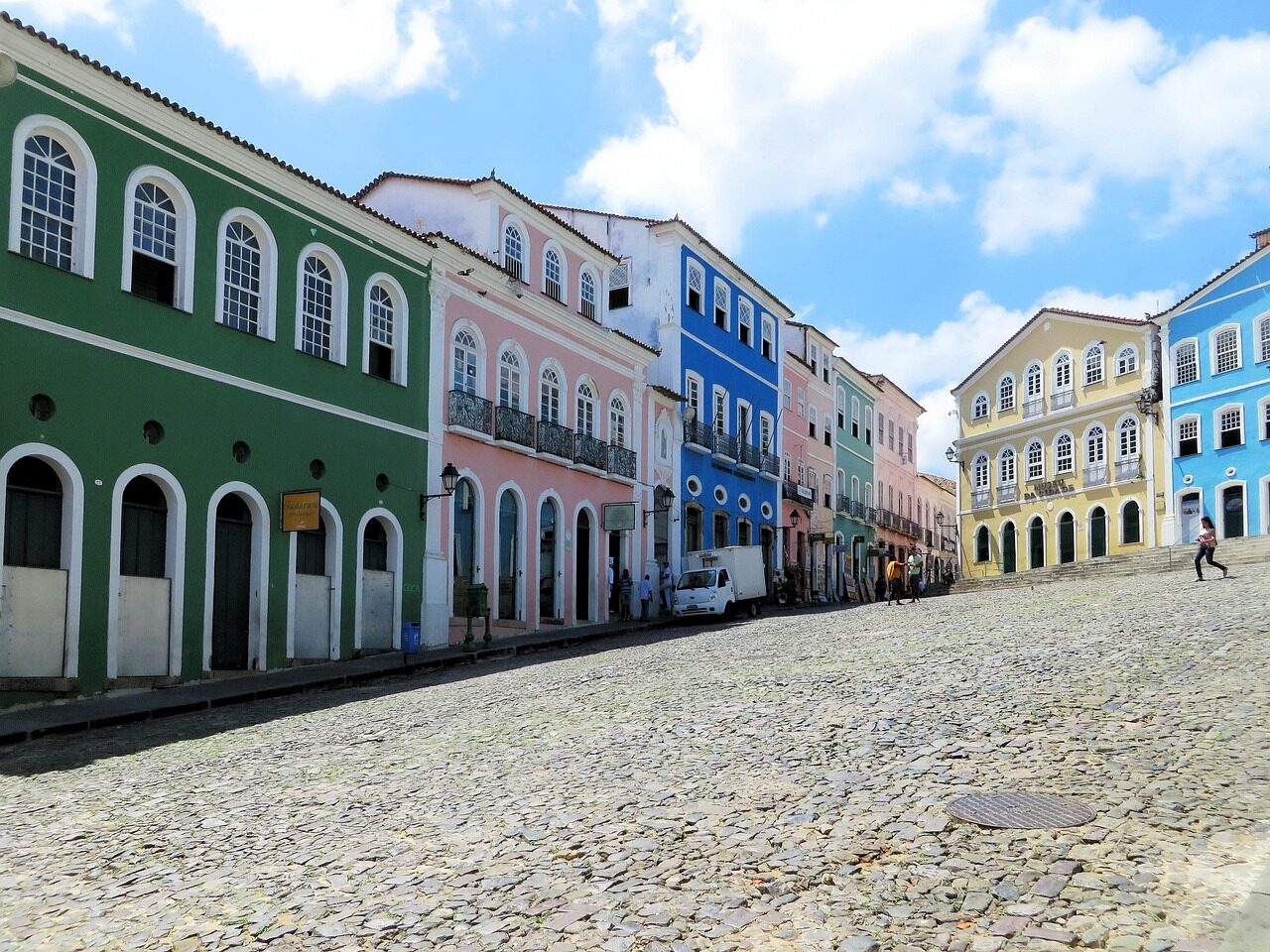
Salvador was Brazil’s first capital, and the old Upper City (Cidade Alta) still shows it. The historic center, known as Pelourinho, is a UNESCO World Heritage site made up of pastel colonial houses, steep cobbled lanes and a large number of churches. Allow at least half a day, and come back in the evening when the squares fill with music.
Start at Terreiro de Jesus, the main square, and walk toward Largo do Pelourinho. The key stops are close together:
- Igreja e Convento de São Francisco: the interior is covered in gilded carving and is the one church you should not skip. Notice the tile panels in the cloister.
- Igreja do Rosário dos Pretos: a church built and used by Black brotherhoods, which says a lot about the city’s history.
- Museu Afro-Brasileiro: on Terreiro de Jesus, it explains African influence on Bahian religion, art and daily life.
- Fundação Casa de Jorge Amado: a small museum about the novelist whose books made Bahia famous worldwide.
Churches generally expect covered shoulders and knees, and some close for lunch or on certain days. Opening hours change, so check locally on the day.
Expect people to approach you in the squares. Women dressed in the traditional white baiana outfit will offer photos for a tip, and others may tie a colored ribbon around your wrist and then ask for money. A polite “não, obrigado” and a smile is enough. If you want a photo with a baiana, agree to the tip first and carry small notes.
The streets are steep and the stones are uneven and slippery after rain. Wear shoes with grip, not flip-flops.
The Lower City, Bonfim and the Waterfront
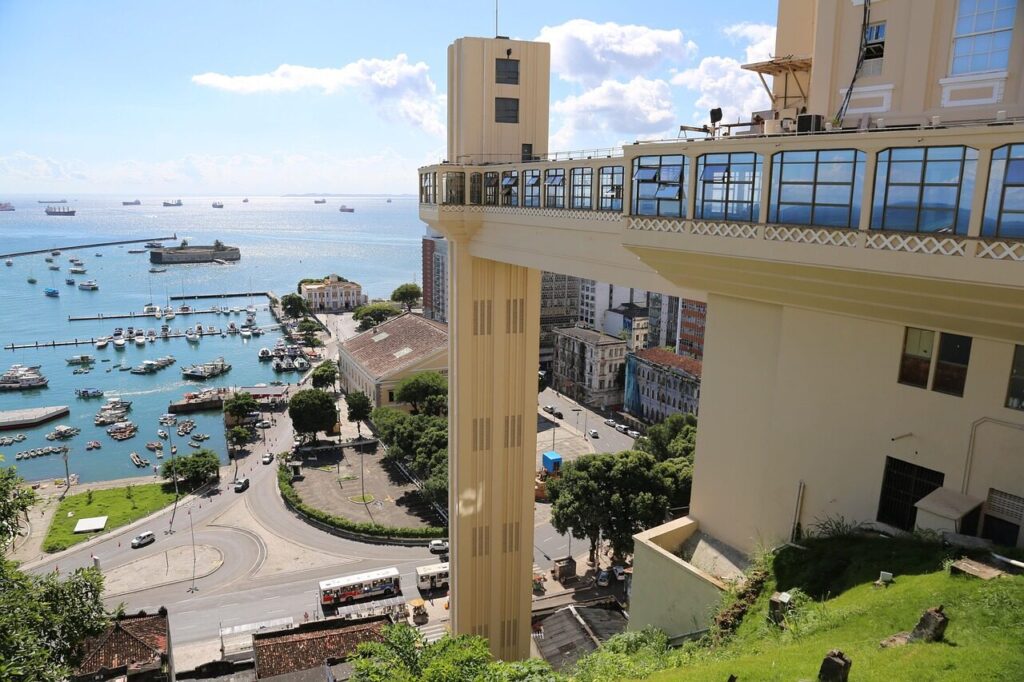
The Elevador Lacerda links the Upper City to the Lower City (Cidade Baixa) in under a minute, with a view over the Bay of All Saints. It is a working commuter lift, cheap and quick, and it saves you a steep climb. A funicular, the Plano Inclinado Gonçalves, does a similar job a short walk away.
At the bottom is the Mercado Modelo, a craft market in a former customs building. It is convenient for souvenirs such as hammocks, berimbau instruments, ribbons, cachaça and leather goods. Prices are generally higher than elsewhere and haggling is normal and friendly. If you want to see crafts being made, ask at your hotel for smaller workshops.
North along the waterfront, the Solar do Unhão houses the Museu de Arte Moderna da Bahia. The grounds face the bay and make a good late-afternoon stop.
The Igreja do Nosso Senhor do Bonfim sits on the Itapagipe peninsula, a short ride from the center. Bahians tie a ribbon around their wrist with three knots and make three wishes, and the church is the focus of an annual washing ceremony in January. Nearby Ribeira has an old-fashioned ice cream parlor and a calm waterfront promenade. Boa Viagem and the point at Humaitá are popular for sunset.
What to Eat in Salvador

Bahian cooking is built on dendê (palm oil), coconut milk, shrimp, peppers and cilantro. It is the most distinctive regional food in Brazil, and it comes straight from West Africa. If you only eat one thing, make it an acarajé from a baiana street stall. The craft of the baianas de acarajé is protected as national cultural heritage.
Acarajé is a black-eyed pea fritter fried in dendê, split open and filled with vatapá, caruru, dried shrimp and green tomato salad. Ask for quente if you want it with hot pepper or frio if you do not. The steamed version wrapped in banana leaf is called abará.
Other dishes to look for:
- Moqueca baiana: fish or shrimp stew with coconut milk, dendê, tomato and peppers, served with rice, farofa and pirão. It differs from the Espírito Santo version, which skips the dendê and coconut milk.
- Bobó de camarão: shrimp in a creamy cassava purée.
- Caruru and vatapá: okra and shrimp or bread-and-fish pastes, often served as sides.
- Sweets: cocada (coconut candy), quindim, and bolinho de estudante, a fried tapioca snack dusted with cinnamon and sugar.
Dendê is rich and can be hard on an unaccustomed stomach, so start with small portions. Vegetarians should ask carefully, because dried shrimp and fish stock show up in unexpected places. Restaurants often add a service charge to the bill, so check before adding a tip.
For seafood, Rio Vermelho has the Mercado do Peixe and a lively cluster of bars and restaurants around Largo de Santana. The huge São Joaquim market shows daily life in the city, but go early, keep valuables at the hotel, and consider a local guide.
Afro-Brazilian Culture: Candomblé, Capoeira and Music
Salvador has one of the largest Black populations outside Africa, and it shows in religion, music, clothing and cooking. Candomblé is the religion that connects much of it. Its houses of worship, called terreiros, are spread across the city, and the orixás it honors appear in Bahian art, food and festivals.
Visiting a terreiro needs care. This is a living religion, not a show. Some houses welcome visitors at specific ceremonies, but you should go through a local guide or a community-run tour, dress modestly (many wear white or light colors) and ask before photographing anything. If you are not sure whether a tour is respectful, ask who owns it and whether the terreiro benefits.
Capoeira circles (rodas) form in squares and at schools in the historic center. Watching is free. Tip performers if they pass a hat, and ask before filming close up. Drumming groups such as Olodum are associated with Pelourinho, and live music is easy to find on weekend evenings in the center and in Rio Vermelho.
Carnival in Salvador is a different experience from Rio. It is organized around the street, with giant sound trucks called trios elétricos moving along set circuits such as Barra-Ondina and Campo Grande. Some people pay for a costume (abadá) to join a block behind a truck, while others watch from the free “popcorn” crowd outside the ropes. Our Rio Carnival guide covers planning and tickets for the other big option.
Beaches and Sunsets in the City
Salvador has real beaches, but they are not the main reason to come. For white sand and clear water, go out of town. Within the city, the best-known areas are:
- Porto da Barra: a small, calm bay beach with good sunsets, popular with locals and easy to reach on foot from Barra hotels.
- Farol da Barra: the lighthouse and fort at the tip of Barra, with the Museu Náutico inside the fort and a pleasant promenade nearby.
- Stella Maris, Flamengo and Itapuã: open ocean beaches with beach huts (barracas) serving seafood and cold drinks. The waves are stronger and the area is quieter and farther from the center.
Barra faces west across the mouth of the Bay of All Saints, so sunsets happen over the water. That makes it an easy and free evening plan.
Water quality can vary after rain, and local authorities publish bathing reports. Check them or ask your hotel before swimming. Rent chairs from a barraca rather than leaving belongings unattended on the sand, and take only what you need.
Day Trips from Salvador
Islands, beaches and colonial towns are within reach by boat or road. The best choice depends on how much time you have.
| Destination | How to get there | Best for |
|---|---|---|
| Itaparica Island (Mar Grande) | Ferry or boat across the bay from the city | An easy half or full day with local beaches and seafood |
| Praia do Forte | Road north, usually about an hour or more depending on traffic | The Tamar sea turtle project, natural pools and the ruins of Garcia d’Ávila castle nearby |
| Morro de São Paulo and Boipeba | Boat from the city, sometimes combined with a road transfer | Car-free island beaches, better as an overnight than a day trip |
| Cachoeira and São Félix | Road inland to the Recôncavo, about two hours | Colonial river towns with Afro-Brazilian religious and artisan traditions |
Boat schedules depend on tides and weather. Book return tickets with some buffer and ask about the last departure. The Chapada Diamantina national park is also reachable from Salvador, but it is too far for a day trip and deserves its own several days.
Where to Stay in Salvador
Choose your base by what you want to do in the evenings, not just by price. The city is spread out and traffic can be slow, so staying close to your priorities saves a lot of time.
| Area | Best for | Trade-off |
|---|---|---|
| Pelourinho and Santo Antônio Além do Carmo | Atmosphere, walking to sights, small guesthouses in old buildings | Steep streets, noise on event nights, quiet and less lively on weak nights |
| Barra | First-time visitors, sunset, beach access, restaurants and a wide choice of hotels | Heavy traffic and a ride to reach the historic center |
| Rio Vermelho | Food, bars and a younger crowd | Noise late at night and farther from the old town |
| Itapuã and Stella Maris | Beach-focused stays, near the airport | Far from the sights, so you will rely on rides |
First-time visitors usually do best in Barra, with a night or two in Pelourinho if they love old-town atmosphere. Salvador generally costs less than Rio for meals and local transport, but hotel rates swing sharply around Carnival and the New Year, so book early for those periods.
Getting Around and Staying Safe
Pelourinho is compact and best explored on foot. Between neighborhoods, ride-hailing apps and taxis are the simplest option, especially at night and when you are carrying a phone or camera. Buses are cheap but crowded and confusing for newcomers. Use the Elevador Lacerda in daylight and early evening rather than late at night.
The tourist areas are usually well patrolled, particularly Pelourinho, Barra and parts of Rio Vermelho. Most visitors have no problems, but petty theft happens. Keep your phone out of sight on the street, avoid wearing jewelry, and do not walk empty side streets or deserted beaches after dark. Carry a copy of your passport rather than the original.
Government travel advisories differ. The US, UK and EU member states each publish their own guidance on Brazil, so read the one for your country before you go. Our honest guide to safety in Brazil covers the general picture and sensible habits.
Best Time to Visit Salvador
Salvador is warm and humid all year. Rain is heaviest roughly from April to July, usually in short, heavy downpours rather than long gray spells. The drier, sunnier months are a good bet for beaches and boat trips, but the city is enjoyable year-round.
The calendar has some peaks. Carnival and the summer holidays bring the biggest crowds and the highest prices, and January and February bring major religious festivals. For a month-by-month view across the country, see our best time to visit Brazil guide.
Planning Your Visit
Entry rules depend on your passport and have changed over time, so confirm them shortly before you travel. US travelers should read our Brazil visa guide for US citizens, and UK and EU travelers should check the entry requirements for Europe.
Salvador’s airport has direct flights from Rio, São Paulo and other major Brazilian cities, with a flight from Rio taking a little over two hours. International connections usually run through those hubs. Ask your doctor or a travel clinic about vaccines for your route.
Take out travel insurance with medical cover. Neither the European EHIC nor the UK GHIC applies in Brazil, and US domestic health plans, including Medicare, generally do not cover care abroad.
Pack light cotton clothes, a rain jacket, sunscreen, sandals for the beach and walking shoes with grip for the cobbles. Learn a few words of Portuguese, since English is limited outside hotels and tour operators. A simple “bom dia” and “obrigado” will go a long way.
Frequently Asked Questions
Is Salvador worth visiting if I am already going to Rio?
Yes, because the two cities offer different things. Rio is about landscapes, beaches and big landmarks. Salvador is about Afro-Brazilian culture, colonial architecture, music and food. Many travelers fly between them in a little over two hours, and Salvador adds depth to a Brazil trip rather than repeating Rio.
How do I get from Salvador airport to Pelourinho?
The easiest options are a ride-hailing car or a licensed taxi from the official stand, especially with luggage. Travel time depends on traffic and can range from about half an hour to over an hour. Agree on the price or use the app before you set off, and ask your hotel where the driver should drop you if you are staying in the historic center.
Do people in Salvador speak English?
Not widely. Hotels, tour operators and some restaurants in Barra and Pelourinho have English-speaking staff, but taxi drivers, market vendors and many waiters do not. A translation app and a few Portuguese phrases help a lot. Menus in the historic center are often translated, but menus in local neighborhoods usually are not.
What should I wear in Salvador?
Light, breathable clothes, since it is hot and humid year-round. Bring comfortable walking shoes for steep cobblestones and a light rain jacket. For churches, cover your shoulders and knees. For beach days, sunscreen and a hat are essential, and it is best to leave valuable jewelry at the hotel.
Can I combine Salvador with other parts of Bahia?
Yes. From Salvador you can reach island beaches such as Morro de São Paulo and Boipeba by boat, or head south to places like Itacaré. The Chapada Diamantina national park is a longer trip inland. Plan a few days for each, because distances are large and transport can be slow.