
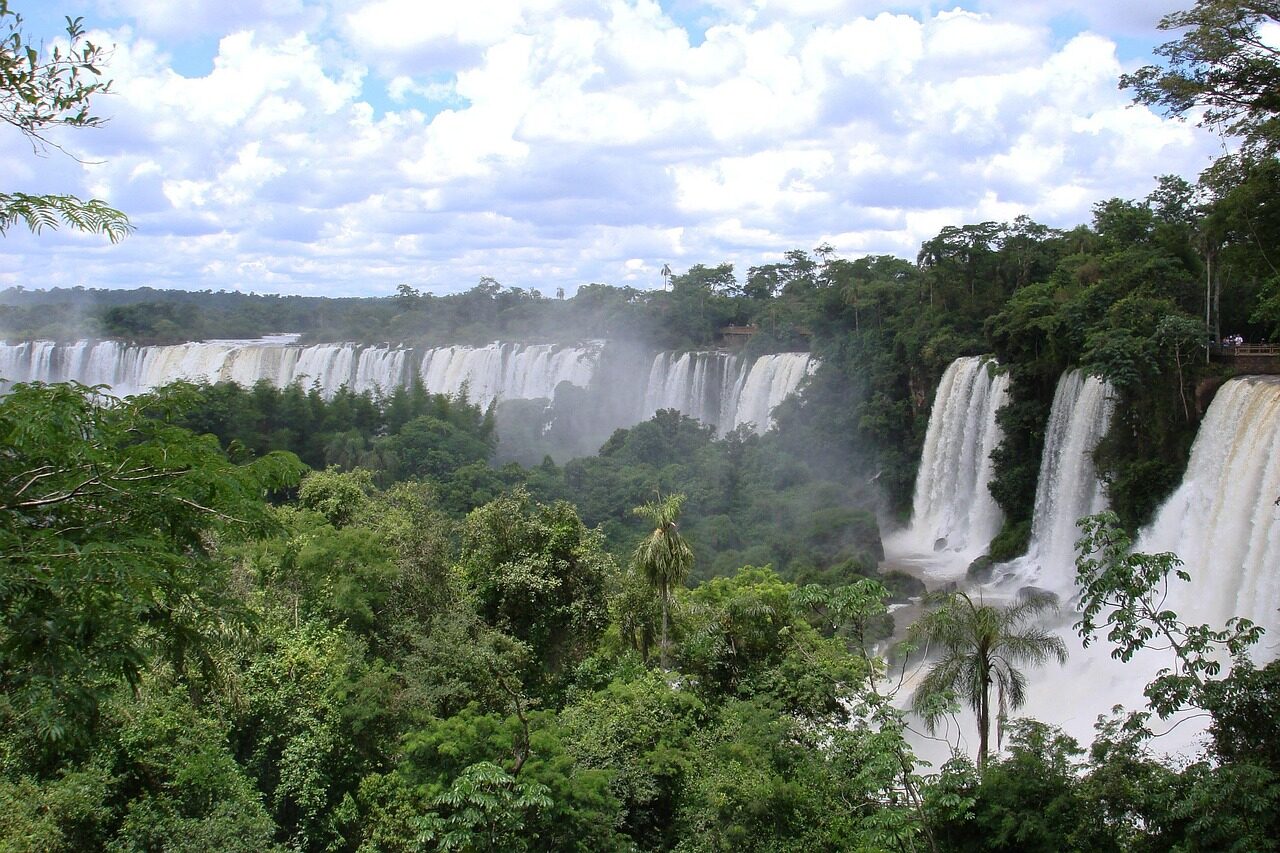

If you only have time for one side, choose Argentina for the full experience of Iguazu Falls, with more trails, closer views and the chance to stand right over the Devil’s Throat. Choose Brazil if you have half a day, limited mobility, or want the best panorama. In the iguazu falls brazil vs argentina debate, the honest answer is that the two sides do different jobs, and most travelers who can spare two days do both.
The falls sit on the border between Brazil’s state of Paraná and Argentina’s province of Misiones. Roughly three-quarters of the cascades are commonly described as lying on the Argentine side, but the Brazilian side faces them across the canyon, so you see more of the whole at once. Below, we compare the two in detail and show how to combine them without wasting a day at the border.
Iguazu Falls Brazil vs Argentina at a Glance
| Factor | Brazil side | Argentina side |
|---|---|---|
| Main appeal | Wide panoramas of the whole system | Close-up, immersive views from above and below |
| Time needed | About 3 to 4 hours | A full day (6 to 8 hours) |
| Walking | One main paved path, mostly gentle | Several circuits with long catwalks and some stairs |
| Devil’s Throat | Platform at the edge of the gorge, very wet | Walkway over the river, looking straight down into it |
| Boat ride | Offered by a private operator at extra cost | Offered by a private operator at extra cost |
| Other extras | Helicopter flights, a bird park, Itaipu Dam nearby | Jungle train inside the park, trails with wildlife |
| Accessibility | Easier for limited mobility | Partly accessible; the upper circuit is the easiest part |
| Gateway town | Foz do Iguaçu (large, more hotels) | Puerto Iguazú (small, quieter) |
The Brazilian Side: The Panorama

The Brazilian national park is organized around a single trail of about a mile (1.2 km) that follows the canyon rim. A shuttle bus drops you near the start, and you walk downstream toward the main falls. Every few hundred yards the view opens up, with cascades stacked across the opposite cliff and the river dropping out of sight.
The trail ends at a walkway that reaches out toward the Devil’s Throat, the horseshoe where much of the river drops at once. The spray here soaks you within seconds, so this is where the poncho earns its keep. An elevator and a viewing deck above the walkway give a last look back along the cliffs.
What Brazil does better
- Perspective. You are looking at the falls rather than standing in them, which makes the scale easier to grasp and the photographs better.
- Efficiency. You can see the highlights in a morning, which suits an arrival day or a tight itinerary.
- Accessibility. The path is paved and mostly gentle, so it works for older travelers and families with strollers or young children.
- Extras. Helicopter flights depart from the Brazilian side, and the large bird park sits just across the road from the park entrance.
What it does worse
The walk is short and fixed. You cannot wander, so once you reach the end, the experience is largely over. At busy times the shuttle and the final walkway also get crowded, and you spend more time in a line of people than the compact distance suggests.
The Argentine Side: The Immersion
The Argentine national park is larger and has more to do. The trails are laid out as circuits, and a small open-air train carries visitors between the entrance and the start of the walk to the Devil’s Throat. You can spend most of a day here without repeating a view.
Devil’s Throat
This is the headline. A long walkway runs out over the calm upper river, and you arrive at a platform at the lip of the gorge, with water vanishing below you and mist rising on all sides. It is louder, closer and more disorienting than anything on the Brazilian side. We recommend going here first, shortly after the park opens, because queues for the train and the platform grow through the morning.
Upper and Lower circuits
The Upper Circuit follows catwalks along the top of several falls, so you look down into the drops from just above them. It is mostly flat and the easiest part of the park for limited mobility. The Lower Circuit goes down to the base of the canyon, where you look up at falls and get close to the spray. It has stairs and takes longer, and some sections can close when the river is high.
Where Argentina falls short
The park is bigger, so a full visit is tiring in the heat. The overview of the whole system is weaker than from Brazil, because you are inside it rather than facing it. Logistics matter more too, since you are crossing an international border to get here if you stay in Brazil.
Which Side Fits Your Trip
- One day only: Argentina, if you are fit and the weather is decent. If you are staying in Foz do Iguaçu and do not want to deal with a border crossing, Brazil is a perfectly good choice.
- Half day only: Brazil. Argentina cannot be done well in four hours once you factor in the crossing.
- Limited mobility, small children or older travelers: Brazil for the easiest path. Add the Argentine Upper Circuit if you have the stamina.
- Photographers: Both. Brazil for the wide shot, Argentina for the intimate angles and details.
- Active travelers who like trails and wildlife: Argentina, with Brazil as the shorter second visit.
- Visa or border complications: Brazil, if crossing is difficult for your passport or your visa type. See the border section below.
Doing Both Sides: One, Two or Three Days
Two days is the sweet spot. We suggest putting the Argentine side on the middle day, when you are rested and have the whole day. Use the Brazilian side for an arrival afternoon or a departure morning, since it fits into a gap around flights. Most people find the order matters less than keeping each side to its own day, so you never rush a border crossing in the middle of a visit.
With a third day, add the boat rides, which are run by private operators on both sides and are separate from the park ticket. They take you close to the base of the falls, and you will be soaked. They are fun, but they are not essential if you have already walked the lower trails, so treat them as optional. A day trip to the Itaipu Dam or the bird park, both on the Brazilian side, fills out a longer stay.
If Iguazu is part of a longer route, our two-week Brazil itinerary shows where it fits between Rio and the rest of the country. For a tighter schedule, the one-week itinerary covers how to squeeze in a short Iguazu stop.
Crossing the Border Between Foz and Puerto Iguazú
The crossing between Foz do Iguaçu and Puerto Iguazú is routine but takes time. Allow extra on top of the travel time to the park, because immigration queues vary a lot. Carry your passport, not a copy or a photo of it.
Entry rules by nationality
- US citizens: Argentina allows short tourist stays without a visa. Brazil’s requirements for US passports have changed before and can change again, so check our Brazil visa guide for US citizens before booking. If your Brazilian authorization is single-entry, confirm that returning from Argentina is covered.
- UK and EU citizens: Both countries generally allow short tourist stays without a visa. Details, including passport validity, are in our Brazil entry requirements for EU and UK travelers.
- Other nationalities: Rules differ and can be stricter. Check both countries’ requirements before planning a day trip.
Practical steps
- Decide how you will cross: a taxi or private transfer is the most predictable, while public buses are cheaper but slower.
- If you take a public bus, ask the driver whether it waits at the border. Some buses do not wait for passengers still in the immigration line, so you may have to catch the next one.
- Buy park tickets online ahead of time in busy periods, and check opening hours and the payment methods accepted at the gate.
- Keep local currency or a card that works abroad. Argentina’s exchange arrangements have changed often, so check how best to pay before you go.
- Leave early on the way back, because queues at the bridge can build in the late afternoon.
One health note: health authorities in the US, UK and EU generally recommend yellow fever vaccination for the Iguazu area. It needs to be done at least ten days before you travel, so talk to a travel clinic well in advance.
Seasons, Water Levels and Weather
The falls run year-round, but the flow changes a lot. After heavy rain the river turns brown and the roar is enormous, which is dramatic but can close lower trails and walkways. In drier spells the falls are thinner and clearer, and you see more rock between the cascades. Neither is wrong, but a trip planned around one particular look can be disappointing.
The summer months are hot, humid and crowded, especially around school holidays. Winter is cooler and quieter, although mornings can be chilly. Spring and autumn often give the best mix of comfortable temperatures and good flow. Our month-by-month guide to Brazil has the wider seasonal picture.
Whatever the month, bring a light rain jacket or poncho, a dry bag for your phone and camera, shoes with grip, sun protection and insect repellent. Surfaces near the falls are slick, and some walkways are exposed to full sun.
Wildlife and Extras Beyond the Falls
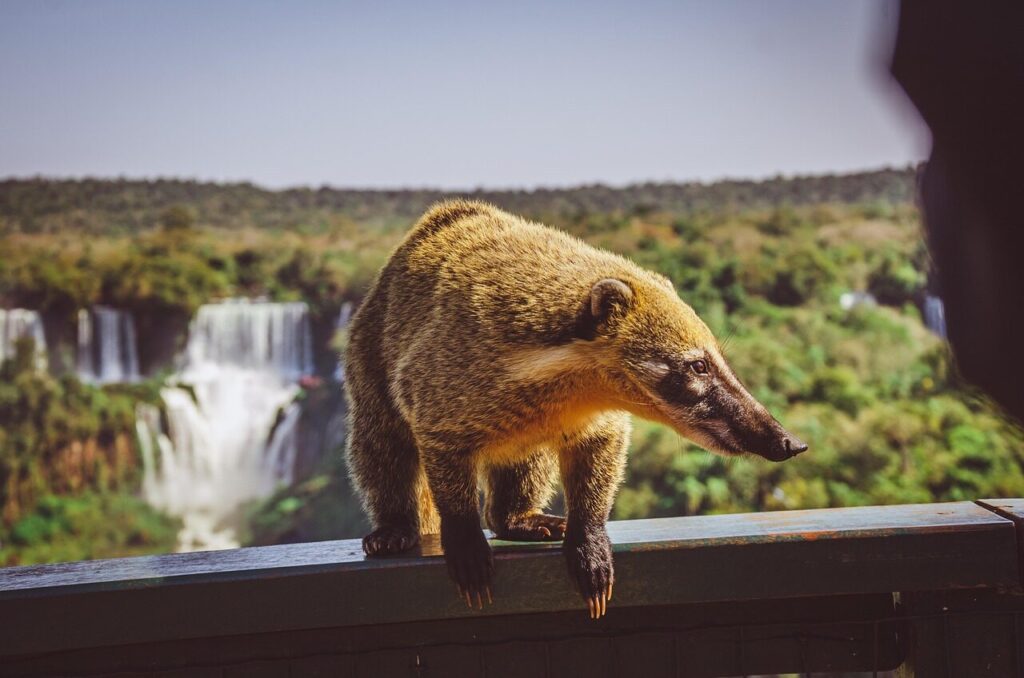
Both parks sit in subtropical Atlantic forest, and wildlife is part of the visit. Coatis, raccoon-relatives that roam in groups, are everywhere near the picnic areas. They are used to people and will grab food or open bags. Do not feed them, keep snacks sealed, and give them space, because they can scratch and bite.
On the Brazilian side, the bird park next to the park entrance is worth an hour or two. It has toucans, macaws and other species in large walk-through aviaries, and it is a good rainy-day option or a break from the heat. Itaipu, one of the largest hydroelectric dams in the world, offers tours for those who like engineering. Both fit around the Brazilian park visit rather than needing a separate day.
Swifts nest behind some of the cascades and are often seen darting through the water. Bring binoculars if you like birds, and look carefully near the railings.
Where to Stay: Foz do Iguaçu or Puerto Iguazú
Foz do Iguaçu is the larger town, with more hotels in every category, more restaurants and the airport with the most flights from Rio and São Paulo. It is also the easier base if you are traveling on to the Brazilian side or the Itaipu Dam. Puerto Iguazú is smaller and quieter, with an easy run to the Argentine park, and works well if you plan to spend more time on the Argentine side.
Both parks also have a hotel inside their gates, which gives you early or late access to the falls without the crowds. They are priced as a premium, so they are mainly worth it if falls are the centerpiece of your trip. For general budgeting, see how much a trip to Brazil costs.
We recommend staying in Foz if you are arriving by air from Brazil and want to keep logistics simple, and in Puerto Iguazú if you are mainly interested in Argentina and want a quieter town.
Planning Your Visit
Book a flight into Foz do Iguaçu, or into Puerto Iguazú if you are coming from Buenos Aires. Reserve two nights at minimum, and give yourself a buffer at the airport after a day at the falls. Check your passport validity and entry requirements for both countries before you buy anything.
On the ground, buy tickets online where possible, start early on the Argentine day, and treat the Brazilian visit as a shorter, more relaxed outing. Carry water and a rain layer, and keep a little cash for small purchases in the parks. With those basics covered, either side delivers, and the combination is the best way to see the falls.
Frequently Asked Questions
Is the Brazil side or Argentina side of Iguazu Falls better?
Neither wins outright. Brazil gives the best panorama and takes half a day. Argentina offers more trails, closer views and the Devil’s Throat walkway, and needs a full day. If you can only do one, pick Argentina for the experience or Brazil for convenience and easier walking.
How many days do you need at Iguazu Falls?
Two days lets you see both sides without rushing: a full day in Argentina and a half day in Brazil. One day is possible if you pick a single side. Add a third day for boat rides, the bird park or the Itaipu Dam.
Do I need a passport to cross from Brazil to Argentina?
Yes, bring your passport and keep it with you, not a copy. US, UK and EU citizens generally do not need a visa for short tourist stays in Argentina, but Brazil’s rules for some passports have changed, so check your own entry authorization first.
Can I visit both sides in one day?
It is possible but not recommended. Border queues are unpredictable, and the Argentine side alone fills most of a day. You would rush both parks and risk missing closing times. Give each side its own day if you can.
Is Iguazu Falls accessible for people with limited mobility?
The Brazilian side is generally easier, with a mostly paved path and an elevator near the end. On the Argentine side, the Upper Circuit is the most manageable section, while the Lower Circuit has stairs. Check current conditions and facilities with the park before you go.
What should I wear and bring to Iguazu Falls?
Bring a light rain jacket or poncho, shoes with good grip, sun protection, insect repellent and water. A dry bag protects your phone and camera near the spray. Keep food sealed, because coatis will try to grab it.