
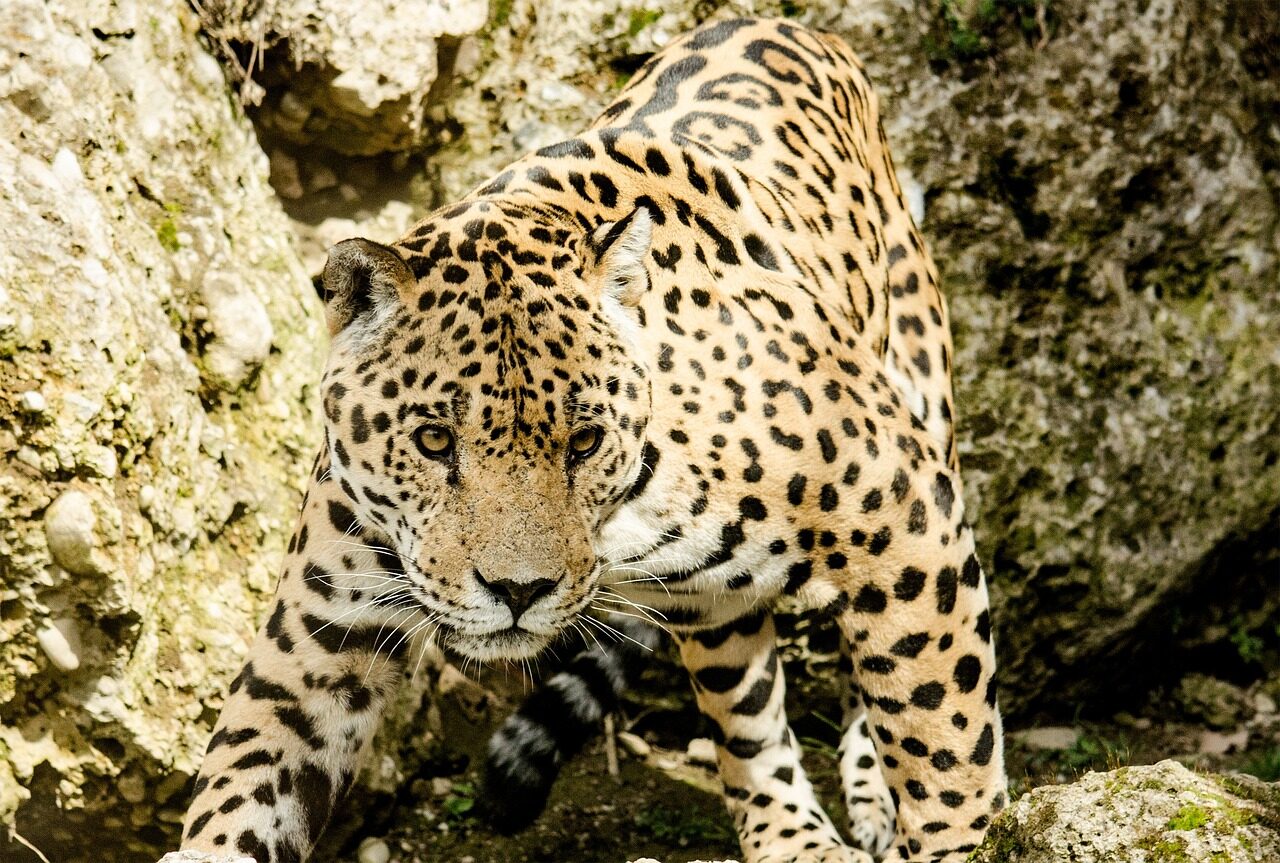

The Pantanal is the best place in Brazil to see large wildlife without trekking for days to find it. This pantanal travel guide covers where to base yourself, when to go and what a stay at a ranch lodge is actually like. The short version: choose the northern Pantanal if jaguars are your priority, the southern Pantanal if you want a gentler stay that pairs well with Bonito, and travel between May and October for the easiest viewing.
The Pantanal is the largest tropical wetland on Earth. Most of it lies in Brazil, in the states of Mato Grosso and Mato Grosso do Sul, and it continues into Bolivia and Paraguay. Rivers spill over the plain every wet season and retreat in the dry months. That cycle shapes everything: where animals gather, how you get around and what you see on any given day.
Why the Pantanal Is Easier for Wildlife Than the Amazon
In the rainforest, most animals live in a dense canopy and are heard far more often than seen. The Pantanal is a mosaic of open floodplain, scattered woodland, lagoons and river channels. You can scan a long way across it, and animals tend to cluster at water, especially in the dry season.
Many lodges sit on working cattle ranches where wildlife is used to trucks, boats and riders. That makes close, calm encounters far more common than on a jungle trail. The Amazon is still the better choice for river cruises, forest immersion and Indigenous-led community visits, and our guide to visiting the Amazon rainforest from Brazil covers that side. If you only have time for one and wildlife is the goal, the Pantanal usually delivers more sightings per day.
Pantanal Travel Guide: North vs South
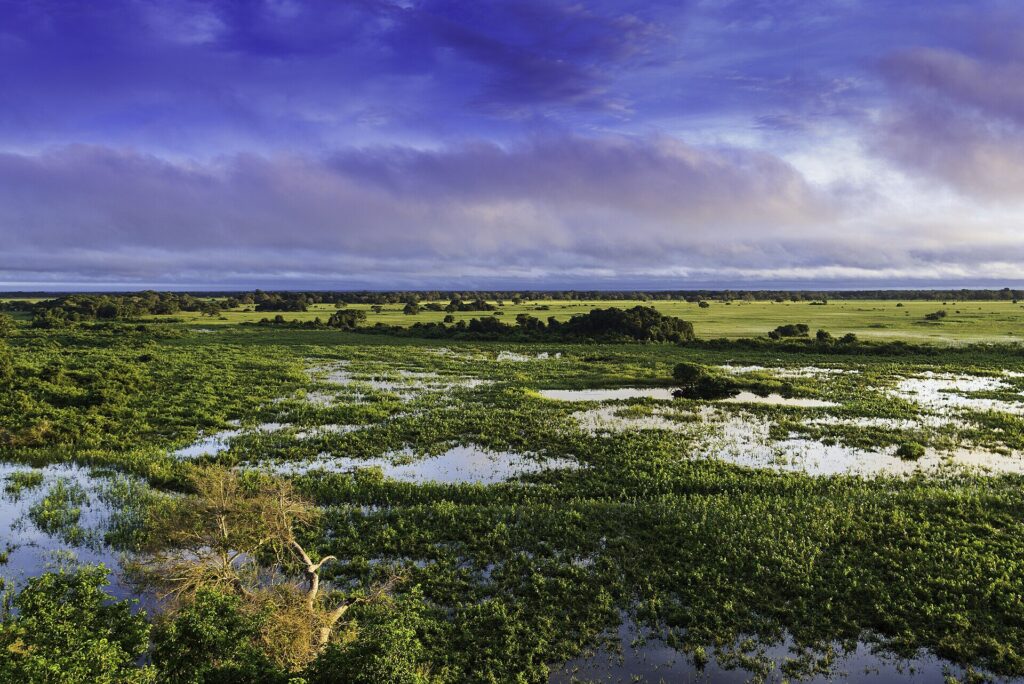
The Pantanal is large, and most visitors pick one region. Combining both means long transfers and fewer nights in each place. The table summarizes the differences.
| Aspect | Northern Pantanal (Mato Grosso) | Southern Pantanal (Mato Grosso do Sul) |
|---|---|---|
| Gateway | Cuiabá, then Poconé | Campo Grande, then Miranda, Aquidauana or Corumbá |
| Access | The Transpantaneira dirt highway and river routes to Porto Jofre | Ranch roads, the Estrada Parque and river routes |
| Known for | Jaguars, giant otters, dense bird life along the road | Hyacinth macaws, giant anteaters, ranch culture, horseback riding |
| Style of stay | Lodges along one road or river, boat-heavy | Working ranches, 4×4 safaris, riding |
| Pairs well with | Chapada dos Guimarães | Bonito |
The northern Pantanal
The Transpantaneira is a mostly unpaved road that runs south from Poconé to Porto Jofre, crossing well over a hundred wooden bridges. Wildlife is visible from the road itself, with caimans, capybaras, storks and kingfishers at almost every crossing. Lodges are strung along it, so you can pick one at the start for an easy transfer or push deeper for more remote surroundings.
The far end, around Porto Jofre, is the center of the jaguar-watching scene. If big cats are the main reason for your trip, this is where to book.
The southern Pantanal
The south has a different feel. Stays are built around fazendas, the big cattle ranches, and the pace is slower. You will spend more time on open-sided safari trucks and on horseback, and the birding and mammal watching are excellent.
Jaguar sightings are possible but far less predictable than around Porto Jofre. In return, the south is easier to reach from a major airport and connects naturally with Bonito.
Wildlife You Can Realistically Expect
Sightings are never guaranteed, but a few days on the ground reliably produces several of the following:
- Capybaras: the world’s largest rodents, seen in family groups near almost every waterway.
- Yacare caimans: packed onto riverbanks and shrinking pools, especially late in the dry season.
- Jabiru storks: locally called tuiuiú, a tall white stork with a black head and red collar, widely treated as the Pantanal’s emblem.
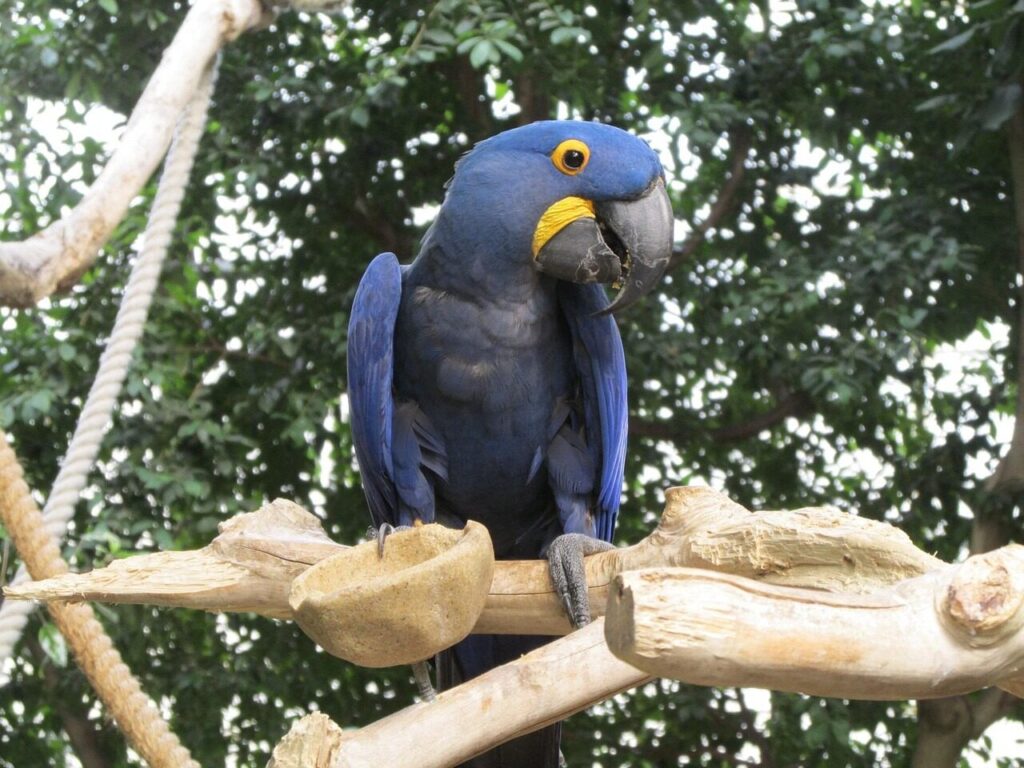
- Hyacinth macaws: the largest parrots in the world, deep blue and often seen in palm groves, especially in the south.
- Giant otters: noisy, social and active in the mornings along river channels.
- Giant anteaters and tapirs: often spotted in open grassland at dawn and dusk, or on night drives.
- Jaguars: the headline animal, most dependable on river trips in the north.
The region also has hundreds of bird species, so even travelers who do not think of themselves as birders end up with a list. Early morning and late afternoon are the productive hours. Midday heat sends most animals into the shade.
Night drives add ocelots, foxes, owls and nightjars to the list. Keep expectations flexible and let your guide set the pace.
Jaguar Spotting from Porto Jofre
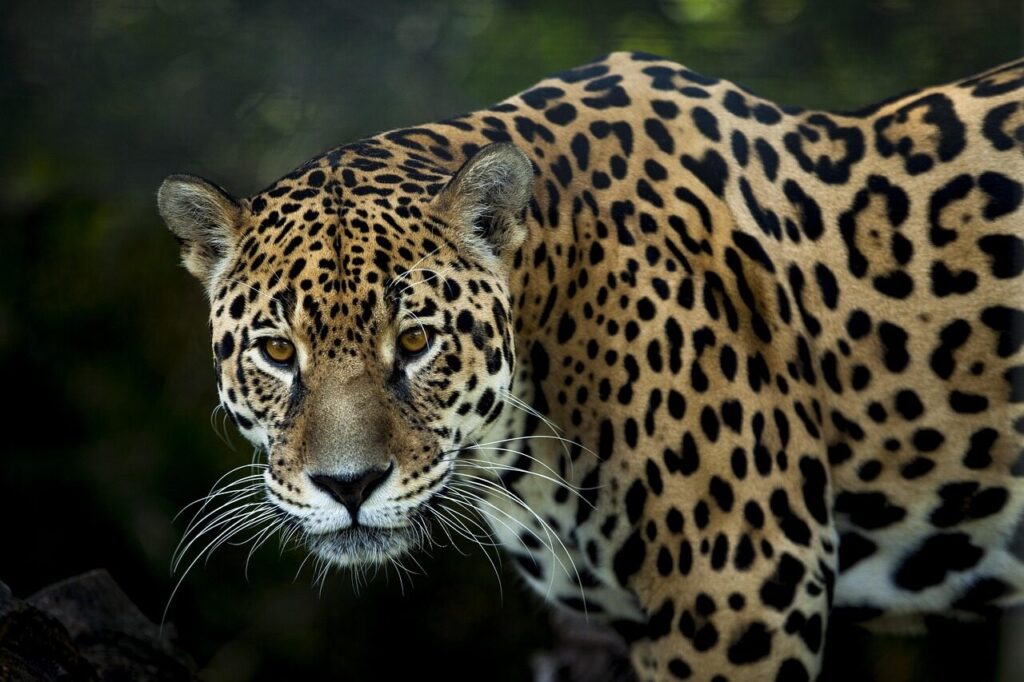
The rivers around Porto Jofre, including areas near Encontro das Águas State Park, are among the most reliable places in the world to see wild jaguars. The cats hunt along the banks, often targeting caimans and capybaras, and are used to boats. Guides on different boats keep in radio contact and share locations.
A few practical points improve your odds and your experience:
- Plan at least three full days of boat outings rather than one. Cats can be quiet for hours, then appear in minutes.
- Go in the dry season, when water levels are lower and the animals use the exposed banks more.
- Sleep close to the river if jaguars are your priority. The drive from Poconé to Porto Jofre takes many hours on the dirt road, and lodges at the far end save you that time every day.
- Choose operators that keep engines off at a respectful distance and do not crowd the animals. A calm cat means a better view for everyone.
Bring a long lens if you photograph. Most views are from a moving or drifting boat, so a high shutter speed matters more than a heavy tripod.
Best Time for a Pantanal Safari
The Pantanal has two seasons, and each suits a different kind of trip. Exact timing shifts from one year to the next with rainfall, so treat the months below as a guide rather than a rule.
| Period | Conditions | Best for |
|---|---|---|
| May to June | Waters recede, landscape still green, temperatures more comfortable | General wildlife, first-time visitors who dislike extreme heat |
| July to August | Peak dry season, dusty roads, cooler nights possible during cold fronts | Jaguars, easy road and boat access, photography |
| September to October | Hottest and driest, wildlife concentrated at shrinking water, storms begin late; fires and smoke can occur | Birds and mammals at waterholes, if you can handle heat |
| November to April | Wet season, flooded plains, lush vegetation, heavy rain and mosquitoes, some roads impassable | Boat and horse access, nesting birds, quieter lodges |
For most travelers, the dry months from roughly June to September offer the best balance of access and sightings. The wet season rewards patience and flexibility, and some lodges only reach their remote areas by boat or horse during those months. Ask your lodge what conditions look like before you book.
Getting to the Pantanal
You will fly to Cuiabá for the north or Campo Grande for the south. International visitors usually connect through São Paulo or Brasília. Our guide to getting around Brazil by plane, bus and rideshare explains domestic flights and what to expect at the airports.
From Cuiabá, Poconé is roughly two hours by road, and the lodges start beyond it. From Campo Grande, the ranches around Miranda and Aquidauana take a few hours to reach. Most lodges arrange transfers, and for first-timers that is the simplest option.
Self-driving is possible, especially on the Transpantaneira, but it needs planning. Bridges are wooden and narrow, fuel stops are sparse, and the road can turn to mud after heavy rain. Animals also cross at dusk and after dark, so avoid driving at night. A rental car works best for short stays at lodges near the start of the road.
Mato Grosso and Mato Grosso do Sul run one hour behind Rio de Janeiro and São Paulo. Allow for that when you book connecting flights.
Lodges, Activities and a Typical Day
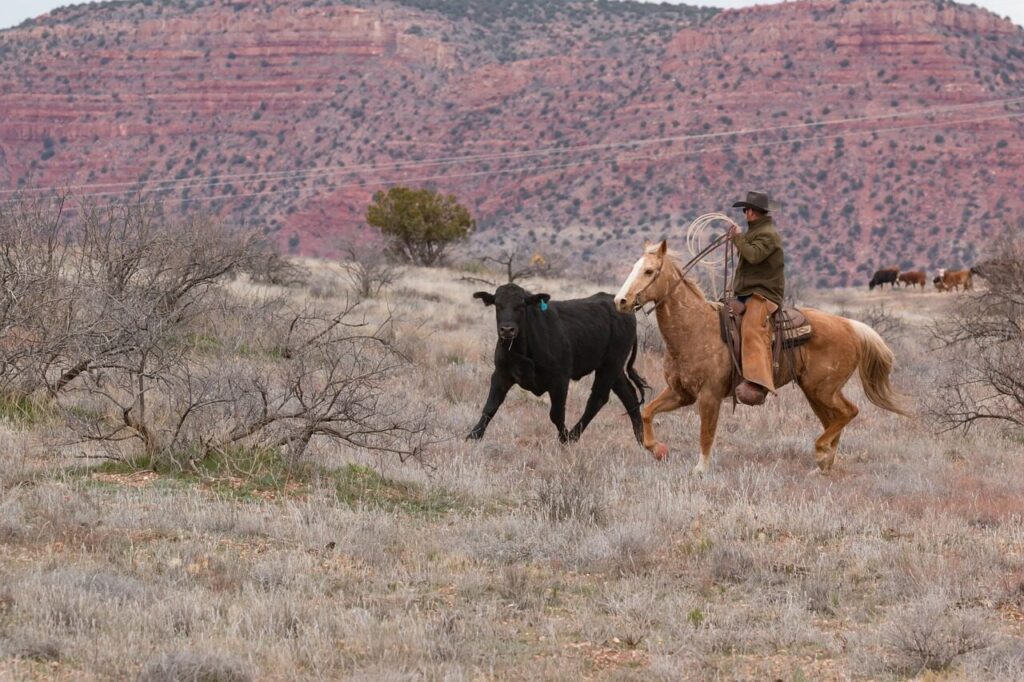
Most stays are at a pousada on a fazenda or at a river lodge. Packages are usually full board with guided activities included, and transfers are often charged separately. Rooms range from simple to comfortable, with air conditioning and a pool, both of which you will appreciate in the afternoon heat.
Because of the all-inclusive format and remote locations, the Pantanal tends to cost more than many other parts of Brazil. Our article on how much a trip to Brazil costs helps you fit it into a wider budget.
A typical day follows the animals’ schedule:
- Dawn: boat trip, walk or safari truck outing while it is cool and wildlife is active.
- Late morning: breakfast or brunch, then rest, since midday is hot and quiet.
- Afternoon: horseback ride, boat trip or a drive to a lagoon.
- Dusk and evening: sunset viewing, dinner, and sometimes a night drive.
Horseback riding is a signature activity, since pantaneiro cowboy culture is part of the region’s identity. Riders do not need to be experienced, and horses are generally calm. Fishing is popular too, but rules on seasons and catch limits apply, so arrange it through your lodge.
Guides make or break the experience. Choose a lodge where at least one guide speaks your language well, and ask how many guests share a vehicle or boat. Small groups see more.
Adding Bonito or Chapada dos Guimarães
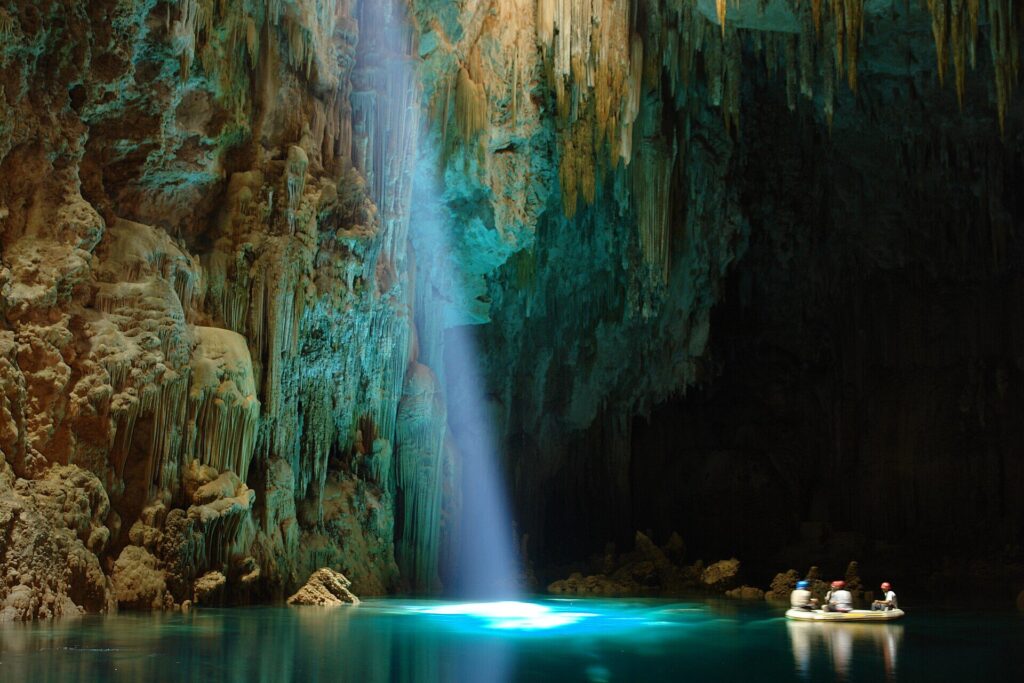
Bonito lies in the highlands south of the Pantanal and is known for clear spring-fed rivers, caves and sinkholes. Snorkeling in the rivers is the signature activity, and caves like Gruta do Lago Azul and the rappel into Abismo Anhumas draw many visitors. Most attractions use controlled visitor numbers, so you need pre-booked tickets and a licensed guide. Reserve ahead rather than arriving without a plan.
Bonito is most of a day from Campo Grande by road, so give it at least two nights. A southern Pantanal stay followed by Bonito makes a well-balanced week.
In the north, Chapada dos Guimarães is about an hour from Cuiabá. It offers red sandstone cliffs, viewpoints and waterfalls, and works as a first or last stop around a Transpantaneira trip.
Health, Safety and Entry Rules
Entry rules depend on your passport. US citizens should read our page on Brazil visa requirements for US citizens. UK and EU travelers should use the guide to Brazil entry requirements for EU and UK travelers. Rules have changed over time, so check before you book flights.
Yellow fever vaccination is recommended for many parts of Brazil, including the Pantanal states. Our vaccines for Brazil article covers timing and documentation, and a travel clinic can advise on anything else for your itinerary. Mosquitoes, including those that carry dengue, are present. Use repellent and wear long sleeves at dawn and dusk.
The bigger day-to-day risks are sun, heat and dehydration. Drink plenty of water, wear a hat and rest at midday.
Wildlife safety is straightforward if you follow your guide:
- Do not swim in rivers or lagoons unless a guide confirms a spot is safe. Caimans and piranhas live in them.
- Keep hands and feet inside the boat.
- Keep distance from giant anteaters, which have long claws and defend themselves if cornered.
- Wear closed shoes on walks, since snakes are present.
- Never feed animals.
Crime is rarely an issue at remote ranches. In Cuiabá and Campo Grande, use ordinary city precautions, as described in our honest guide to whether Brazil is safe for tourists.
Food and Drink in the Pantanal
Lodge meals are generous and built around regional staples. River fish features heavily, especially pacu, served grilled or fried, and piranha soup is a local specialty. Beef is everywhere on a cattle ranch, often as carne seca (dried beef) or in arroz carreteiro, a rice-and-beef dish. Fried bananas and farofa, toasted manioc flour, appear on most tables.
In Mato Grosso do Sul, locals drink tereré, cold yerba mate sipped through a metal straw. In Campo Grande, look for sobá, a noodle soup brought by Japanese-Okinawan immigrants.
Menus are meat-heavy, so tell your lodge in advance if you are vegetarian or have allergies. Remote kitchens cannot improvise easily, but most can adapt with notice.
What to Pack
- Lightweight long-sleeved shirts and trousers in neutral colors such as khaki, olive or gray
- A wide-brimmed hat, sunglasses and high-SPF sunscreen
- Insect repellent, preferably with DEET or picaridin
- Binoculars, and a telephoto lens if you photograph
- A light rain jacket and a dry bag for electronics
- Closed, comfortable shoes and a warm layer for cold-front evenings in the dry season
- A power bank and a spare memory card, since electricity and connectivity can be limited at remote lodges
- Cash in Brazilian reais for tips and small purchases, as ATMs are found in gateway towns rather than at lodges
Leave bright clothing at home, since it can disturb wildlife. Pack light, because small planes and transfer vehicles have limited luggage space.
Planning Your Visit
Three nights is the minimum that makes the transfers worthwhile. Four or five allow you to try boat, truck and horseback outings. Add a night or two if jaguars are the main goal.
Book lodges early for the peak dry months from roughly July to September, since the best places have few rooms. Reserve directly or through a Brazil-based agency that knows the lodges and can combine transfers.
Build in a buffer before long flights home. Roads can be slow and small-plane schedules can shift, so spend your final night in Cuiabá or Campo Grande rather than leaving the ranch on the morning of an international departure.
Frequently Asked Questions
Can I visit the Pantanal as a day trip from Cuiabá?
Not in any useful way. Most wildlife areas are several hours from Cuiabá along unpaved roads, and the best sightings happen at dawn and dusk. A day trip would leave you mostly in the car. Stay at least two nights at a lodge so the transfer time does not consume your safari.
Is the wet season still worth it for a Pantanal trip?
Yes, if you accept the trade-offs. Flooded landscapes are lush, many birds are nesting and lodges are quieter. Roads may be impassable and mosquitoes are more active, so activities rely on boats and horses. Mammals are harder to see because they disperse across the flooded plain.
Do Pantanal guides speak English?
At the better-known lodges, usually at least one guide does, but standards vary. Confirm English-language guiding when you book rather than assuming it. In smaller ranches and gateway towns, expect basic or no English. A few Portuguese phrases and a translation app are helpful.
Can I combine the Pantanal with Rio and Iguazu in one trip?
Yes. Direct domestic flights connect Cuiabá and Campo Grande with São Paulo and other hubs, so the Pantanal slots in as a separate leg. Allow at least five days for the Pantanal itself, including transfers, and avoid squeezing it into a tight schedule where one delayed flight could break the plan.
Is the Pantanal suitable for children?
Often yes, particularly at southern ranches with pools, horse rides and short safari outings. Long drives, heat, insects and early starts can wear out younger children. Ask lodges about minimum ages for boat trips and horseback riding, and choose one with a pool and flexible meal times.