
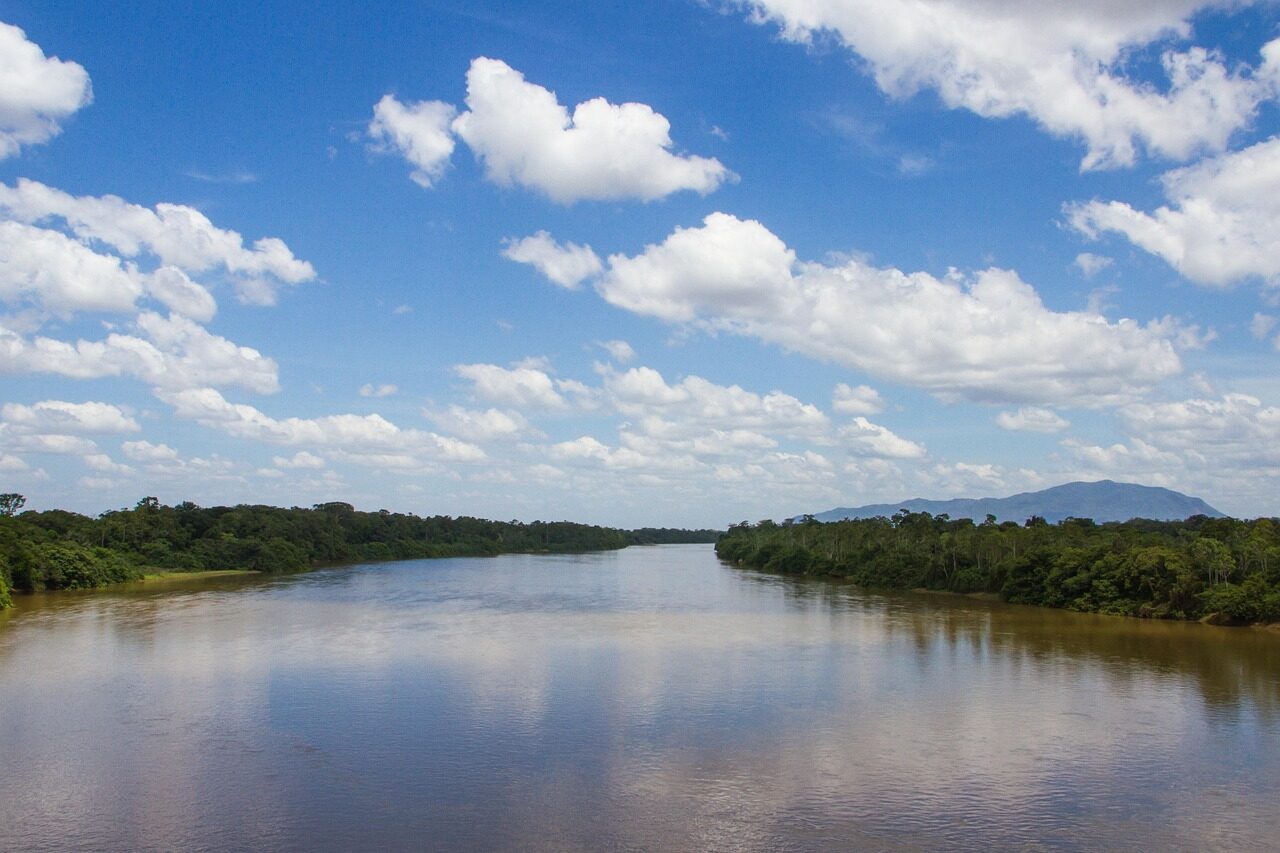

The practical way to visit the Amazon rainforest in Brazil is to fly to a gateway city, most often Manaus, then travel by boat to a jungle lodge or board a riverboat for several days. You cannot see the forest properly on a day trip from the city, and you should not try to enter it without a licensed guide. Plan on at least three nights away from the gateway.
Brazil holds the largest share of the Amazon basin, so you have more choices here than anywhere else. They differ a lot in cost, comfort and what you will see. This guide covers gateways, lodge versus boat, water levels, health and entry rules, and what to pack.
Choosing Your Gateway: Manaus, Belém or Santarém
Most international visitors fly into Manaus, the capital of Amazonas state, which has the widest choice of lodges, tours and flights from São Paulo and Rio. Belém, near the mouth of the river, is a better fit if you care more about food, markets and river islands than deep jungle. Santarém and the village of Alter do Chão suit travelers who want river beaches and a quieter pace.
| Gateway | Best for | Typical stay | Good to know |
|---|---|---|---|
| Manaus | Jungle lodges, river cruises, wildlife, first-time visitors | 1–2 nights in the city, 2–4 nights in the forest | Largest airport in the region; the Rio Negro lodges are a short boat or road transfer away |
| Belém | Markets, Amazonian cooking, Marajó Island | 2–3 nights | More urban and cultural than wild; the forest experience is lighter |
| Santarém / Alter do Chão | River beaches, Tapajós National Forest, community visits | 3–5 nights | Beaches are at their best when water drops; fewer international tour options |
| Tefé (Mamirauá reserve) | Remote, research-linked stays, flooded forest | 4+ nights | Reached by short flight from Manaus; more logistics and less choice |
Manaus in a day or two
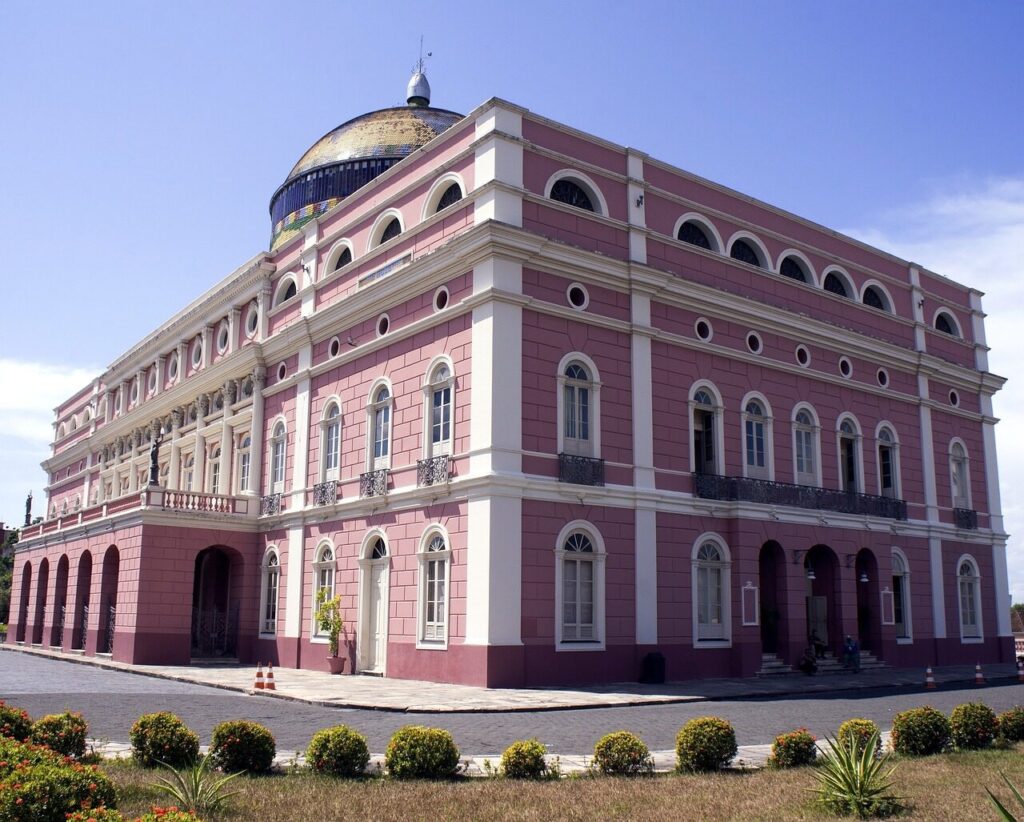
Manaus is hot, loud and busy, and it is mainly a launch point. Give it a morning for the Teatro Amazonas opera house, a look at the old port and the municipal market, and an evening meal built around river fish such as tambaqui or pirarucu.
The most-photographed sight nearby is the Meeting of the Waters. There the dark Rio Negro and the pale, silty Solimões run side by side for several miles before mixing. Most lodge packages and day boats include it.
Belém and the river’s mouth
Belém works well as a food stop. The Ver-o-Peso market sells forest fruits, herbs, smoked fish and açaí by the bucket, and local dishes such as tacacá and duck in tucupi sauce have no real equivalent elsewhere in Brazil. From here you can take a boat to Marajó Island or a shorter river excursion, but a wilderness stay is easier to arrange from Manaus.
Time zone and flights
Manaus is one hour behind Brasília time, and Belém matches it. Flights from Rio or São Paulo to Manaus are long, usually four hours or more, so build the transfer day into your plan. Carry your passport for domestic flights and for ID checks at boat terminals.
How to Visit the Amazon Rainforest in Brazil: Lodge, Riverboat or Community Stay
The format you pick shapes everything else: how much forest you see, how comfortable you are, and who benefits financially. There are four main options.
Jungle lodges
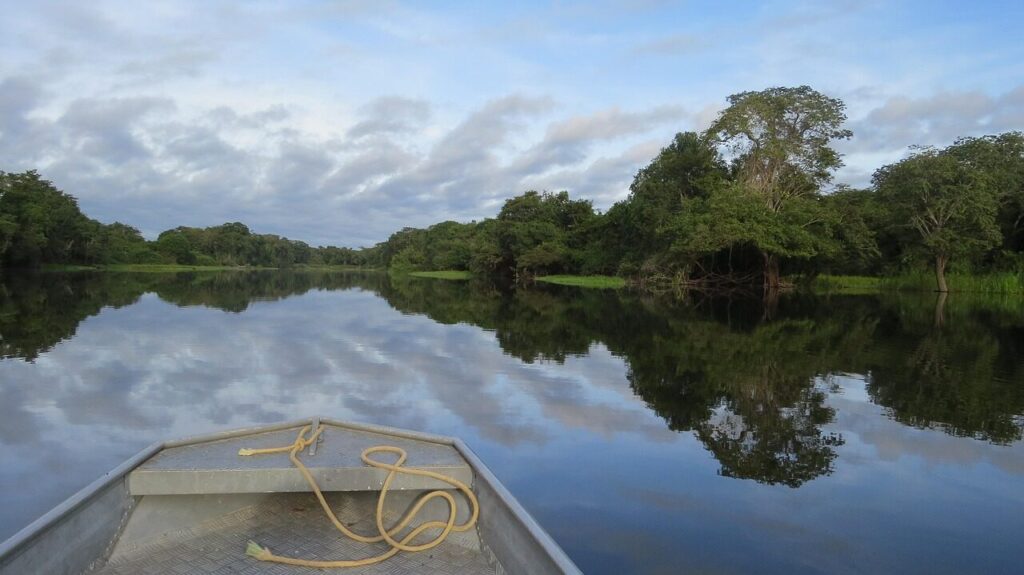
Lodges are the standard choice. You get a bed with a roof or net, meals, and daily guided outings by motorized canoe and on foot. Most are one to a few hours from Manaus by boat or road-and-boat combinations, and packages usually run two to four nights.
The quality range is wide. Basic lodges mean shared bathrooms and fans, while higher-end ones offer air-conditioned rooms, viewing towers and trained naturalist guides. A longer transfer generally means fewer other groups, though it costs more.
Multi-day riverboat cruises
Small expedition-style boats sleep you in cabins and stop at different spots each day, so you cover more ground than from a fixed lodge. They suit travelers who want variety and do not mind close quarters. Check the group size, the guide-to-guest ratio and whether the itinerary includes real time in the forest or just boat travel.
Public river ferries
Locals travel the big river between cities on slow, multi-deck passenger boats, sleeping in hammocks or small cabins. Manaus to Santarém takes more than a day, and Manaus to Belém takes several. It is an authentic way to see riverside life, but it is not a wildlife trip. Expect crowds, basic food and noise. If you hang a hammock, bring your own, plus rope, a net and a lock for your bag.
Community-based stays
Some riverside communities and reserves run their own guesthouses or lodges, with local guides leading walks, fishing and craft demonstrations. This is often the best way to understand how people live in the forest. Facilities are simpler, and English may be limited, so a Portuguese phrasebook helps. The Mamirauá reserve near Tefé and the Tapajós area near Santarém are the better-known examples.
Day trips from Manaus
Day tours can show you the Meeting of the Waters, a short boat ride and a dolphin stop. That is fine as a sampler if you have only a day to spare. The forest itself, with its night sounds and early-morning wildlife, needs overnight time.
When to Go: High Water and Low Water
The Amazon is hot and humid year-round, and rain can fall in any month. What changes dramatically is the river level, which can rise and fall by many yards over the year. That decides what you can do. For the national picture, see our month-by-month guide to visiting Brazil.
| High water (roughly Dec–June) | Low water (roughly July–Nov) | |
|---|---|---|
| Transport | Boats reach deep into the flooded forest | Shallow channels limit some routes; more walking |
| Wildlife | Animals spread out in the treetops; harder to see on the ground | Animals concentrate near remaining water; more riverbank sightings |
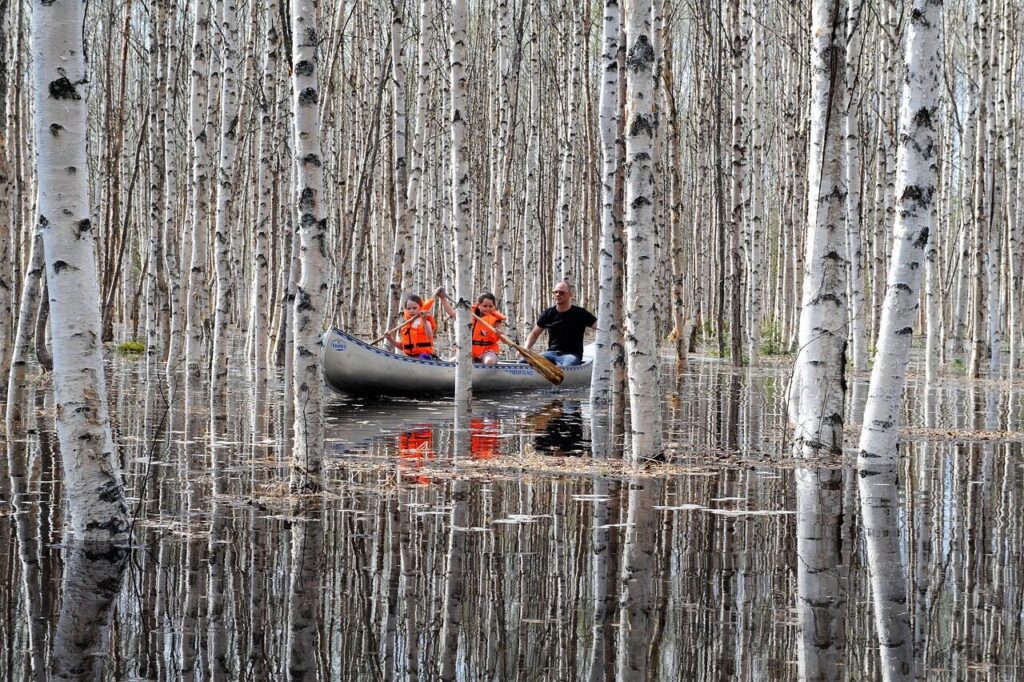
| Landscape | Canoe through flooded trees; river looks vast | Sandbars and river beaches appear; trails open |
| Comfort | Frequent rain; very humid | Often sunnier; fishing and swimming spots easier |
| Best for | Canoeing, birdlife in the canopy, flooded-forest scenery | Hiking, beaches, wildlife on the banks, photography |
Neither season is “wrong.” If you want walking trails and beaches such as those near Alter do Chão, aim for low water. If the flooded forest by canoe is the image in your head, go when the river is high. Avoid assuming that the shoulder months behave exactly the same every year, because the timing of the flood pulse shifts.
Mosquitoes are generally fewer around the acidic, dark water of the Rio Negro than on the whitewater rivers. That is one reason many lodges cluster there.
Entry Rules, Vaccines and Health Prep
Entry rules depend on your passport. UK and EU citizens can usually enter Brazil visa-free as tourists for a limited stay, but you should read the details in our Brazil entry requirements for EU and UK travelers. US citizens need to follow a separate process, which we cover in Brazil visa requirements for US citizens. Rules change, so confirm with the official government source before you book flights.
Health is the other thing to settle early. Most travel clinics and health authorities in the US, UK and EU advise yellow fever vaccination for travelers heading into the Amazon region. It needs to be given well before arrival (at least ten days is the standard guidance), so do not leave it to the last week.
Malaria risk exists in parts of the Amazon and varies by location and season. Whether you need preventive medication depends on your exact route, so book an appointment with a travel clinic and bring a printed itinerary. Dengue and other insect-borne illnesses also occur in Brazil, so repellent matters even if you do not take pills.
Pack a basic first-aid kit with rehydration salts, antihistamines and any prescriptions. Lodges are often hours from a hospital, and boat transfers can be slow.
What You Will Actually Do on an Amazon Trip
A typical lodge day starts before sunrise, when birds and monkeys are most active, then takes a break in the heat and goes out again in the late afternoon. Expect a mix of the activities below.
- Canoe or motorboat outings: quiet paddling along small channels is where you will notice birds, sloths and the forest’s detail.
- Guided forest walks: guides explain medicinal plants, tracks and insects. Keep your hands off trees, since many have spines or ants.
- Night excursions: a spotlight on the water reveals caiman eyes and sleeping birds.
- River dolphin encounters: pink river dolphins are common around Manaus and Novo Airão. Check how your operator handles feeding, because many conservation groups discourage it.
- Fishing: simple piranha fishing from a canoe is a staple of the lodge menu.
- Village visits: a stop at a riverside community can include manioc processing and handicrafts. Ask whether the community benefits directly.
Realistic expectations help. Jaguars, tapirs and giant otters exist, but they are rarely seen on a short trip. What most people do see are birds, monkeys, caimans, river dolphins, sloths and a huge variety of insects and plants. Binoculars will improve your trip more than almost any other single item.
Near Manaus you can also add Presidente Figueiredo, a town with many waterfalls and swimming spots a few hours’ drive north, or the Anavilhanas archipelago, a vast cluster of river islands on the Rio Negro.
Choosing a Responsible Operator
Tourism in the Amazon ranges from carefully run community projects to operators that cut corners on safety or animal welfare. A few checks help you filter.
- Registration: look for operators and guides listed in Cadastur, Brazil’s official tourism registry.
- Guide qualifications: ask who leads the outings, how long they have worked in that area and whether they speak English or your language.
- Group size and pace: smaller groups see more wildlife and disturb less.
- Animal rules: avoid any tour that promises holding sloths, caimans or other wild animals, or that sells wild-caught souvenirs.
- Local benefit: ask whether staff come from nearby communities and whether the lodge pays local fees or rents land.
- What is included: clarify transfers, park fees, drinks, excursions and tips before you pay.
Be careful with street offers in Manaus. Unlicensed touts at the port or in hotel lobbies sometimes sell tours that skip safety standards, so book through a lodge, an established agency or your hotel.
Safety and Practical Details
The main risks on an Amazon trip are ordinary: sun, heat, insects, dehydration and bad judgment around water. Do not swim where your guide tells you not to, and never go into the forest alone, because it is very easy to lose your bearings. The risks in Manaus and Belém are the usual city ones, such as phone theft and bag snatching. Our honest guide to staying safe in Brazil covers the general rules.
Connectivity is limited at most lodges, and some have no signal at all. Download offline maps and tell family when you will be out of contact. Carry some cash in small bills for communities, tips for guides and boat staff, and places that do not take cards.
Electricity at remote lodges often comes from generators and may run only for some hours each day. Bring a power bank, and ask whether your room has a socket you can use at night.
Money and budget
The Amazon is usually pricier per day than a typical Brazilian beach or city stop, because every supply has to come by boat or plane. Packages that include meals, transfers and excursions make budgeting easier, and they often work out better than piecing everything together yourself. Our overview of what a trip to Brazil costs will help you place the Amazon within a wider budget.
What to Pack for the Rainforest
Lightweight, long-sleeved clothes in muted colors work best, both for insects and for sun. Cotton stays wet for hours, so quick-dry synthetic fabrics are more comfortable. Bring items for both heat and sudden rain.
- Insect repellent suited to tropical areas, and a hat
- Light rain jacket or poncho, and a dry bag for electronics
- Closed shoes or boots that can get wet, plus sandals for the lodge
- Sunscreen and sunglasses, since the river reflects strong light
- Binoculars, a headlamp with spare batteries, and a refillable bottle
- Copies of your passport, insurance details and vaccination records
- Any personal medicine in original packaging
Pack light if you will take small planes or boats, since baggage limits can be strict. Many lodges let you leave a suitcase at a Manaus hotel.
Fitting the Amazon into a Longer Brazil Trip
Because of the distances, the Amazon works best as a dedicated segment rather than a side trip. If you only have a week, it is hard to combine with Rio and Iguazu, though a short Manaus stay is possible. With two weeks you have more room, and our 2-week Brazil itinerary covering Rio, Iguazu, Salvador and the Amazon shows one realistic way to sequence it.
Plan the Amazon either at the start or the end of your trip, with a buffer day before an international flight. Weather delays and boat schedules are normal.
Planning Your Visit
Start with three decisions: your gateway, the type of stay and your travel window. Once those are set, book flights into Manaus or your chosen city, then reserve the lodge or boat directly or through a registered agency. Good Amazon operators fill up in the busier months, so earlier is better.
Next, confirm your entry paperwork and book a travel-clinic appointment well ahead of departure. Finally, leave a spare day on each side of the Amazon portion so a delayed flight or boat does not wreck the rest of your itinerary.
Frequently Asked Questions
Can I see jaguars on a typical Amazon trip?
Very unlikely. Jaguars live at low density, are mostly nocturnal and avoid people. On a three- or four-night trip, expect birds, monkeys, caimans, river dolphins and sloths instead. If jaguars matter to you, the Pantanal offers much better odds than the Amazon.
Is it safe to swim in the Amazon?
It depends on where you are and who is with you. Guides know which spots are safe and which have currents, caimans or stingrays. Piranha attacks on swimmers are rare, but follow local advice. Swim only where your guide says it is fine, and shuffle your feet in shallows to warn stingrays.
Can I visit the Amazon as a weekend trip from Rio?
Technically yes, but it is not worth it. The flight alone takes several hours each way, and getting to a lodge adds more time. You would spend most of the weekend in transit. Aim for at least three nights in the forest after arriving in Manaus.
Do I need to book Amazon lodges in advance?
Yes, particularly for small lodges, community stays and expedition boats with limited cabins. Booking several weeks ahead is sensible, and longer for popular periods. Public ferries can be booked closer to departure, though cabins sell out sooner than hammock space.
Will my credit card work at Amazon lodges?
Many established lodges and agencies accept cards, but remote and community-run places often do not, and payment systems can fail when connectivity drops. Carry some Brazilian reais in small bills for tips, souvenirs, boat staff and village purchases.