
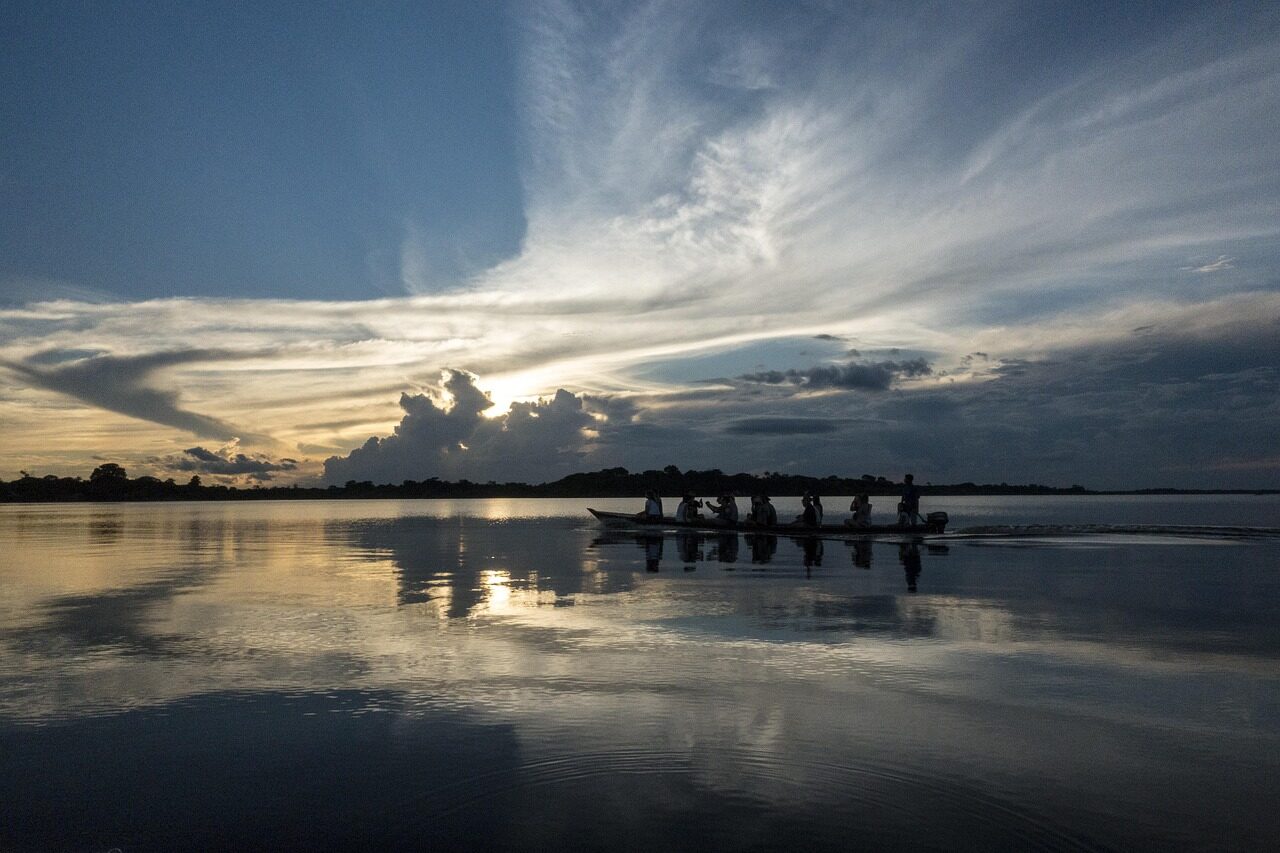

Manaus is the practical starting point for the Amazon in Brazil. It is a river port city of around two million people, about 900 miles (1,500 km) from the Atlantic coast as the crow flies, on the Rio Negro just upstream from where it joins the Amazon proper. This manaus travel guide covers what the city offers, how to time your trip, and how to turn it into a few good days in the forest.
The short version: plan two days in the city and two to four nights on the river or in a lodge. Manaus itself is hot, loud and a bit rough around the edges, but it has a 19th-century opera house, a great market, and some of the best river-fish cooking in the country. The forest is the real reason most people come.
Getting to Manaus and Entry Rules
Almost everyone arrives by air at Eduardo Gomes International Airport (MAO), roughly 30 to 40 minutes from the center by road, depending on traffic. There are frequent domestic flights from São Paulo, Brasília and Rio de Janeiro, plus links to other northern cities. Most visitors from the US and Europe connect through one of those hubs. If you are building a longer trip, Manaus slots in easily at the end of a Rio and Iguazu route, as in our 2-week Brazil itinerary.
Entry rules depend on your passport:
- US citizens need a visa to enter Brazil. This has applied since April 10, 2025. Our guide to Brazil visa requirements for US citizens covers the process.
- UK and EU citizens can generally enter Brazil without a visa for short tourist stays. See Brazil entry requirements for EU and UK travelers for passport validity and length of stay.
Manaus sits in the Amazon time zone, one hour behind Brasília (UTC−4). Brazil does not use daylight saving time, so the gap with Rio and São Paulo stays constant all year, and your flights will reflect it.
When to Go: High Water and Low Water
Temperature barely changes in Manaus. Expect hot, humid weather all year, with highs around 90°F (32°C) and sudden downpours at any time. What changes dramatically is the river. The Rio Negro rises and falls by many meters over the year, and that decides what you will see and do in the forest.
| Water stage | Roughly | What it means for you |
|---|---|---|
| Rising water | December to May | Heavy rain, rivers climbing, forest slowly flooding. Fewer visitors and lower demand. |
| High water | June to July | Flooded forest you can paddle through by canoe. Fewer land trails, and wildlife spreads out. |
| Falling water | August to September | Good balance: trails reopen, river beaches start to appear. |
| Low water | October to November | Sandbars and beaches, long jungle walks, easier wildlife viewing. Hottest and driest stretch. |
No season is wrong. High water suits canoeing and bird-watching in the treetops, while low water suits walkers and anyone who wants river beaches. For how this fits with the rest of the country, see our month-by-month guide to the best time to visit Brazil.
The Historic Center: Opera House and Port Market
Manaus grew rich on the rubber boom in the late 1800s, and the money went into the center. The star is the Teatro Amazonas, an opera house that opened in 1896. Its dome is tiled in the colors of the Brazilian flag, and the interior is full of imported materials and painted ceilings. Guided visits run most days, and they are the easiest way to see inside. If you can catch a performance, even better. The theater also hosts an opera festival, usually in the first half of the year.
The square in front, Largo de São Sebastião, has wavy black-and-white paving that nods to the river. Several old buildings sit within a short walk, including the Palácio Rio Negro, a former rubber baron’s mansion that is now a cultural center.
Head down toward the water for the Mercado Municipal Adolpho Lisboa, a wrought-iron market hall from the rubber era. Inside you will find fish stalls, dried and smoked goods, guaraná, Brazil nuts, Amazonian herbs and bottled tinctures. Go in the morning, when the stalls are busy and the heat is bearable. Treat the herbal remedies as curiosities rather than medicine.
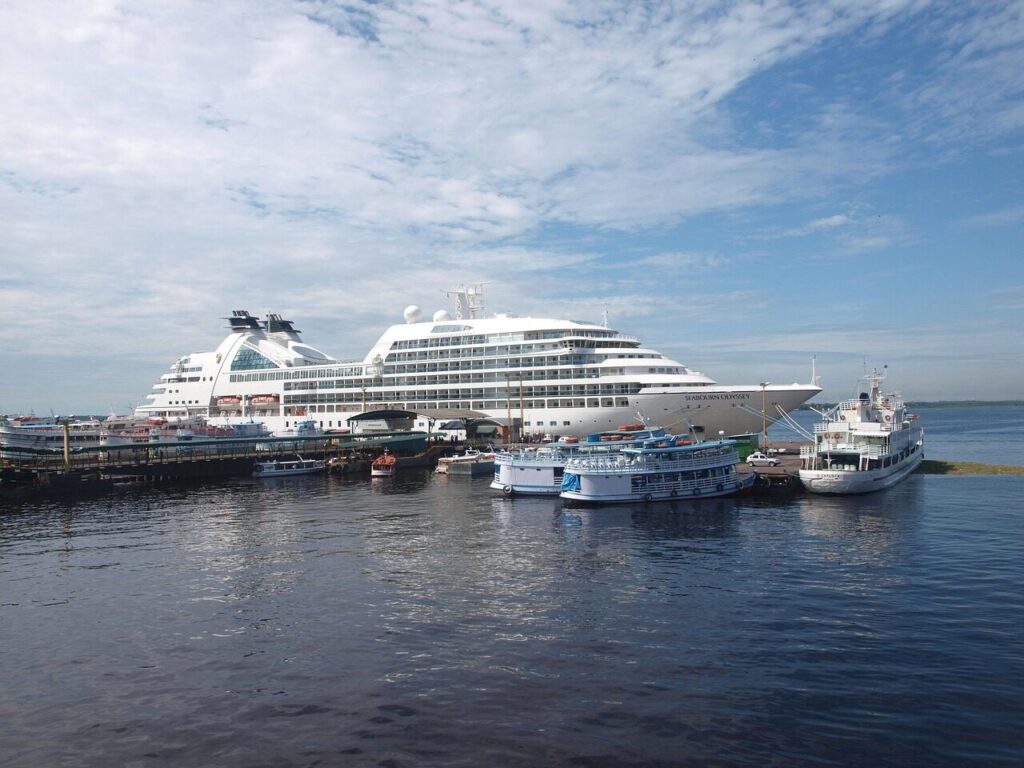
Just outside, the port is where the city’s relationship with the river is easiest to see. Passenger boats, cargo barges and floating docks that rise and fall with the water crowd the waterfront. It is photogenic, but keep your bag zipped and your phone out of sight.
Meeting of the Waters and Other River Sights
The Meeting of the Waters (Encontro das Águas) is the classic Manaus excursion. The dark Rio Negro and the pale, sandy Solimões run side by side for several kilometers without mixing, separated by a sharp line. The two rivers differ in temperature, speed and density, which keeps them apart. It looks best on a clear morning, and most boat trips combine it with other stops.
Those stops often include the Janauari area, where giant Victoria water lilies grow in the flooded channels. The leaves can be large enough to look like round trays, and the sight is most impressive when the water level suits them. Ask your operator what to expect in the month you travel.
Back in the city, Ponta Negra is the local sunset spot. It has a river beach whose size changes with the water level, a long promenade and an amphitheater by the water. Locals come in the late afternoon to walk, eat and watch the light go. It is also where much of the restaurant and nightlife scene is concentrated.
For wildlife in town, the Bosque da Ciência, run by the national Amazon research institute (INPA), is a small forest park where you can see animals such as manatees and giant otters. The Museu da Amazônia (MUSA) is another option for a half-day. It sits inside a forest reserve and has an observation tower above the canopy. Opening hours change, so confirm before you go.
What to Eat in Manaus
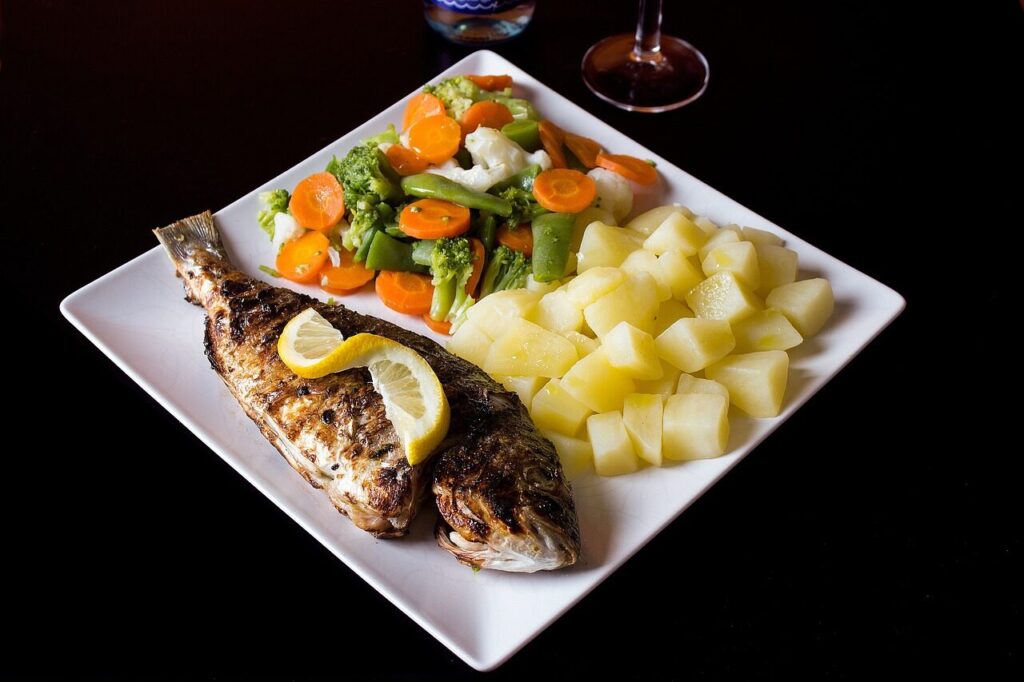
Amazonian cooking is built on river fish, manioc and forest fruit. It is one of Brazil’s most distinctive regional cuisines, and Manaus is the best place to eat it outside the interior itself. Dishes and drinks to look for:
- Tambaqui: a large, meaty river fish, famous grilled as ribs (costela de tambaqui) or fried. Often served with farinha, rice and salad.
- Pirarucu: a giant river fish with firm white flesh, usually grilled or served in a sauce. Order it only where the menu suggests it is legally farmed or sustainably managed.
- Tacacá: a hot, tangy street soup made with tucupi (a yellow manioc broth), jambu leaves that tingle the mouth, dried shrimp and gummy tapioca starch. It is usually eaten from a gourd bowl in the late afternoon.
- X-Caboquinho: a local sandwich of tucumã palm fruit, banana and cheese, often with coffee at breakfast.
- Açaí: in the Amazon it is often eaten as a savory side with fish and farinha, not as the sweet frozen bowl you know from home.
- Cupuaçu and other fruit: cupuaçu, taperebá, bacuri and others turn up as juices and ice cream. Many of the fruits have no English name, so just point and taste.
- Guaraná: Amazonas state is the heartland of guaraná, and the soda is everywhere. Powdered and syrup versions are common souvenirs.
Eat fish at busy places with high turnover, and be careful with raw street food if your stomach is sensitive. Tacacá stalls are generally fine if they are busy and the soup is served piping hot.
Jungle Trips from Manaus
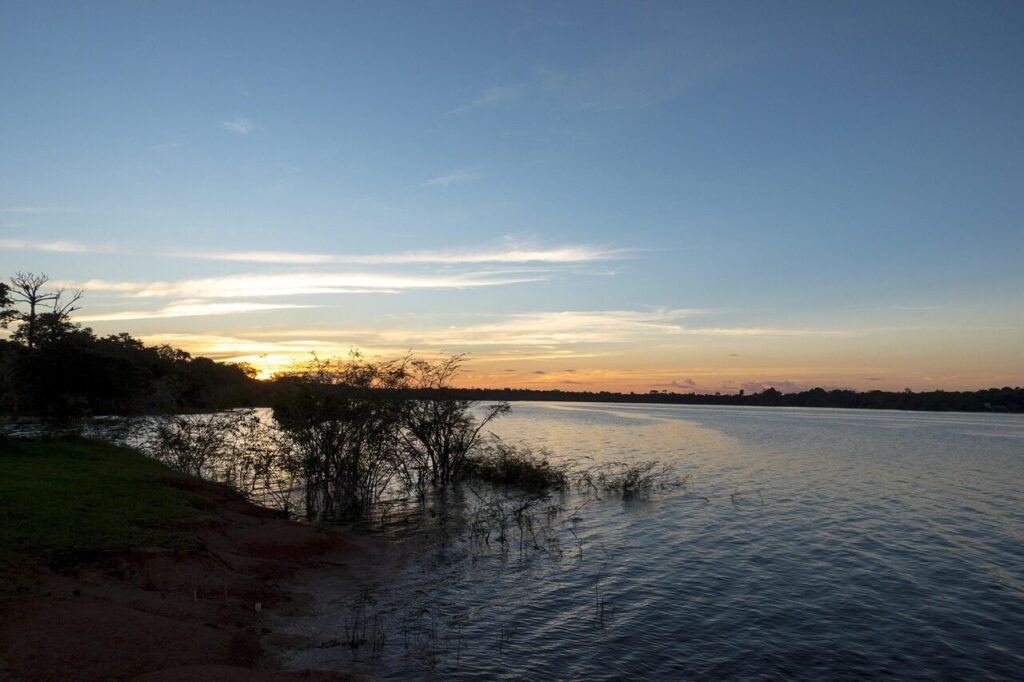
This is the biggest decision of the trip. For the general picture of how to see the rainforest across Brazil, start with our guide on how to visit the Amazon rainforest from Brazil. For Manaus specifically, your main options look like this:
| Option | Time | Best for | Trade-offs |
|---|---|---|---|
| Day cruise | One day | Short stopovers, tight schedules | Mostly boat time. You see the river, but not the forest at dawn or night. |
| Jungle lodge | 2 to 4 nights | Most first-timers | Guided walks, canoe trips and night spotting. Comfort ranges from rustic to well-equipped. |
| Expedition boat | Several nights | Travelers who want to cover more river | You sleep aboard and move daily. Cabins are small, and it needs more time and budget. |
| Local slow boat | Days between cities | Adventurous, flexible travelers | Hammock travel with locals. Basic, slow and not a wildlife trip. |
For most people, a lodge stay of two to four nights is the sweet spot. One night is often swallowed by transfers. Typical activities include sunrise canoe trips, night caiman spotting, jungle walks with a guide, fishing for piranha, and visits to riverside communities. Many lodges are on the Rio Negro, which tends to have fewer mosquitoes than whitewater rivers, though you should still bring repellent.
How to choose an operator
Book before you land if you can, and avoid accepting offers from touts at the airport or port. Look for operators that are registered with Brazil’s tourism ministry (Cadastur), and ask whether guides are licensed and speak your language. Ask exactly how many hours are spent on the boat or road and how many in the forest, and what is included. Group size matters more than anything. A small group makes wildlife easier to see and the trip quieter.
Set expectations
You are very likely to see birds, monkeys, caimans, river life and possibly sloths. Seeing a jaguar is extremely unlikely, and anyone who promises it is overselling. Choose operators that do not feed wild animals, handle them for photos or sell products made from wildlife. When visiting communities, ask how the visit benefits the people who live there, because some “village visits” are staged.
Day Trips Near Manaus
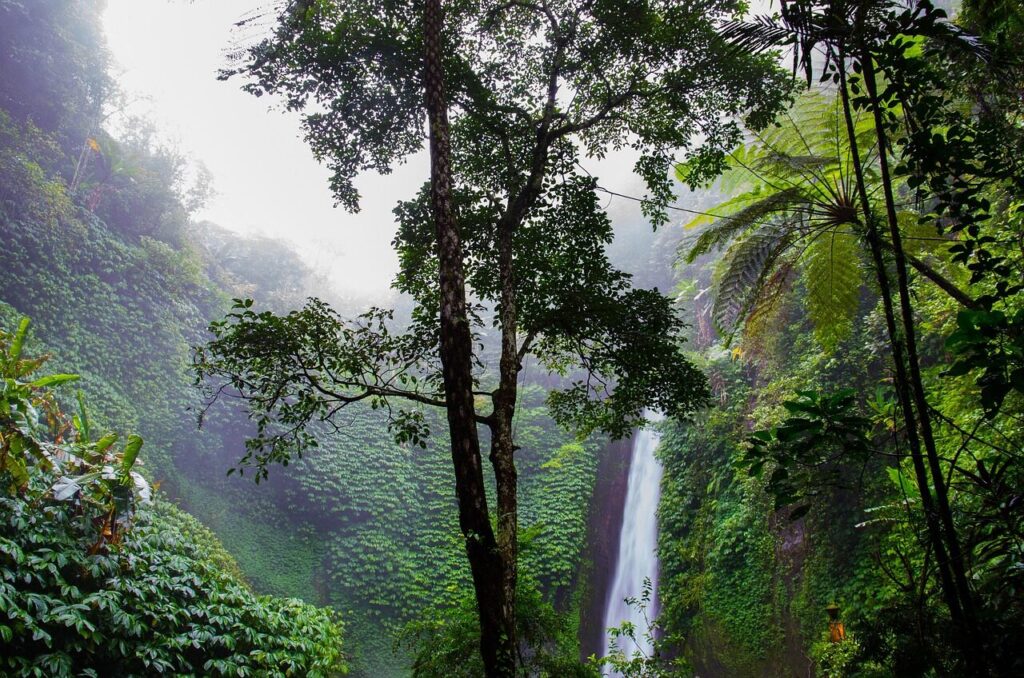
If you do not have time for an overnight stay, there are a few good options. Presidente Figueiredo, about two hours north by road, is known for its waterfalls, caves and swimming holes. It is a good choice if you want to be active, and it works well as a full day with a driver or a tour. Bring swimwear and shoes with grip, because rocks are slippery.
Anavilhanas National Park is a huge archipelago of river islands in the Rio Negro. It is accessed from the Novo Airão area and is excellent for canoeing through channels and flooded forest. Pink river dolphins are seen in this region. Look for operators that observe the dolphins at a distance and follow park rules rather than encouraging contact.
The Meeting of the Waters, as described above, also works as a half-day. Combined, these give you a lot without a lodge stay, but they do not replace a night in the forest.
Where to Stay in Manaus
Manaus is not a walkable city like Rio’s beachfront, so pick your base by what you want to do. The main areas:
- Centro: closest to the opera house, port and market. Convenient for sightseeing and early boat departures, but it empties out after dark and feels less comfortable at night.
- Ponta Negra: the most popular base for visitors. Riverside promenade, restaurants, shops and a livelier evening scene. It is farther from the historic sites, so you will use rides to get there.
- Adrianópolis and Vieiralves: residential neighborhoods with good restaurants and cafés, a calmer option if you want to eat well and sleep quietly.
Choose a hotel with strong air conditioning and decent soundproofing, especially in Centro. If you leave luggage behind while you go to a lodge, ask whether the hotel offers secure storage. Many do this routinely, since a lot of guests are in the same situation.
Safety, Health and Getting Around
Manaus has the usual big-city risks: petty theft, phone snatching and opportunistic robbery, mostly in Centro, around the port and in quieter streets after dark. Keep valuables out of sight, carry only what you need, and use ride-hailing apps or licensed taxis in the evening rather than walking. For a broader view of risks and habits across the country, read our honest guide to safety in Brazil.
For health, speak to a doctor or travel clinic well before departure. Yellow fever vaccination is commonly recommended for travel to the Amazon region, and it needs to be given some days before you travel. Malaria and dengue also occur in the region. Your clinic can advise on prevention based on your itinerary and health. Pack a high-quality insect repellent, a light long-sleeved shirt and trousers, and a rain layer.
Getting around the city is simple enough. Ride-hailing apps and taxis are the easiest options, while buses are cheaper but harder to read for visitors. Tour operators usually include transfers to docks and lodges. Carry some cash for markets and small stalls, although cards work in most restaurants and hotels. English is limited outside tourism businesses, so a few Portuguese phrases and a translation app will help.
Planning Your Visit
Book the jungle portion first, then fit the city around it. Two nights in Manaus before or after your lodge stay is enough to cover the opera house, market, Meeting of the Waters and a sunset at Ponta Negra. Keep flights flexible if you can, because tropical storms occasionally delay departures, and boat schedules depend on river conditions.
Pack light for the lodge, with quick-dry clothes in neutral colors, a headlamp, a dry bag for your phone and camera, and spare socks. Leave anything you do not need in your city hotel. Before you book, check your entry documents and vaccination timing, since those are the items that can derail an otherwise easy trip.
Frequently Asked Questions
Is Manaus worth visiting if I skip the jungle trip?
Yes, but briefly. The opera house, port market, Meeting of the Waters and local food are worth one to two days. The city alone is not a highlight of Brazil, though, so most travelers pair it with a lodge stay or at least a day trip to see the forest properly.
Can I swim in the Rio Negro?
Many people do, usually at spots chosen by their guide or lodge, and the water is not typically a concern in those places. Ask locally before getting in, avoid swimming at dawn, dusk or near fishing activity, and never swim in murky areas where the guide tells you not to.
Will I see pink dolphins and jaguars?
Pink river dolphins are a realistic target, especially around the Rio Negro and Anavilhanas. Jaguars are extremely hard to spot and are not something a standard lodge trip will deliver. Expect birds, monkeys, caimans, insects and plant life, and treat anything more as a bonus.
Can I travel overland to Manaus?
Not in a practical way from most of Brazil. The road links are limited and unreliable, so flying is the standard option. Slow river boats do run from cities such as Belém and Santarém, taking days in a hammock or cabin. They suit adventurous travelers with plenty of time, not a quick trip.
Do I need to carry cash in Manaus?
Yes, a modest amount. Cards are accepted at most hotels, restaurants and tour offices, but markets, street stalls, small boat operators and community visits often prefer cash. Withdraw in the city before heading to a lodge, since ATMs are rare or absent once you leave town.