


Car rental in Brazil is straightforward on paper: a valid license, your passport and a credit card will get you keys at most airport counters. The harder question is whether you should. A car is excellent for coastal road trips and small-town itineraries, and a poor choice for Rio, São Paulo or Salvador, where ride-hailing is cheaper and less stressful.
This guide covers where a rental makes sense, what the desk will ask for, how insurance, tolls and fines really work, and the road rules that catch visitors off guard.
Car Rental in Brazil: Where It Makes Sense
A car earns its cost on routes where buses are slow and distances between sights are short but awkward. The coast between Rio and Paraty is the classic example, and so is Santa Catarina Island, where beaches, lagoons and restaurants are spread across the whole island. Our Florianópolis travel guide explains why wheels help there.
In big cities, skip the car. Traffic is heavy, parking is expensive or informal, and a visitor gains nothing. Use Uber and similar apps for city trips, and see our overview of getting around Brazil for long hops by air or bus.
Some destinations look drivable on a map but are not for a standard rental. Reaching the dunes at Lençóis Maranhenses means a local 4×4 transfer, and the dirt tracks of the Pantanal are better handled through a lodge or guide. Rental contracts for ordinary cars often restrict unpaved roads, so read that clause before you plan a detour.
Documents and Requirements at the Counter
Brazilian rental companies ask for more than the law does. The main requirements are being at least 21, holding a permanent physical license issued at least two years ago, and presenting a physical credit card in the renter’s name with enough limit for the security deposit. Provisional licenses are generally refused.
On the legal side, visitors may drive on a valid foreign license for up to 180 days from the day they enter the country. That covers any normal tourist trip.
Do you need an International Driving Permit?
Strictly speaking, opinions differ. Some legal sources say a foreign license alone is enough for tourists, but an IDP helps avoid confusion with rental agencies and traffic officers who may not understand a foreign document. Other guides say rental companies require one. Treat it as mandatory: it is cheap, and a refusal at the counter ruins a trip.
Get it before you leave. Format matters too. Brazil is a party to the 1968 Vienna Convention, and at least one guide says the 1949 IDP is not accepted. Ask your rental company which version it wants before you pay for a permit.
| Traveler | Where to get the IDP | Watch for |
|---|---|---|
| US | An authorized automobile association, in person or by mail | Card rental coverage may not apply in Brazil; call your issuer |
| UK | Post Office branches | Separate excess-insurance policies may not replace the counter’s mandatory cover |
| EU | Your national motoring club or licensing authority | Same as UK; confirm whether your policy applies in Brazil |
Bring the original license, the IDP and your passport every time you drive. Police checkpoints are common, and the rental company’s contract copy should stay in the glove box.
Credit Card Deposits and Costs
The deposit, called caução, is where most visitors get stuck. Almost every major rental company requires a physical credit card in the driver’s name, and debit or prepaid cards are frequently rejected. The hold is placed at pickup and released after return.
Amounts vary by company, car category and insurance level. One guide cites typically R$1,000 to R$3,000, while others report holds several times higher with basic cover. Ask for the exact figure in writing before you book, and keep enough credit limit free for the hold plus your other spending. Our guide to eSIM options helps you stay online for navigation, and the money-in-Brazil article covers card habits in general.
For budgeting, one source puts economy cars at roughly R$60 to R$150 per day before insurance, tolls and the deposit. Treat that as a rough range. Prices climb during school holidays and around Christmas and New Year, and one-way drop-offs in another city usually add a fee, so ask.
Insurance: What Is Included and What Is Not
Basic liability cover is built into Brazilian rentals. The part you can change is damage and theft protection, where the deductible (franquia) can be large. Terms you will see are CDW or LDW for damage to the car, and TPL for third-party liability.
US travelers often assume their premium card covers everything. Check carefully. Card benefits usually cover only the damage waiver portion and never the mandatory third-party liability. Another guide warns that accepting the rental company’s own waiver frequently invalidates credit card protection, so you have to choose one route or the other. Call your card issuer and ask about Brazil by name.
If you want no financial surprises, the simplest route is the rental company’s reduced-deductible or zero-deductible package. It costs more per day, and it usually lowers the deposit hold too.
Tolls, Fuel and Fines
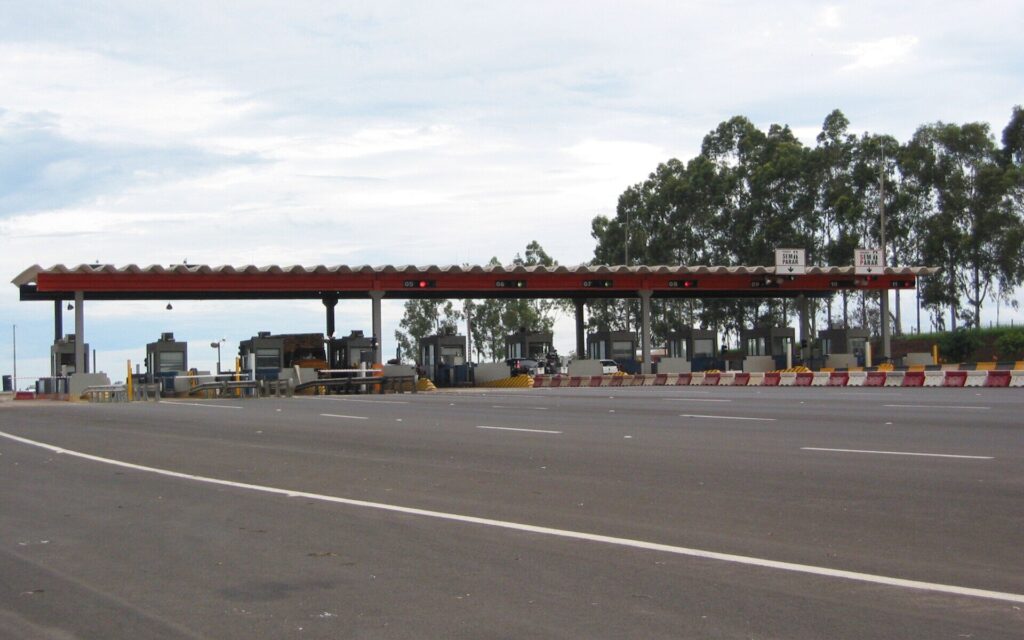
Many main highways around São Paulo and Rio are tolled. Electronic tags are not mandatory on most toll roads, but cash and card lanes are shrinking. Ask at pickup whether the car has an active tag and how the company bills it. Some companies add a daily admin fee on top of the toll itself.
Barrier-free “free flow” gantries read your plate. On free-flow-only sections, a driver without a tag has to pay within 30 days through the operator’s app or website. A tag from the rental company avoids chasing that payment from abroad. Official details on tolling are summarized on TollGuru’s Brazil toll guide.
At gas stations, an attendant normally fills the tank. Many Brazilian cars run on both ethanol and gasoline, so ask the rental desk which fuel to use and return the car at the agreed fuel level.
Fines follow the car. Most fines are sent to the rental company, which pays and then charges your credit card, including an administrative fee. That can happen weeks after you fly home, so keep your card active and your address current with the company.
Road Rules That Catch Visitors Off Guard
The biggest one is alcohol. Under the Lei Seca, Brazil has zero tolerance, and any detectable alcohol brings a fine of R$2,934.70 and a 12-month license suspension. Checkpoints are common at night and on weekends. If you plan a caipirinha with dinner, someone else drives or you take a ride-hail.
Speed cameras are the next trap. They sit near speed-limit changes, after tunnels and on curves. Typical limits are lower in town and reach 110 km/h on motorways. Watch for signs, because limits change quickly. Speed bumps (lombadas) are frequent on small roads, and some are poorly marked.
Other points to know:
- Turning right on a red light is not allowed unless a sign says otherwise.
- Seat belts are required for everyone, and handheld phone use is penalized.
- Avoid long rural drives after dark. Potholes, animals and unlit trucks are the main hazards.
- Never leave bags visible in a parked car, and use a staffed lot in cities and at beaches.
For crime and common-sense precautions beyond the car, see our honest safety guide.
Planning Your Visit

Book through the rental company’s own site or a major comparison platform at least a few weeks ahead for peak periods, and read the cancellation terms. Choose airport pickup only if you will drive straight out of the city. Many travelers do better collecting the car on the day they leave a big city, not the day they land.
At pickup, photograph every panel, the wheels and the windshield, and confirm the spare tire and jack are present. Ask for the toll tag status, the exact deposit and the emergency number. Requirements are also explained on the Rentcars help page, and the license rules are summarized by Expat Focus.
Finally, plan your route around daylight. Fill the tank before remote stretches, and download offline maps in case signal drops on the highway.
Frequently Asked Questions
Can I rent a car in Brazil if I am under 25?
Often yes, if you are at least 21 and have held a full license for two years, though some companies set their own minimums. Drivers under 25 commonly pay a young-driver surcharge, and the choice of cars can be narrower. Check the age rules in the booking terms before you pay.
Can I drive a rental car into Argentina or Paraguay?
Usually not without written permission. Many Brazilian rental contracts ban cross-border driving, and your insurance may be void abroad. If you plan a day trip from Foz do Iguaçu, ask the rental company first, or use a taxi or transfer across the border instead.
Is an automatic transmission easy to find?
Manual cars are more common among budget categories, and automatics are often in higher-priced classes. If you only drive automatics, reserve one in advance and confirm it in writing. Do not count on swapping at the counter during busy travel periods.
Who pays if I get a speeding ticket in a rental car?
You do. The ticket goes to the car’s registered owner, the rental company, which identifies you and bills your card with an administrative fee. This can arrive weeks after your trip. Disputing a fine from abroad is rarely practical, so the cheaper option is simply to avoid it.
Is it safe to drive in Brazil as a tourist?
Yes, with sensible habits. Most problems come from night driving on rural roads, unfamiliar speed enforcement and parking. Stay on main roads, keep doors locked in slow city traffic, and use navigation apps. If you feel uneasy, hiring a driver for one leg costs less than a mistake.