


Brazil weather is really several climates under one flag. The country stretches from roughly 5°N to 34°S, so the Amazon can be mid-flood while Rio is dry and the South is cold enough for frost. A single “best month” for the whole country doesn’t exist.
The practical rule is to match each region to its own season. Wildlife trips want the dry months, beach trips want sun, and the South wants spring or fall. Our month-by-month guide ranks the calendar. This article explains why each region behaves the way it does, so you can build a route that works.
Brazil Weather at a Glance by Region
Seasons here are reversed from the US and Europe. December to February is summer and June to August is winter, at least south of the Amazon. Near the equator the labels matter less than the rain calendar. Figures below are typical averages, and individual years vary.
| Region | Wetter months | Drier months | Temperature note |
|---|---|---|---|
| Rio and the Southeast | October to March | April to September | Daytime highs near 30°C (86°F) in January and near 25°C (77°F) in July |
| Amazon | Roughly December to May | June to November | Hot and humid all year, averaging about 26°C (79°F) |
| Salvador to Recife coast | Roughly April to July | September to February is the usual sunny window | Around 26–28°C (79–82°F) in the rains, 29–31°C (84–88°F) when drier |
| Pantanal | Most rain falls November to March | April to September | Very hot late in the dry season, with occasional cold snaps in July |
| South and Iguazu | Rain is spread fairly evenly through the year | May to September is cooler and drier | Real winters, with frost and rare snow |
Rio and the Southeast: Warm All Year, Wetter in Summer
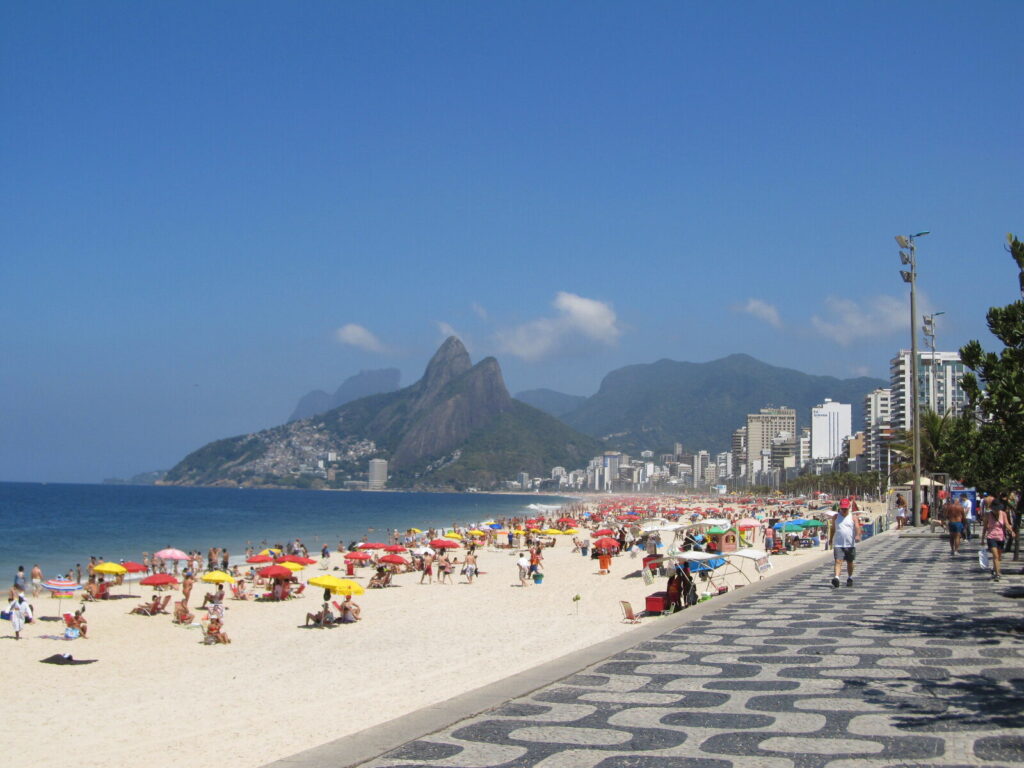
Rio never gets truly cold. The hot season runs from late December to mid-March, with highs above 86°F. The cool season, from mid-May to early October, keeps highs below 79°F. For a UK or EU visitor, a “cool” Rio day feels like a warm summer afternoon at home.
Summer brings humidity and heavy, fast storms, often in the afternoon. August is the driest month, and winter days are usually clear and comfortable. The ocean is cooler then, but the beach is still very much in use. Our Rio de Janeiro travel guide shows how to plan around the weather on the ground.
São Paulo sits on a plateau and runs several degrees cooler than the coast. Pack a light layer for evenings even in summer. In winter, nights can feel properly chilly.
The Amazon: Two Seasons, Not Four

Temperature barely moves in the Amazon. What changes is the water. During the wet season, rivers rise dramatically and flood the surrounding forest. In the lower-water months, trails open up and sandy river beaches begin to appear from July.
High water means canoe trips through flooded forest. Low water means more walking and easier wildlife spotting along the banks. Neither is “bad.” They are different trips, and our guide to visiting the Amazon rainforest from Brazil covers lodge types and logistics.
One exception: near the mouth of the river, around Belém, the seasons are less pronounced than farther inland. Expect rain at some point regardless of the month.
The Northeast: Coastal Rains, Dry Interior
The Northeast has the most varied rainfall of any region. On the Bahia coast, the rainy season runs from April to July, with the heaviest rain in May and June. Showers are often short and passing, and temperatures stay warm. Our Salvador da Bahia guide explains how to use the wet months to your advantage, including lower hotel prices.
Farther north, around Fortaleza, the rainy season is short and irregular. The interior sertão is something else entirely. Rainfall there is low and highly unreliable, and summer heat can approach 40°C (104°F).
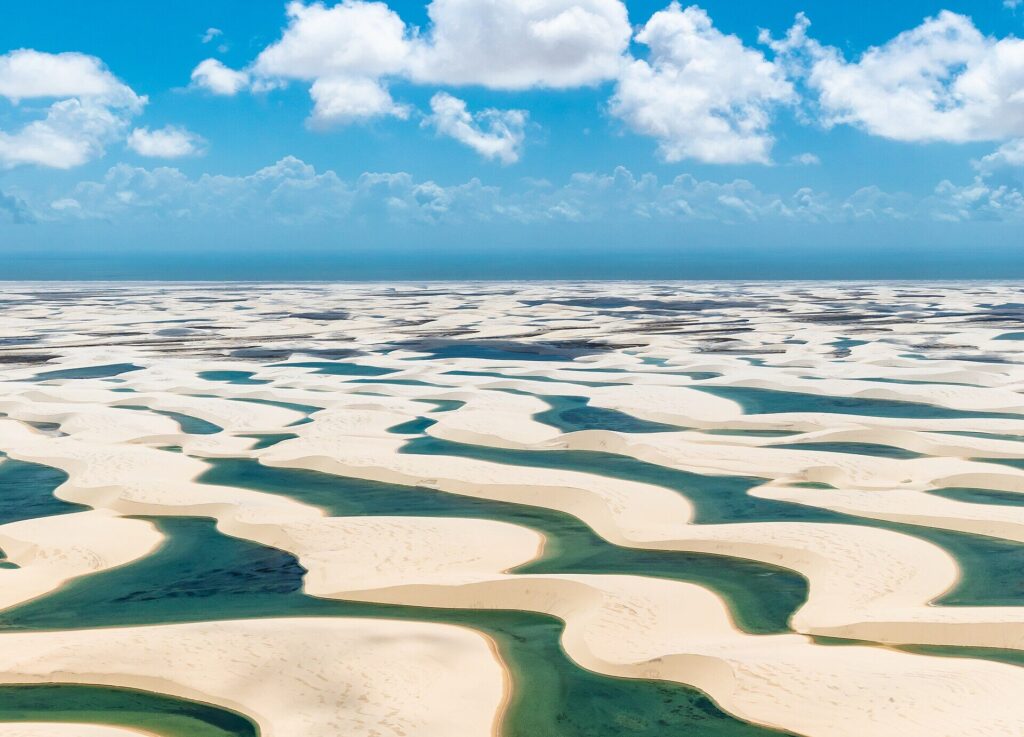
Rain also shapes the landscape in some Northeast destinations. The lagoons at Lençóis Maranhenses fill and drain with the seasons, so timing matters more there than almost anywhere else. See the park guide for details.
Pantanal and the Center-West: Floods, Dust and Cold Snaps
The Pantanal runs on a flood cycle. Researchers describe four hydrological phases: flooding, recession, dry season and rising water, which is more nuanced than a simple wet/dry split. In the dry months, roads are less boggy, wildlife gathers around rivers and lakes, and there are far fewer mosquitoes.
The wet season changes access. Wet conditions from November through March can flood roads and limit lodge access to boats. Check your lodge’s operating dates before booking.
Dry-season temperatures are not uniform. Midday can reach 32–36°C (90–97°F), while nights in June and July can fall to 10–15°C (50–59°F). Early-morning safaris need a fleece. Occasionally a cold front called the friagem arrives, typically in July, and temperatures can briefly drop as low as -1°C. Our Pantanal guide covers lodges and routes.
Brasília and the high interior have a different feel. Winters there are pleasant, around 22°C, with very low humidity. It is a welcome contrast to the coast.
The South and Iguazu: Where Winter Is Real
Below the Tropic of Capricorn, Brazil has genuine seasons. The warm, humid season runs October to March, and winter arrives between May and September. In the highlands, nights can drop near freezing, and the sunny beach image of Brazil doesn’t apply.
Many hotels and homes in the South are built for mild weather, so ask whether your room has heating in winter. Summer is the season for coastal towns such as Florianópolis, but expect humidity and thunderstorms.
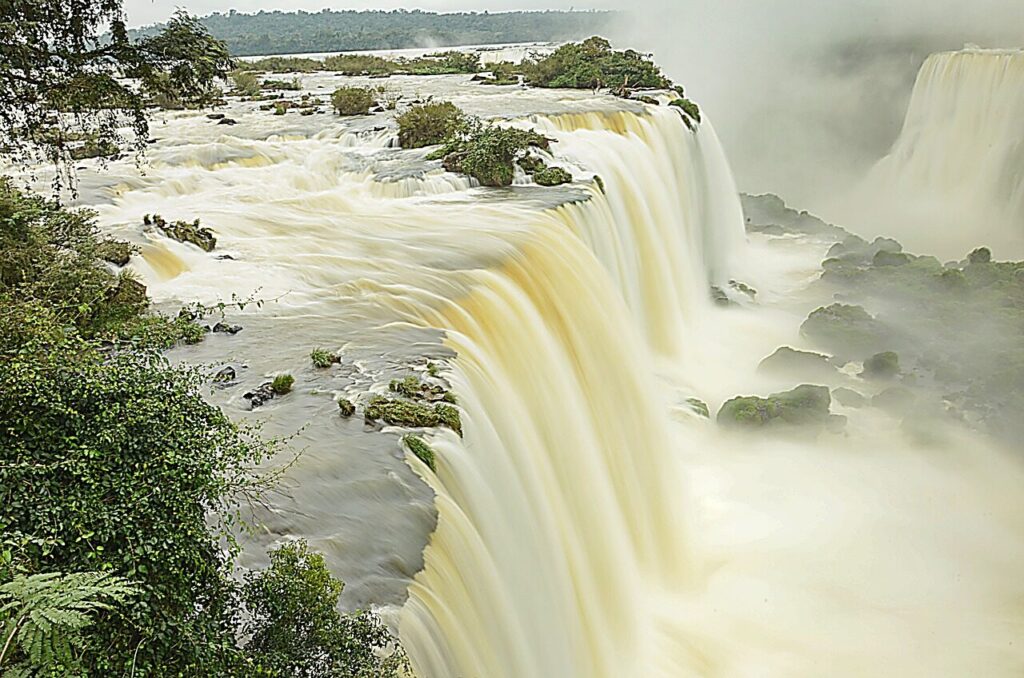
Iguazu Falls sits in this subtropical zone, so rain can come in any month. Heat and humidity peak in summer, and winter days are cooler. Our Foz do Iguaçu guide has more on timing your visit.
Daily Weather: Rain, Heat and What to Wear
Tropical rain in Brazil usually arrives in bursts, not as all-day drizzle. A thin waterproof jacket or a compact umbrella handles most of it. In the Amazon and the Northeast, plan outdoor activities for the morning and expect storms later.
Heat is more of a factor than rain in the north and along much of the coast. Humidity makes 30°C feel hotter than it reads. Use sun protection every day, including in winter, and drink more water than you think you need.
Celsius is the standard in all forecasts. For US readers, these anchors help:
- 20°C is 68°F, a comfortable day
- 30°C is 86°F, hot and humid on the coast
- 35°C is 95°F, the point where afternoon sightseeing gets hard
- 10°C is 50°F, a cold morning in the Pantanal or the South
Air conditioning in buses, restaurants and malls can be strong. A light layer is useful even in the tropics.
Planning Your Visit
If your route crosses climates, pick the region with the narrowest good window first and fit the others around it. The Pantanal and the Amazon are the least flexible, while Rio and the Northeast coast tolerate most months.
For forecasts, use Brazil’s national weather service, INMET, which publishes city-level pages such as the one for Rio de Janeiro. Local weather apps are fine for quick checks. Look at the forecast a few days before each leg, and keep one flexible day in regions where storms are common in your travel month.
Frequently Asked Questions
When is the rainiest time in Brazil?
It depends on the region. The Amazon is wettest from roughly December to May, Rio and the Southeast from October to March, and the Salvador coast from April to July. The South gets rain fairly evenly all year, so there is no single rainy season for the whole country.
Is Brazil hot in winter?
Mostly yes, in the tropics. Rio’s winter days are typically warm, around 25°C (77°F). The Amazon and Northeast coast stay hot all year. The exception is the South, where winter brings cold nights, frost in some places, and the occasional snowfall in the highlands.
Does it rain all day during the rainy season?
Usually not. Tropical rain often arrives as short, heavy downpours followed by sun, especially on the coast and in the Amazon. Some regions, like the South, can have longer overcast spells. A light rain jacket and flexible plans handle most situations.
Does Brazil have hurricanes?
Hurricanes are very rare in Brazil. The more common weather hazards are heavy rainfall, flash flooding, landslides in hilly areas, and extreme heat. Your hotel or tour operator can tell you if local conditions affect your plans, and INMET issues official warnings.
Which part of Brazil has the best weather during North American and European winter?
December to February is summer in Brazil, so expect heat everywhere. The Northeast coast is often the sunniest choice, though temperatures can be very high. Rio is hot and can be stormy. The Amazon and Pantanal are in their wet season, and the South is warm and humid.
What should I pack for Brazil?
Light, breathable clothes, sun protection and a thin rain jacket cover most trips. Add a warmer layer for São Paulo evenings, the South in winter, and early Pantanal safaris. Insect repellent is useful in the Amazon and Pantanal.