

You do not need to speak Portuguese to travel in Brazil, but a few dozen phrases change how the trip feels. Outside the main tourist areas, English is limited, and even in good hotels the person at the next counter or taxi window often speaks none. The brazilian portuguese phrases for travelers below cover the situations you will actually meet: greeting people, ordering, finding your way, paying, and getting help.
Brazilians respond warmly to any effort, even a clumsy one. Start every exchange in Portuguese, then switch to gestures, a translation app or English if needed. That small opening gets you much better service than starting in English.
Everything here is Brazilian Portuguese, which differs from the European variety in pronunciation, vocabulary and some grammar. If you learned Portuguese in Portugal, or are using a course aimed at it, see the comparison table later in the article.
Pronunciation Basics That Make You Understood
Portuguese looks like Spanish on the page and sounds quite different. A handful of rules will fix most problems.
- Nasal vowels: ão (as in não, pão) is a nasal sound close to “owng” with the “ng” barely pronounced. Vowels before m or n at the end of a syllable are nasal too.
- lh and nh: lh sounds like the “lli” in “million”, and nh like the “ny” in “canyon”. Trabalho and amanhã follow these.
- D and T before “i”: In most of Brazil, di sounds like “jee” and ti like “chee”. That is why tchau and tarde sound the way they do. A final unstressed e gets the same treatment, so noite sounds like “NOY-chee”.
- R at the start of a word or doubled (rr): Usually an “h” sound, like English “hat”. Rio sounds like “HEE-oo”. Regional accents vary, and some areas roll or tap the r.
- J and G before e/i: Both sound like the “s” in “measure”.
- Ç, X and CH: Ç is an “s”, and ch is “sh”. X is often “sh” too, as in caixa.
- Final S in Rio: Cariocas pronounce an s at the end of a syllable as “sh”, so Brasil sounds closer to “bra-ZEEOO” and festa to “FESH-ta”. Elsewhere it is a plain “s”.
Stress usually falls on the second-to-last syllable. When it doesn’t, the word carries an accent mark (café, você), or ends in certain consonants. Say words steadily rather than fast, because Brazilians tend to guess your meaning from context anyway.
Brazilian Portuguese Phrases for Travelers: Greetings and Politeness
Greetings carry real weight in Brazil. Walking into a shop, bakery or hotel lobby without saying oi or bom dia comes across as cold. Do it every time, including to taxi drivers and waiters.
| Portuguese | Say it like | Meaning |
|---|---|---|
| Oi | oy | Hi (the everyday greeting) |
| Bom dia | bohm JEE-ah | Good morning |
| Boa tarde | BOH-ah TAR-jee | Good afternoon |
| Boa noite | BOH-ah NOY-chee | Good evening / good night |
| Tudo bem? | TOO-doo bayng | How’s it going? |
| Obrigado / Obrigada | oh-bree-GAH-doo / -dah | Thank you (men / women) |
| Por favor | poor fah-VOR | Please |
| De nada | jee NAH-dah | You’re welcome |
| Com licença | kohm lee-SEN-sah | Excuse me (to pass or get attention) |
| Desculpa | dees-KOOL-pah | Sorry |
| Prazer | prah-ZEHR | Nice to meet you |
| Tchau | chow | Bye |
Two points trip up first-timers. Obrigado changes with the speaker’s gender, not the listener’s: a man says obrigado, a woman says obrigada. And Tudo bem? is a greeting, not a medical inquiry. The standard reply is Tudo bem, e você? or simply Tudo bom.
For “you,” você works everywhere and is not rude. With much older people or in formal settings, use o senhor (to a man) or a senhora (to a woman). Using tu, common in some regions, is better left to locals.
Greeting customs include a cheek kiss between women and between men and women who are being introduced socially. The number of kisses varies by region, so follow the other person’s lead. Men usually shake hands or give a half-hug. A hotel clerk or tour guide will generally just say oi and smile.
Phrases for Getting Understood
These are the sentences you will use most often when a conversation goes beyond your vocabulary. Learn them before anything else, because they keep every other exchange from stalling.
- Você fala inglês? Do you speak English?
- Eu não falo muito português. I don’t speak much Portuguese.
- Não entendi. I didn’t understand.
- Pode repetir, por favor? Can you repeat that, please?
- Mais devagar, por favor. More slowly, please.
- Como se diz … em português? How do you say … in Portuguese?
- O que significa isso? What does this mean?
- Pode escrever? Can you write it down?
- Pode me mostrar no mapa? Can you show me on the map?
Brazilians often speak quickly and swallow endings, so asking for a repeat is normal and nobody minds. Asking someone to write a price or an address is also normal and saves a lot of confusion with numbers.
If you speak Spanish, you will understand written Portuguese quite well and can get by speaking slowly, but spoken Portuguese is harder to follow than you expect. Mixing Spanish into your sentences works only at the margins, and many Brazilians will switch to simple English instead.
Ordering Food and Drinks
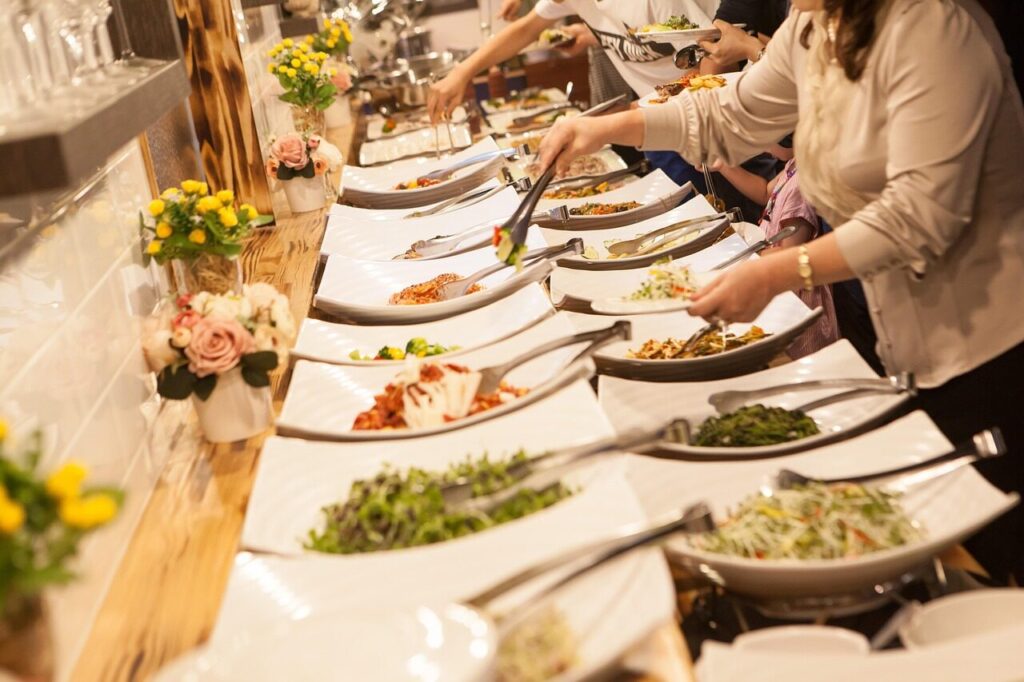
Restaurants are where a little Portuguese pays off fastest, because menus and servers rarely use English outside the tourist zones. For the dishes themselves, our guide to traditional Brazilian food explains what to order. The phrases below get it onto your table.
- Uma mesa para dois, por favor. A table for two, please. (Change dois to três, quatro, and so on.)
- Posso ver o cardápio? Can I see the menu?
- O que você recomenda? What do you recommend?
- Eu queria… I would like… (the polite way to order)
- Para mim, … For me, …
- Sem pimenta / sem gelo / sem cebola. Without chili / ice / onion.
- Tem opção vegetariana? Is there a vegetarian option?
- Sou alérgico / alérgica a… I’m allergic to… (amendoim peanuts, camarão shrimp, castanhas nuts, leite milk)
- Água com gás / sem gás. Sparkling / still water.
- A conta, por favor. The check, please.
- Pode dividir a conta? Can you split the check?
Waiters in Brazil do not bring the check until you ask, and lingering is considered polite. Catch the waiter’s eye and say a conta, por favor, or make a small writing gesture in the air. A service charge (serviço) is commonly added to the bill, so ask O serviço está incluído? if you are unsure whether to tip on top.
Menu words worth recognizing
At bars you will see porção, a shared plate of snacks meant for the whole table. A prato feito (often shortened to PF) is an inexpensive set lunch of rice, beans, a protein and a side. A chope is draft beer, and a cafezinho is a small, strong, usually sweet black coffee. At a por quilo restaurant you fill your own plate and pay by weight, and some places give you a comanda, a card that records your consumption. Do not lose it, since replacement often costs a fixed penalty.
Ordering a drink? The classic is covered in our caipirinha guide, and you can say com pouco açúcar if you want it less sweet.
Getting Around: Directions, Buses and Taxis
The key verb is ficar, which Brazilians use to mean “to be located.” So “Where is the bus station?” is Onde fica a rodoviária?, not the textbook onde está. You will hear it everywhere.
- Onde fica…? Where is…? (o banheiro the bathroom, o metrô the metro, a farmácia the pharmacy)
- Como eu chego a…? How do I get to…?
- Fica longe? / Fica perto? Is it far? / Is it close?
- Vire à direita / à esquerda. Turn right / left.
- Siga em frente. Go straight ahead.
- Na esquina. At the corner.
- Esse ônibus vai para…? Does this bus go to…?
- Pode me avisar quando chegar em…? Can you tell me when we reach…?
- Pode parar aqui, por favor. You can stop here, please.
- Quanto vai custar? How much will it cost?
Intercity travel uses a few set terms. The rodoviária is the long-distance bus station, aeroporto is the airport, and passagem is a ticket. Ida e volta means round trip, and só ida means one way. For taxis, ask Pode ligar o taxímetro? to make sure the meter is running.
With ride-hailing apps, drivers may message in Portuguese. Common texts include Cheguei (I’ve arrived) and Onde você está? (Where are you?). A simple Estou na frente do hotel (I’m in front of the hotel) answers most questions. Before getting in, confirm the name with Você é o…? and the plate number against the app.
If you are crossing to Argentina or Paraguay from the Iguazu region, remember that Spanish takes over on the other side of the border. Border guards and most tour operators will handle whichever language you use, as long as the key words (passport, tour, ticket) are clear.
Money, Numbers and Shopping
The currency is the real (plural reais), divided into centavos. Prices are spoken without much ceremony. You hear vinte reais or just vinte for 20, so numbers matter.
- 1 um, 2 dois, 3 três, 4 quatro, 5 cinco
- 6 seis, 7 sete, 8 oito, 9 nove, 10 dez
- 20 vinte, 30 trinta, 50 cinquenta
- 100 cem, 1,000 mil
For shopping and paying, these are the sentences you will reach for:
- Quanto custa? / Quanto é? How much is it?
- Aceita cartão? Do you take cards?
- Posso pagar em dinheiro? Can I pay in cash?
- Tem troco? Do you have change?
- Tem um tamanho maior / menor? Do you have a bigger / smaller size?
- Posso experimentar? Can I try it on?
- Vou levar. I’ll take it.
- Só estou olhando, obrigado/a. I’m just looking, thanks.
When paying by card, the terminal may ask débito ou crédito? (debit or credit) and sometimes à vista ou parcelado? (in one payment or in installments). Foreign cards are normally run as credit, in a single payment, so answer crédito, à vista. If a shop assistant says pois não?, that is a polite “how can I help you?” rather than a refusal.
Hotels and Arrival
Immigration officers sometimes ask the purpose of your visit. A short answer is Estou aqui a turismo (I’m here as a tourist). The paperwork you need depends on your passport, and the rules differ for US, UK and EU citizens, so check our guides to Brazil visa requirements for US citizens and entry requirements for EU and UK travelers before you fly.
At the hotel, a few sentences are all you need:
- Tenho uma reserva no nome de… I have a reservation under the name…
- A que horas é o café da manhã? What time is breakfast?
- Qual é a senha do Wi-Fi? What’s the Wi-Fi password?
- Pode guardar minha mala? Can you store my bag?
- O quarto tem ar-condicionado? Does the room have air conditioning?
- Preciso de mais toalhas. I need more towels.
Spelling your name aloud is hard even in English, so say Posso mostrar meu passaporte? (Can I show my passport?) and let the clerk copy it.
At the Beach
Beach culture in Brazil has its own routine: vendors walk the sand, kiosks rent chairs and umbrellas, and beachgoers keep belongings to a minimum. If you are still choosing a stretch of sand, our comparison of Copacabana and Ipanema will help. These phrases handle the practical side.
- Quanto é a cadeira e o guarda-sol? How much is the chair and the umbrella?
- Pode ficar de olho nas minhas coisas? Can you keep an eye on my things?
- Uma água de coco, por favor. A coconut water, please.
- Hoje não, obrigado/a. Not today, thanks. (A friendly way to decline vendors.)
- A água está fria? Is the water cold?
- Tem correnteza? Is there a current?
- Onde posso tomar uma ducha? Where can I rinse off?
A smile and a hand raised, palm out, with não, obrigado works for vendors. Ignoring them completely is the thing that tends to make them persist.
If the red flag is up or lifeguards (guarda-vidas) wave you back, take it seriously. Cuidado means “be careful,” and perigoso means “dangerous.” Our honest guide to safety in Brazil covers the broader picture of staying out of trouble.
Health, Safety and Emergencies
Learn these before you need them, because stress makes foreign words disappear. The emergency numbers are free to dial from any phone:
- 190: Military police (polícia)
- 192: Ambulance (SAMU)
- 193: Fire department (bombeiros)
Operators often speak little English, so short phrases help:
- Socorro! Help!
- Preciso de ajuda. I need help.
- Chame a polícia / uma ambulância. Call the police / an ambulance.
- Preciso de um médico. I need a doctor.
- Fui roubado / roubada. I was robbed (man / woman).
- Perdi meu passaporte. I lost my passport.
- Estou passando mal. I’m feeling unwell.
- Onde fica a farmácia / o hospital? Where is the pharmacy / the hospital?
- Tenho seguro viagem. I have travel insurance.
Pharmacies (farmácias) are common and pharmacists can help with minor problems. Some larger cities also have police stations that deal specifically with tourists. For a theft report, which you usually need for an insurance claim, ask for fazer um boletim de ocorrência (file a police report).
Regional Words and Everyday Slang
Brazil is large, and the way people talk changes from one region to the next. You do not need to copy local speech, but recognizing it makes conversations less puzzling. A few examples:
- Northeast (including Bahia): oxente is an all-purpose exclamation of surprise. Salvador’s accent is slower and sing-song, which our Salvador da Bahia travel guide shows in context.
- Minas Gerais: uai expresses surprise or “well, of course.”
- Rio Grande do Sul: bah and tchê are typical of the gaúcho accent.
- Rio: The “sh” pronunciation of final s described earlier, and cara (literally “face”) as “dude.”
Some everyday words you will hear across the country and can use freely:
- Beleza: Cool, OK, great. Also an answer to tudo bem?
- Valeu: Thanks (casual).
- Legal: Nice, cool.
- Tá bom / Tá bem: OK, fine.
- Gostoso: Tasty (for food) or pleasant.
- Saudade: A wistful longing for someone or something absent, with no single English equivalent.
Two things to avoid: the circle-shaped “OK” hand gesture, which is rude in Brazil, and a thumbs-up used sarcastically. A plain thumbs-up is used constantly for “good” or “thanks.”
Brazilian vs. European Portuguese
The two varieties are mutually understandable, but some everyday words differ. If your phrasebook came from Portugal, these swaps will help in Brazil.
| English | Brazil | Portugal |
|---|---|---|
| Bus | ônibus | autocarro |
| Train | trem | comboio |
| Breakfast | café da manhã | pequeno-almoço |
| Cell phone | celular | telemóvel |
| Juice | suco | sumo |
| Ice cream | sorvete | gelado |
| Bathroom | banheiro | casa de banho |
Grammar differs too. In Brazil you say estou falando (I am speaking), while in Portugal it is estou a falar. Pronunciation is the biggest gap: Brazilian vowels are open and clear, while European Portuguese swallows many unstressed vowels. Brazilians will understand a Portugal-trained speaker, but you may find their replies faster and more melodic than what you studied.
Planning Your Visit
Treat the phrases like a short course rather than a memory test. Learn the greetings and the “getting understood” list first, then add food and transport phrases for your first city, and leave the beach and emergency lists for the flight. Listening to Brazilian audio before you go helps more than staring at word lists, because it trains your ear to the rhythm.
Carry a few things on your phone: an offline Portuguese language pack in a translation app, a screenshot of your hotel’s address written in Portuguese, and the emergency numbers. Translation apps cope well with short, plain sentences and badly with slang, so keep your questions simple.
Finally, remember that mistakes are fine. A wrong gender or a mangled verb will be forgiven, and what people notice is the greeting, the por favor and the obrigado. Start there in every conversation, and the rest tends to sort itself out.
Frequently Asked Questions
Is English widely spoken in Brazil?
Not widely. You will find English in international hotels, at major tourist sights and with some tour guides, especially in Rio and São Paulo. Outside those settings, such as taxis, small restaurants, markets and buses, little English is spoken. Learning basic Portuguese phrases, plus using a translation app for harder exchanges, makes travel much smoother.
Can I get by in Brazil with Spanish?
Partly. Written Portuguese is easy to read if you know Spanish, and Brazilians often follow slow, clear Spanish. But spoken Portuguese sounds quite different, and mixing the two languages can confuse both sides. Use Spanish as a backup, not a plan, and learn the core Portuguese greetings, numbers and food words.
How do I say thank you in Brazilian Portuguese?
Men say “obrigado” and women say “obrigada,” because the ending follows the speaker’s gender. For “you’re welcome,” say “de nada.” Casual speakers also say “valeu,” which is closer to “thanks.” Saying thank you often, to waiters, drivers and shop staff, is a normal part of everyday politeness.
Is Brazilian Portuguese very different from Portugal’s?
They are the same language but differ noticeably in pronunciation, vocabulary and some grammar. Brazilian vowels are clearer, and many everyday words change, such as “trem” for train and “suco” for juice. People understand each other, but if you learned in Portugal, expect to adjust a bit.
Is a translation app good enough on its own?
It helps, but it works best as support. Apps handle short, plain sentences well and struggle with slang, fast speech and background noise. Using even a few spoken phrases first builds goodwill and makes people more patient when you pull out your phone. Download offline Portuguese before you travel in case signal is weak.