
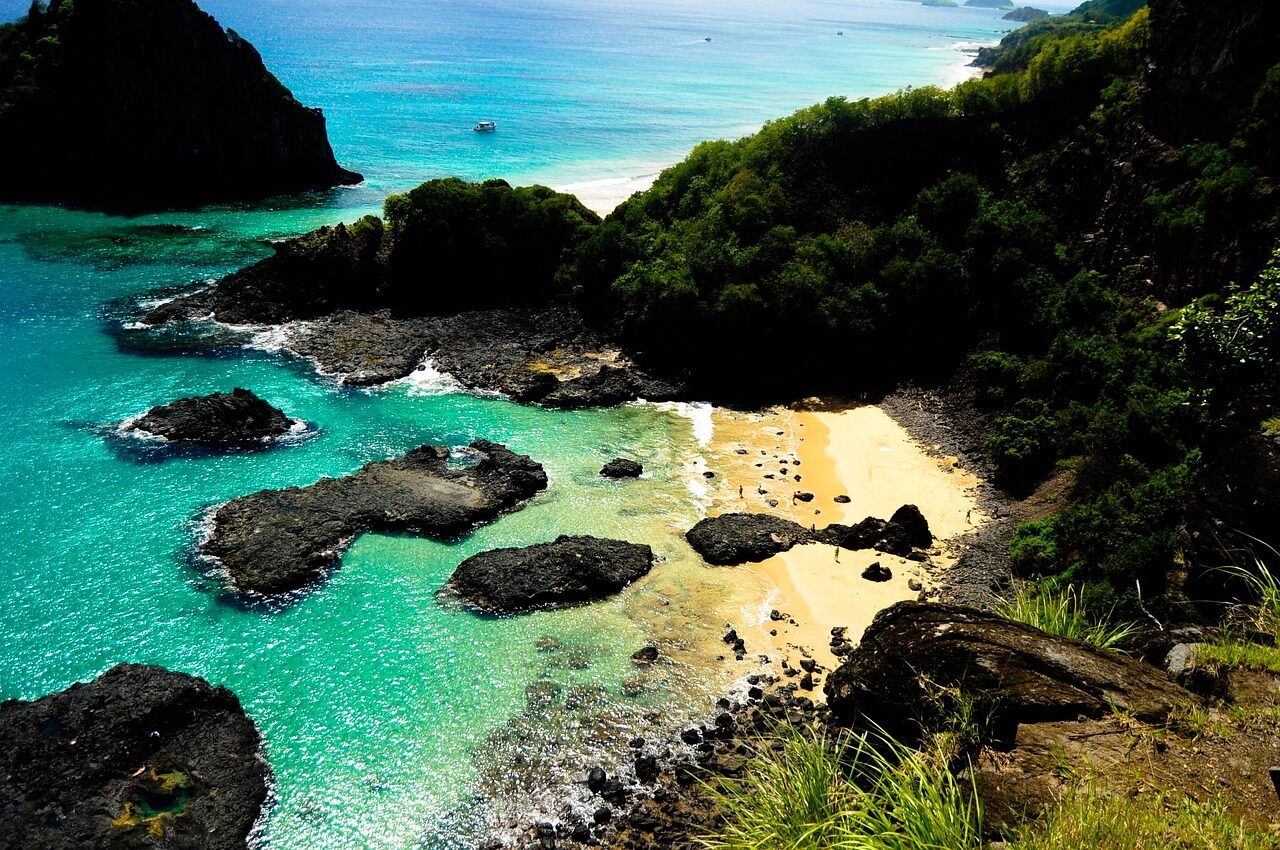

The best beach in Brazil depends on what you want from it. For clear water and scenery, Baía do Sancho on Fernando de Noronha is the usual winner. For wind, dunes and sunsets, go to Jericoacoara. For forest-backed sand within reach of Rio, Lopes Mendes on Ilha Grande is hard to beat.
The best beaches in Brazil are spread across more than 4,000 miles of Atlantic coast, plus a few freshwater sandbars deep in the Amazon. Water temperature, tides, waves and the way you reach the sand change dramatically from region to region. This guide sorts the coast into practical zones so you can match a beach to your trip rather than just chase a ranking.
The Best Beaches in Brazil at a Glance
Use this table to shortlist, then read the regional sections for detail. “Getting there” describes the usual route, not the only one.
| Beach | Region | Best for | Getting there |
|---|---|---|---|
| Baía do Sancho | Fernando de Noronha | Scenery, snorkeling, turtles | Domestic flight from Recife or Natal, then a short transfer |
| Jericoacoara | Ceará | Dunes, sunsets, kitesurfing | Road transfer by 4×4 or buggy from the Fortaleza area |
| Atins and Caburé | Maranhão | Dunes and lagoons, quiet coast | From Barreirinhas by boat or 4×4 |
| Pipa | Rio Grande do Norte | Cliffs, dolphins, nightlife | Road from Natal |
| Porto de Galinhas and Maragogi | Pernambuco and Alagoas | Reef pools, families | Road from Recife or Maceió |
| Praia do Espelho | Bahia | Tidal pools, calm water | Road from Trancoso |
| Itacaré beaches | Bahia | Surf, forest setting | Road from Ilhéus airport |
| Lopes Mendes | Ilha Grande, Rio state | Long surf beach, hiking | Boat from Angra dos Reis or Mangaratiba, then trail or boat |
| Arraial do Cabo | Rio state | Clear water, boat trips | Road from Rio |
| Praia do Rosa | Santa Catarina | Surf, whale watching, relaxed town | Road from Florianópolis |
| Alter do Chão | Pará (Amazon) | River beaches, sandbars | Flight to Santarém, then a short drive |
How Brazil’s Coast Changes From Region to Region
The Northeast has the warmest water and the most dependable sun. Rio state and the São Paulo coast are good in summer, but cooler water and passing fronts are common. The far south is a summer-only destination for swimming, though it stays pleasant for walking and surf.
Tides matter more than most visitors expect. Many of the Northeast’s best swimming spots are reef pools that only appear at low tide, so check a tide table the day before. At high tide the same stretch can look unremarkable.
For when each coast is at its best, see our month-by-month guide to the best time to visit Brazil. As a rule, the Northeast is driest from roughly September through March, and the south is busiest from December through February. Brazilian school holidays in January fill the popular beach towns, so book early for that stretch.
Northeast Beaches: Warm Water, Dunes and Reef Pools
Fernando de Noronha
This volcanic archipelago off the Northeast coast is the one place in Brazil that regularly appears on world beach rankings. Baía do Sancho sits at the bottom of a cliff, reached by a steep staircase set into the rock. The water is clear enough that snorkelers often spot turtles and reef fish close to shore.
Noronha is a protected marine park, so visitor numbers are managed and an environmental fee is charged on arrival. Flights are limited, and accommodation is small-scale and pricey for Brazil. Plan well ahead, and expect to base yourself at a pousada (small guesthouse) rather than a resort. Surf beaches like Cacimba do Padre are best in the winter swell months, while the calmer side of the island suits swimming and snorkeling.
Jericoacoara
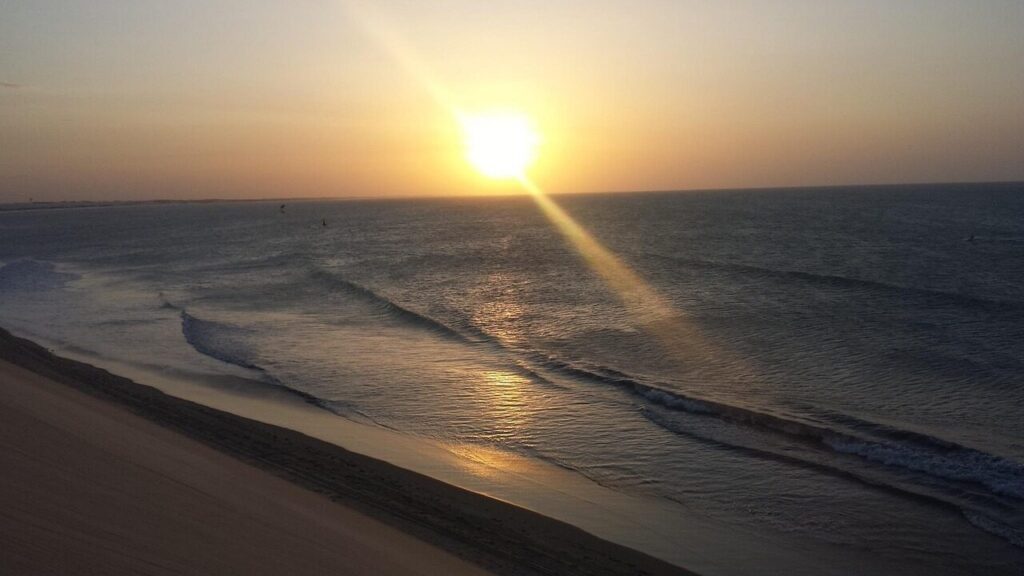
“Jeri” is a fishing village turned beach town where the streets are sand and the dunes start at the edge of town. The ritual is to climb the big dune at dusk and watch the sun drop into the sea. The wind also makes it one of Brazil’s top kitesurfing and windsurfing bases, with the steadiest wind in the second half of the year.
Day trips go to Pedra Furada, a rock arch on the shore, and to freshwater lagoons inland where bars set hammocks in the shallows. The lagoons are fullest after the rains in the first half of the year. Getting here takes a few hours by road from Fortaleza, with the last stretch done in a 4×4 or buggy.
Lençóis Maranhenses and the Maranhão coast
Lençóis Maranhenses National Park is technically dunes rather than beach, but it belongs on any serious list. After the rainy season, freshwater collects between the white dunes and forms turquoise lagoons you can swim in. They are fullest roughly in the middle of the year and gradually shrink afterward.
The gateway is Barreirinhas. For real beach time, continue to Atins or Caburé, where the dunes meet the ocean and the pace is slow. Facilities are basic, so lower your expectations for nightlife and raise them for silence.
Pipa, Porto de Galinhas, Maragogi and Carneiros
These are the Northeast’s comfortable, easy beach destinations. Pipa has red cliffs, a sheltered bay where dolphins are often seen, and plenty of restaurants. Praia do Amor and the cliff-backed sands nearby are popular for sunset and surf lessons.
Porto de Galinhas, south of Recife, is known for natural pools that form in the reef at low tide, where you can snorkel from a small fishing boat called a jangada. Maragogi, in Alagoas, has a similar reef system farther offshore. Boats take you out to the pools, and the water is shallow and very clear on a calm day. Praia dos Carneiros, near Tamandaré, is a calm, palm-lined strip with a small chapel near the sand, and it suits families.
One safety note: around Recife and nearby stretches of Pernambuco, certain beaches carry posted shark warnings. Respect the signs and swim only where locals do.
Bahia Beaches: Trancoso, Itacaré and the Island Coast
Bahia has a long coastline with very different personalities. South of Salvador you find two main styles: lively island beaches and slower, forest-lined stretches. If you are already planning time in the city, our Salvador da Bahia travel guide covers the urban beaches and how to pair them with a trip farther down the coast.
- Praia do Espelho (near Trancoso): Its name means “mirror beach,” and at low tide shallow pools form that reflect the sky. It is calm, relatively quiet and easy to combine with the town of Trancoso, known for its grassy central square and small restaurants.
- Itacaré: Forest runs right down to the sand, and several small surf beaches sit within a short ride of town. This is the pick for surfers and anyone who likes green hills with their ocean.
- Morro de São Paulo and Boipeba: Both are islands without cars, reached by boat. Morro has four numbered beaches, with the second one being the liveliest. Boipeba is quieter and suits people who want to disconnect.
- Praia do Forte: A comfortable resort-style base north of Salvador, home to a well-known sea turtle conservation center.
Beaches Near Rio and São Paulo
If your trip is built around Rio, you have a surprisingly wide range within a few hours. For the famous city beaches, our comparison of Copacabana vs Ipanema explains which suits you. Beyond those, Grumari and Prainha on the western edge of the city are protected stretches with fewer buildings and more natural scenery. They are quieter on weekdays, have limited facilities and are easiest to reach by car or ride-hailing app.
Ilha Grande and Paraty
Ilha Grande is a car-free island with forest-covered hills and dozens of beaches. Lopes Mendes is the headline: a long, wide stretch of pale sand with real surf and almost no development behind it. You can reach it by boat from Vila do Abraão or on foot via a forest trail, which takes a good while and is best in comfortable shoes.
Paraty, farther along the coast, is better known for its colonial center. It is also the departure point for schooner trips that stop at small islands and swimming coves. The water there is calm, and the trip suits people who want a relaxed day rather than surf.
Arraial do Cabo and Búzios
Arraial do Cabo, in the Lakes Region east of Rio, has the clearest water in the state. Boat tours stop at spots such as Praia do Forno and Prainha, and the white sand and turquoise color surprise first-time visitors. The water is often cold because of a cold-water upwelling offshore, so do not expect Northeast temperatures.
Búzios is a rocky peninsula with more than twenty beaches, from calm coves like Ferradura to surf-friendly Geribá. It is a polished resort town with lots of restaurants and an easy-going evening scene. If you want choice and comfort over wilderness, Búzios delivers.
The São Paulo coast
For São Paulo-based trips, the north coast around Ubatuba, Ilhabela, Maresias and Juquehy is the usual weekend escape. Beaches range from calm bays to proper surf spots, with plenty of waterfalls and trails inland. Traffic on the coastal roads gets heavy on holiday weekends, so travel midweek or leave very early if you can.
Santa Catarina and the South
The south has Brazil’s most European-feeling beach scene, with cooler water, strong waves and long summer days. Florianópolis is the main hub, with dozens of beaches on one island, from lively Jurerê to dune-backed Joaquina and trail-only coves. Our Florianópolis travel guide covers the island in detail, so here the focus is on what lies beyond it.
Praia do Rosa, south of Florianópolis, is a surf-oriented beach town with green hills behind a curved bay. From roughly mid-year through spring, southern right whales often come close to shore nearby. Bombinhas, to the north, has calmer water and clear coves that suit snorkeling, and it is popular with Brazilian families in summer.
The southern beaches are best between December and March. Outside that window the water is cold and many businesses scale back, so only go if you want quiet and surf rather than swimming.
River Beaches in the Amazon
Brazil’s best beaches are not all on the Atlantic. In the dry season, receding rivers expose wide sandbars and white-sand riverbanks in the Amazon basin. Alter do Chão, on the Tapajós River near Santarém, is the most famous. A sandbar called Ilha do Amor appears in the dry months, roughly in the second half of the year, and the water is calm, clear and freshwater.
Closer to Manaus, Ponta Negra is the city’s river beach, better for sunset and a walk than for a long swim. To combine river beaches with rainforest lodges and wildlife trips, see our guide on how to visit the Amazon rainforest from Brazil. The water level changes the landscape completely, so ask locally what is accessible when you go.
Beach Safety and Etiquette in Brazil
All Brazilian beaches are legally public, so no hotel can close off the sand. Parking, access roads and boat landings can still be private, and some charge fees. Always check what is actually accessible rather than assuming you can walk in.
- Currents and waves: Many beaches face open Atlantic surf. Look for lifeguard posts and warning flags, and avoid swimming alone on remote beaches, even if the water looks calm.
- Chairs and umbrellas: Beach huts called barracas rent chairs and umbrellas, usually on the understanding that you order food or drinks. Agree on the arrangement before sitting down.
- Vendors: Walking sellers offer grilled cheese on a stick (queijo coalho), shrimp skewers, hats and drinks. A polite “não, obrigado” is enough if you are not interested.
- Valuables: Bring only what you need to the sand, such as a card, a little cash and a phone in a small pouch. Theft is more common on busy urban beaches than on remote ones.
- Sun: The sun is intense, especially near the equator. Bring reef-friendly sunscreen, a hat and a rash guard for long days on the water.
- Dress: Swimwear is small by US and UK standards, but topless sunbathing is uncommon and generally not accepted on most public beaches.
For wider safety context, see our honest guide on whether Brazil is safe for tourists. Government travel advisories from the US, UK and EU countries are worded differently, so read the one issued by your own government before you go.
Planning Your Visit
Choose one coastal region per trip rather than trying to sample everything. Distances are large, and domestic flights and transfers eat time. A week works well for a single zone, such as Rio plus Ilha Grande, or Fortaleza plus Jericoacoara.
Entry rules differ by passport. US citizens need a visa for tourism under rules that took effect in April 2025, covered in our Brazil visa guide for US citizens. UK and EU travelers can generally visit without a visa for short stays, but rules and documentation requirements change, so confirm them in our entry requirements for EU and UK travelers before booking.
Book Noronha, Jericoacoara and Morro de São Paulo well ahead for January and Carnival weeks. Carry some cash for small beach towns, boat operators and barracas, since card machines fail more often than you might expect. Finally, check tides, wind and the rainy-season pattern for your exact dates, because those three factors shape a beach day more than any ranking does.
Frequently Asked Questions
What is the single best beach in Brazil?
Baía do Sancho on Fernando de Noronha is the most consistently praised, thanks to its clear water, cliff setting and snorkeling. It is not the most convenient, though. If you want an easier trip, Lopes Mendes on Ilha Grande or Praia do Rosa in Santa Catarina give you excellent scenery with simpler logistics.
Which Brazilian beaches have the calmest water for swimming?
Look for reef-protected spots in the Northeast, such as Maragogi, Porto de Galinhas at low tide and Praia dos Carneiros. Praia do Espelho in Bahia is also gentle. Open surf beaches like Joaquina or Geribá are better for watching waves than for relaxed swimming, especially with children.
Are beaches in Brazil free to enter?
Yes, the sand itself is public by law. You do not pay to access a beach, even in front of a resort. Fees can apply for parking, private access roads, boat landings or protected areas, and Fernando de Noronha charges an environmental fee on arrival.
When is the best time of year for beaches in Brazil?
It depends on the coast. The Northeast is generally best from about September to March, while the south and Rio state peak from December to March. The Amazon’s river beaches appear in the dry months. Match your dates to the region rather than picking one season for the whole country.
Can I see good beaches and the Amazon on the same trip?
Yes, but plan around flight times. Fortaleza and Jericoacoara pair reasonably well with a Manaus or Santarém flight, and Alter do Chão combines beach time and rainforest in a single stop. Pairing the Amazon with Rio beaches works but needs a full day of travel each way.
Is swimming in the sea in Brazil safe?
Usually, if you follow local signals. Swim near lifeguards when possible, heed warning flags and avoid beaches with strong shore-break or rip currents. Around Recife, some beaches have posted shark warnings, so only swim where signs and locals say it is fine.