

Traditional Brazilian food is not one cuisine but several, shaped by Indigenous cassava and fish cooking, African techniques and ingredients, Portuguese stews and sweets, and later waves of Italian, Japanese and Lebanese immigrants. The 25 dishes below cover the national staples, the street snacks, and the regional specialties that define Bahia, the Northeast, Minas Gerais, the South and the Amazon.
If you only have time for a handful, start with feijoada, a good grilled-meat meal, pão de queijo, a moqueca and something sweet. The rest of this guide explains what each dish is, where it belongs, and how to order it without guessing.
Traditional Brazilian Food: The National Staples
These five show up in every region, at every price level, often on the same table. Learn them first and the rest of a menu starts to make sense.
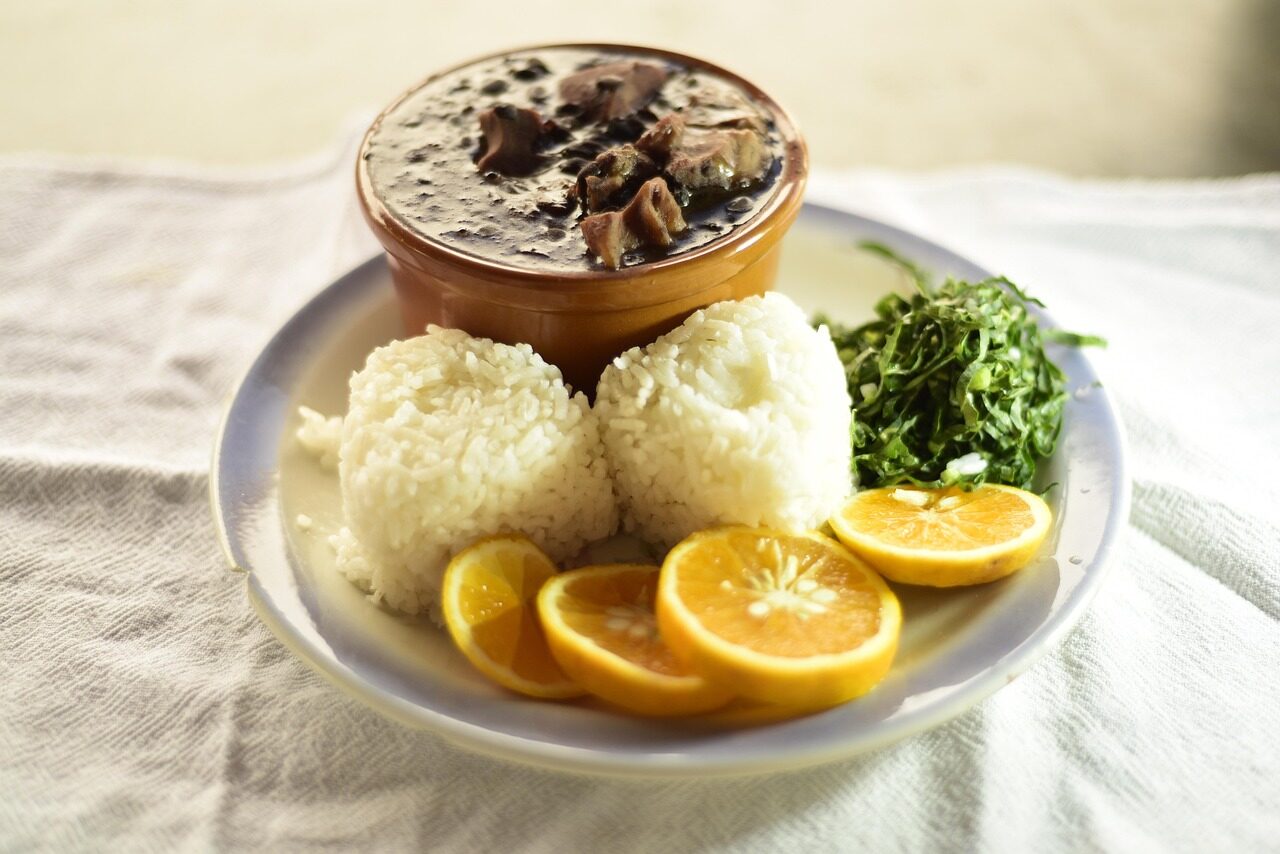
- Feijoada. Black beans slow-cooked with cuts of pork and sometimes smoked sausage and dried beef. It arrives with white rice, sautéed collard greens, orange slices and toasted manioc flour. It is heavy and meant for a long lunch, traditionally on Saturdays, so skip the big breakfast.
- Arroz e feijão with prato feito. Rice and beans are the daily base of Brazilian eating. A prato feito (often shortened to PF) is the set lunch plate: rice, beans, a protein, salad and usually fries or pasta. In many cities you will also find por quilo restaurants, where you fill a plate from a buffet and pay by weight.
- Farofa. Manioc flour toasted in butter or oil, sometimes with bacon, egg or banana. It is sprinkled over beans and meat for crunch and to soak up juices. Think of it as a seasoning more than a side dish.
- Churrasco and picanha. Churrasco is Brazilian barbecue, strongest in the South, where gaúcho tradition centers on beef cooked over coals. Picanha, the rump cap with its fat layer, is the signature cut. At a rodízio steakhouse, waiters bring skewers to your table until you flip your marker to signal you are done.
- Pão de queijo. Small, chewy cheese rolls from Minas Gerais, made with manioc starch rather than wheat flour. They are eaten at breakfast and with afternoon coffee, ideally still warm. They are usually gluten-free in the recipe, but confirm with the kitchen if you have celiac disease, as cross-contamination is possible.
Street Food and Bakery Snacks
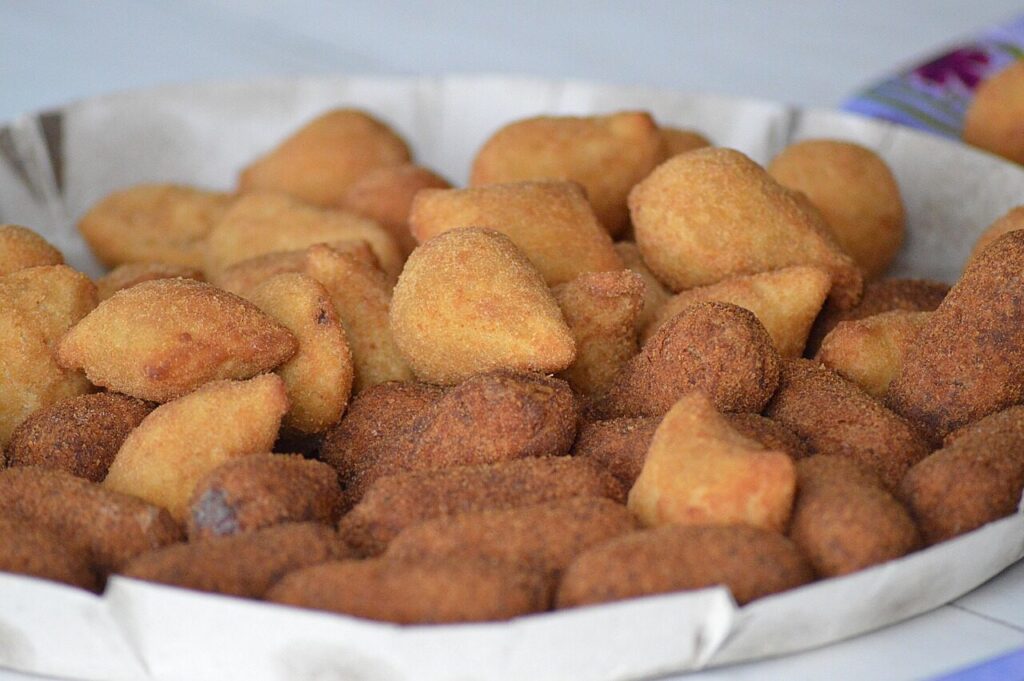
Brazil eats between meals, and most cities have a lanchonete or bakery on every block. These are the snacks you will see in glass counters. São Paulo is especially strong here, and our guide to the best things to do in São Paulo points you toward the markets and neighborhoods where they are done well.
- Coxinha. A teardrop-shaped croquette of shredded chicken in dough, breaded and fried. Some versions include a creamy cheese called catupiry. It is the standard bar snack, and a good coxinha is crisp outside and moist inside.
- Pastel. A thin, blistered fried pastry filled with cheese, ground beef, hearts of palm or shrimp. It is a fixture of weekly street markets (feiras), where people eat it with fresh sugarcane juice. Eat it right away, while it is still crisp.
- Tapioca. A flat, chewy crepe made by griddling hydrated manioc starch, then folding in fillings. Coconut, cheese and condensed milk are the classics. It is naturally gluten-free and common on beachfront stalls, especially in the Northeast.
- Esfiha. A small, open-faced baked pie topped with spiced meat or cheese, brought by Lebanese and Syrian immigrants. It is especially associated with São Paulo, but you will find it throughout the country. Order a few with a cold drink as a quick lunch.
Bahia and the Northeast
Bahian cooking has the strongest African imprint in Brazil, built on coconut milk, shrimp, peppers and dendê, a reddish palm oil with a distinctive flavor. The Northeast beyond Bahia leans toward sun-cured meat, cassava and cheese. If you are heading to the coast, our Salvador da Bahia travel guide covers where to eat these dishes in the city.
- Moqueca baiana. A fish or shrimp stew simmered with coconut milk, dendê, tomatoes, peppers and cilantro, usually served with rice and pirão (a fish-broth porridge). The neighboring state of Espírito Santo makes moqueca capixaba, which skips coconut milk and dendê and uses annatto for color, cooked in a clay pot. Both are worth trying if you can.
- Acarajé. A fritter of mashed black-eyed peas deep-fried in dendê, then split and stuffed with vatapá, shrimp and a spicy relish. It is sold on the street by baianas in traditional white dress and has deep ties to Afro-Brazilian religious tradition. Tell the vendor quente for hot or frio for mild chili.
- Vatapá and caruru. Two creamy companions to acarajé, also served as dishes in their own right. Vatapá is a paste of bread, shrimp, coconut milk, nuts and dendê. Caruru is an okra stew with dried shrimp and similar seasonings.
- Carne de sol. Lightly salted beef that is dried in the shade and sun, then grilled or fried. It is richer and more tender than jerky and typically comes with cassava, rice and butter. It is a signature of the sertão, the dry interior of the Northeast.
- Baião de dois. Rice and beans cooked together with cheese, often with sausage or dried beef and fresh herbs. It is associated especially with Ceará. It is comfort food and often a good first Northeastern order.
Minas Gerais and the South
Minas Gerais is known for hearty, farm-style cooking, while the South has its own regional dishes alongside the beef culture. Both are less visited by food-focused travelers than they deserve.
- Feijão tropeiro. Beans tossed with manioc flour, sausage, bacon, egg and collard greens. It traces back to the muleteers who carried goods through the mining country. It is a filling plate on its own.
- Barreado. A slow-cooked beef stew from the coast of Paraná, traditionally sealed in a clay pot and cooked for hours. It is served with manioc flour and banana. The town of Morretes is the classic place to try it.
The Amazon
Northern cooking relies on river fish, manioc products and forest ingredients you will not find elsewhere, including tucupi, a yellow broth extracted from wild manioc, and jambu, a leaf that makes your mouth tingle. Most of these dishes are easiest to find in Belém and Manaus; our Manaus travel guide and our piece on how to visit the Amazon rainforest from Brazil help with planning.
- Tacacá. A hot soup served in a gourd bowl (cuia), combining tucupi, jambu, dried shrimp and gummy manioc starch. It is sold in the late afternoon by street vendors. The tingling sensation from the jambu is normal.
- Pato no tucupi. Duck cooked in tucupi with jambu, usually served with rice and manioc flour. It is tangy, earthy and unlike anything in the South. It is strongly tied to Pará.
- Pirarucu. One of the largest freshwater fish in the world, with mild, firm white flesh. It is grilled, fried or served in stews across Amazonian restaurants. Ask for it fresh and legally sourced, as the fish is subject to fishing regulations.
- Açaí. In the Amazon, açaí is a thick, dark, unsweetened purple pulp eaten at lunch or dinner with fish and manioc flour. The sweet version blended with banana, granola or guaraná syrup is the southern adaptation. Try the regional style if you want the original.
Sweets and Drinks
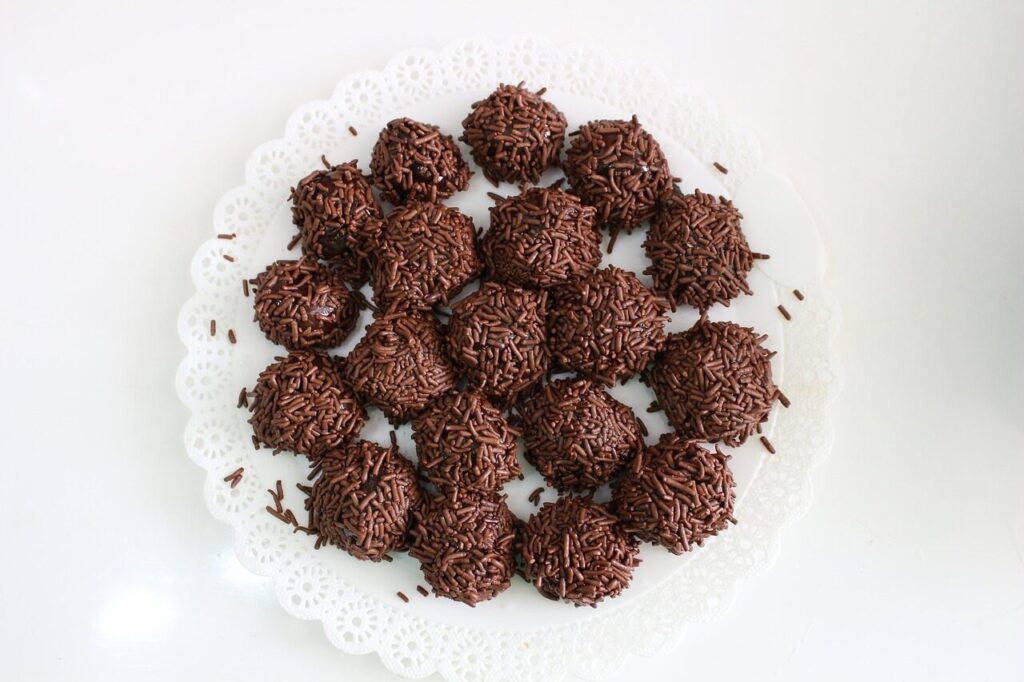
Brazilian desserts lean on condensed milk, eggs and coconut. Drinks are simple but memorable.
- Brigadeiro. A fudgy truffle of condensed milk, cocoa and butter rolled in chocolate sprinkles. It is a fixture of children’s birthday parties and is sold in shops across the country. Gourmet versions use better chocolate and creative flavors.
- Quindim. A glossy yellow custard made with egg yolks, sugar and grated coconut, with Portuguese convent roots and strong ties to Bahia. It is sweet, dense and very eggy.
- Pudim de leite. A dense condensed-milk flan with caramel sauce, often found in restaurants at the end of a meal. It is firmer and creamier than a typical French-style crème caramel.
- Caipirinha. The national cocktail: cachaça (sugarcane spirit), muddled lime and sugar over ice. It is stronger than it tastes, so pace yourself in the heat. Fruit variations are common, and a caipiroska swaps in vodka.
- Guaraná. A sweet, lightly fruity soda made from the guaraná berry, which grows in the Amazon. Most Brazilians treat it as the default soft drink. It is a good low-stakes thing to taste at any lunch counter.
Planning Your Visit
Lunch is often the main meal of the day, and set-lunch plates and por quilo buffets are usually the best value. Dinner tends to be later and lighter, though restaurants in big cities keep long hours. For a realistic sense of daily food budgets, see our breakdown of how much a trip to Brazil costs.
- Service charge. Many restaurants add a service charge of around 10 percent to the bill. Check the receipt before adding more.
- Spice. Most dishes are seasoned, not hot. Chili sauce (molho de pimenta) usually arrives on the side, so add it gradually.
- Dietary needs. Vegetarians will find it easier in big cities than in regional or rural areas, where even beans may contain pork. Say sem carne (without meat) and ask what is in the beans. For allergies, write the allergen name down in Portuguese.
- Street food. Choose busy stalls where food is cooked to order and served hot. That is the simplest way to lower your risk.
- Bringing food home. Rules differ by destination. The EU and UK generally prohibit personal imports of meat and dairy products from outside the EU, and the US restricts many meat products and some dairy. Check the current rules for your country before buying cheese or cured meats, and declare any food you carry. Sealed sweets and manioc flour are usually simpler, but confirm first.
If you are still choosing where to base yourself for food, our comparison of Rio de Janeiro vs São Paulo is a good place to start, since the two cities offer very different eating experiences.
Frequently Asked Questions
What is Brazil’s national dish?
Feijoada is the one most often called the national dish, a black bean and pork stew served with rice, greens and toasted manioc flour. In practice, everyday eating revolves more around rice and beans. Feijoada is the celebration version, usually eaten at long weekend lunches.
Is Brazilian food spicy?
Mostly no. Brazilian dishes are well seasoned with garlic, onion, herbs and peppers, but they are rarely hot. Chili sauce is normally served on the side. Bahian food can taste intense because of dendê palm oil and coconut milk, but that is richness, not heat.
Can vegetarians eat well in Brazil?
In big cities, yes: many restaurants and por quilo buffets offer salads, vegetable dishes, rice and beans. Elsewhere it is harder, because beans are often cooked with pork or bacon. Ask whether the beans contain meat and say you eat “sem carne.” Tapioca, pão de queijo and fruit juices are easy fallbacks.
Is street food in Brazil safe to eat?
Generally, if you choose carefully. Stick to busy stalls that cook food fresh and serve it hot, such as pastel at a market or acarajé from an established vendor. Be more cautious with anything sitting out, raw seafood in the heat, or ice from unknown sources if your stomach is sensitive.
What should I order first in Brazil?
A prato feito or por quilo lunch gives you rice, beans and a protein cheaply, with no guessing. Add a pão de queijo with coffee for breakfast, and a regional dish wherever you are: moqueca in Bahia, tacacá in the Amazon, or churrasco in the South.