
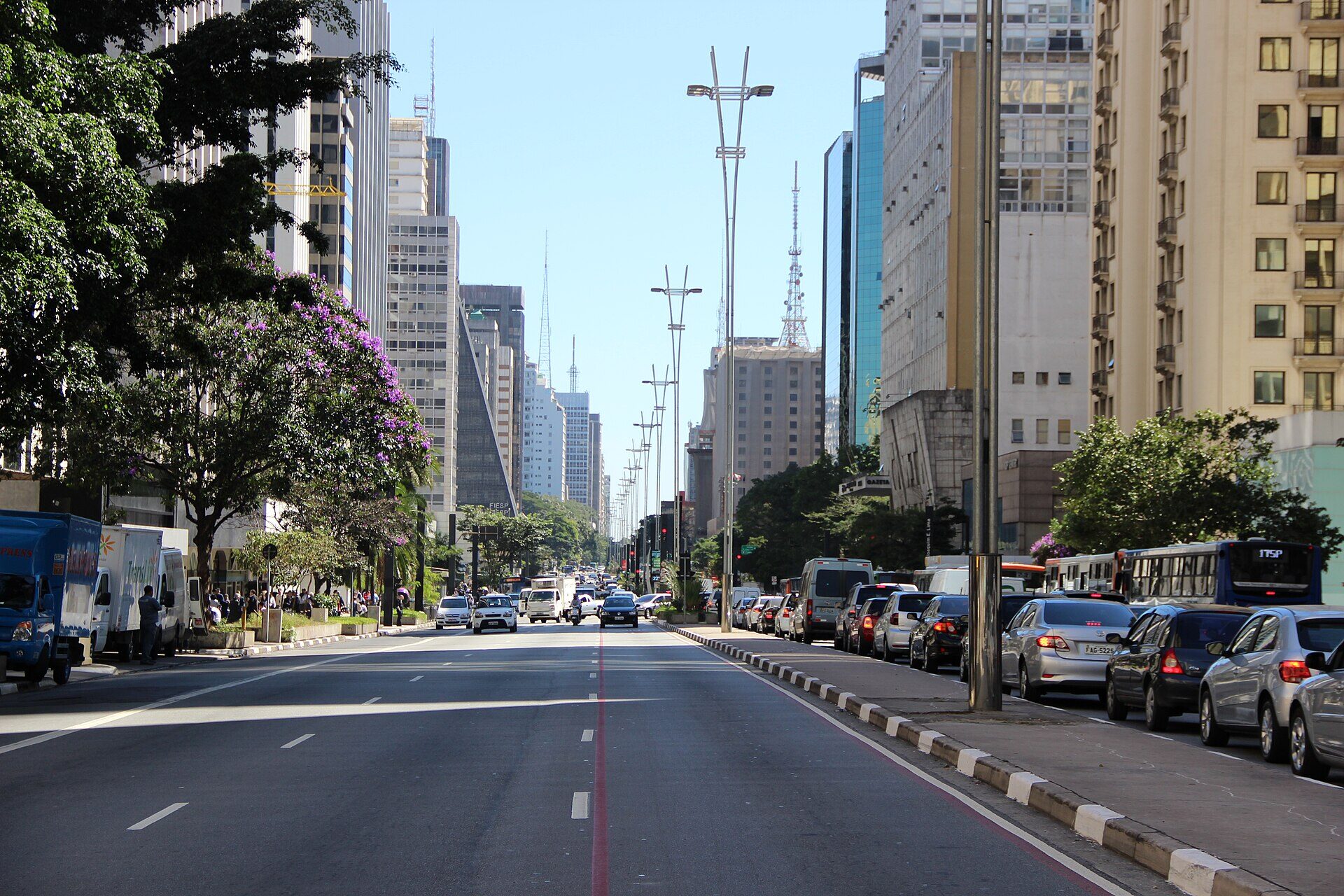

Yes, Uber in Brazil is generally safe, and for most visitors it is the best way to get around a big city, especially after dark. Government advice backs this up: Australia’s travel advisory calls registered taxis and rideshare apps, such as Uber, generally safe, and the US State Department notes that US government employees working in Brazil are allowed to use Uber, which has safety features such as traceable operations.
The real risks are small and avoidable: getting into the wrong car, a declined foreign card at the worst moment, and waiting for a pickup in a bad spot. This guide covers all three. For the wider picture, see our honest guide to safety in Brazil.
How Uber Works for Visitors
The app behaves the way it does at home. You enter a destination, see an upfront price, and a nearby driver accepts. Your account from the US, UK or EU works in Brazil, and Uber, 99, inDrive and Cabify can all be registered with an overseas phone number and an international credit card. Nothing needs a Brazilian tax number (CPF) for a basic ride.
You do need mobile data to request a car and to follow it on the map. Set up an eSIM before you land (see our SIM and eSIM guide) so you aren’t hunting for airport Wi-Fi with luggage in tow.
Fares are set by the app, and they rise with demand. Heavy rain and rush hour are the usual triggers, so a ten-minute ride can cost noticeably more at 6 p.m. in a downpour. Check the price before you confirm.
Paying for Uber in Brazil With a Foreign Card
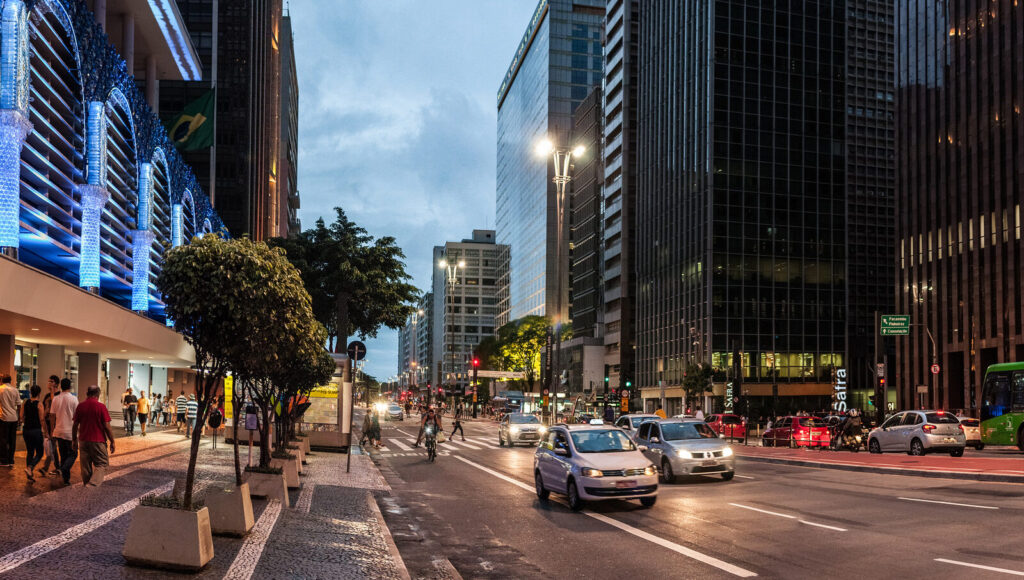
A foreign card usually works, but not always. Some travelers find that Uber handles foreign cards more smoothly than other apps, and Uber, Lyft, Bolt, Free Now and Cabify reliably accept international cards according to one comparison site. Even so, Brazilian anti-fraud systems occasionally block a card for no obvious reason.
A few habits reduce the risk:
- Add the card in the app at home, and confirm it reaches the payment screen on a test request once you land.
- Carry a second card from a different bank or network. Visa and Mastercard are the safer bets; American Express is less universally accepted.
- Tell your bank you are traveling, so a series of small reais charges doesn’t trigger a block.
Fees depend on your issuer, not on Uber. Many US travel cards waive foreign transaction fees, while many UK and EU cards charge a percentage on every payment, so check before you leave. Our guide to Pix and card payments explains why Pix, the local instant-payment system, isn’t a realistic option for most tourists.
Uber can also take cash in Brazil, depending on your account settings. Treat that as a fallback only. Paying by card keeps a clean record of the trip and avoids haggling over change. The app’s tip option is optional; our tipping guide covers when it makes sense.
A Safety Routine for Every Ride

Most problems come from skipping one of these steps. They take under a minute in total.
- Wait somewhere secure. The US State Department advises that you arrange pickup in a secure area. A hotel lobby, restaurant doorway or shop entrance beats standing on the curb with your phone out.
- Match the car to the app. The plate, car model, driver’s name and photo must all agree. Australia’s advisory tells travelers to enter the vehicle with the same plate number and name shown in the app.
- Check the rating. The US advisory suggests that you avoid accepting rides from drivers with few or low ratings. If the app lets you cancel without a penalty, do so.
- Sit in the back and share your trip. Use the in-app trip-sharing tool so a friend or family member can follow the route. If the app offers a PIN or security code, use it.
- Keep your phone out of sight in the car. Phone grabs at red lights are a bigger risk than the driver. Hold it below window height, or put it away once the route is confirmed.
- Stay in the app. If a driver asks you to cancel and pay in cash instead, decline and report it.
In Rio, the app is most valuable at night, when streets that feel fine at 6 p.m. empty out. Our neighborhood-by-neighborhood Rio safety guide shows where a ride is worth the few extra dollars.
Fake Drivers and Other Common Problems
The most common scam is a stranger who claims to be your Uber. At São Paulo’s main airport, people hang around the arrivals area holding “Uber” signs and offering rides. Real drivers don’t solicit passengers. Only get into a car you requested yourself, on your own phone.
A simple check helps: before you say your name, ask the driver who they are picking up. A real driver will see your name in the app. A scammer will agree with whatever you say.
Smaller annoyances are more common than scams. Pickup pins in dense neighborhoods can be off by a block, and drivers sometimes call or message you in Portuguese. A few words go a long way, so keep our Portuguese phrases for travelers handy.
Uber Pickups at Brazilian Airports

Both big gateways have dedicated app pickup zones, and you won’t be picked up at the arrivals curb. At Guarulhos (GRU), there are designated pickup totems or lanes at each terminal, clearly after the taxi line. Open the app while you’re still inside and walk to the zone it assigns. If you have a lot of luggage, request a larger car (the app calls the option Uber Bag).
At Rio’s Galeão (GIG), the app zone is between Terminal 1 and Terminal 2. A small airport fee is added to your fare automatically and appears in the price breakdown. Don’t confirm the request while you’re still at the baggage carousel, or the driver may cancel while you wait.
Uber lets you reserve airport pickups up to 90 days ahead through its Reserve feature. Uber’s Galeão pickup page has the latest details. If you’d rather not deal with an app after a long flight, most airports also have licensed taxi desks inside baggage reclaim where you can pay before you travel.
Uber, 99 and Licensed Taxis Compared
Uber isn’t the only option. 99 is a Brazilian app that books both private drivers and licensed taxis, operates in over 1,600 cities, and is often slightly cheaper than Uber depending on demand. Locals use both, often comparing prices before choosing.
| Option | Foreign card | Best for |
|---|---|---|
| Uber | Usually works; familiar interface | First rides, airport pickups, night trips |
| 99 | Works with international numbers and cards, though it occasionally rejects foreign issuers | Comparing prices, smaller cities, when Uber is scarce or surging |
| Licensed taxi | Often by card or cash; check the amount on the machine before paying | Airport desks, hotel-arranged rides, backup when apps fail |
Install both apps before you travel. If one shows a surge price or no cars, the other often doesn’t. Australia’s advisory also warns that credit card fraud is widespread, so check the amount on a taxi’s card machine before you pay.
Planning Your Visit
Uber and 99 work best inside Brazil’s large and mid-sized cities, including Rio, São Paulo, Salvador and Manaus. Don’t assume the same in remote destinations such as the Pantanal or Lençóis Maranhenses, where transfers are usually arranged through lodges or tour operators. Our guides to the Lençóis Maranhenses and the Pantanal explain how to get there.
Apps don’t replace planes or long-distance buses between cities. Our overview of flights, buses and rideshares in Brazil shows how they fit together.
Before you rely on any app, read your own government’s current advice. US citizens can check the State Department’s Brazil page. UK and EU travelers should check their foreign ministry’s guidance. Australia’s Smartraveller advisory is a useful extra reference.
Frequently Asked Questions
Is Uber legal in Brazil?
Yes. Uber and other ride-hailing apps operate legally across Brazil, and locals use them daily. Local rules differ by city, but as a passenger you don’t need to do anything special. Request the ride through the app, check the car, and pay as normal.
Do I need a Brazilian phone number to use Uber?
No. You can register with your overseas number and add an international card, and the app works from day one. You will need mobile data to request rides, so get an eSIM or local SIM before you arrive. A drivers’ call or message may come through WhatsApp or the app.
Is Uber cheaper than a taxi in Brazil?
Usually, though not always. Uber shows a fixed price upfront, which makes it easy to compare, but fares rise with demand during rain or rush hour. At those times a licensed taxi or 99 can be cheaper. Compare both apps before confirming a long ride.
Can I use Uber in Brazil if my card is declined?
Try a second card first, then check that your bank hasn’t blocked the charge. Uber also allows cash in Brazil, depending on your account settings. If neither works, switch to 99 or a licensed taxi, ideally from an official airport desk that lets you pay before the ride.
Is it safe for women traveling alone to use Uber in Brazil?
Most solo women use rideshare as their default at night. Share your trip with someone, sit in the back, and check the plate and driver name before entering. Wait inside until the car is close, and cancel if anything feels wrong. The app’s record of each trip is a safety advantage over street taxis.